Puntos clave
- The 1908 topographical survey lists the methods: on the trolling line, on the jig and on the saithe hook, with a sinking seine, and with nets in autumn.
- An 1884 paper records that the Nordland boat had been almost sole master within the whole of the Tromso diocese, and that a fembering with a very good wind could run from Tromso to Vardo in two days.
- In 1925 a vessel came into Tromso with sixty-three barrels of Greenland shark oil; a decade later boats were working the Denmark Strait and the west side of Spitsbergen for the same fish.
- In Balsfjorden and Malselven in 1892 the ground frost did not leave the soil all summer in several places. In Malangen in 1899 there was serious fodder famine around 10 May.
The tackle, exactly as it was
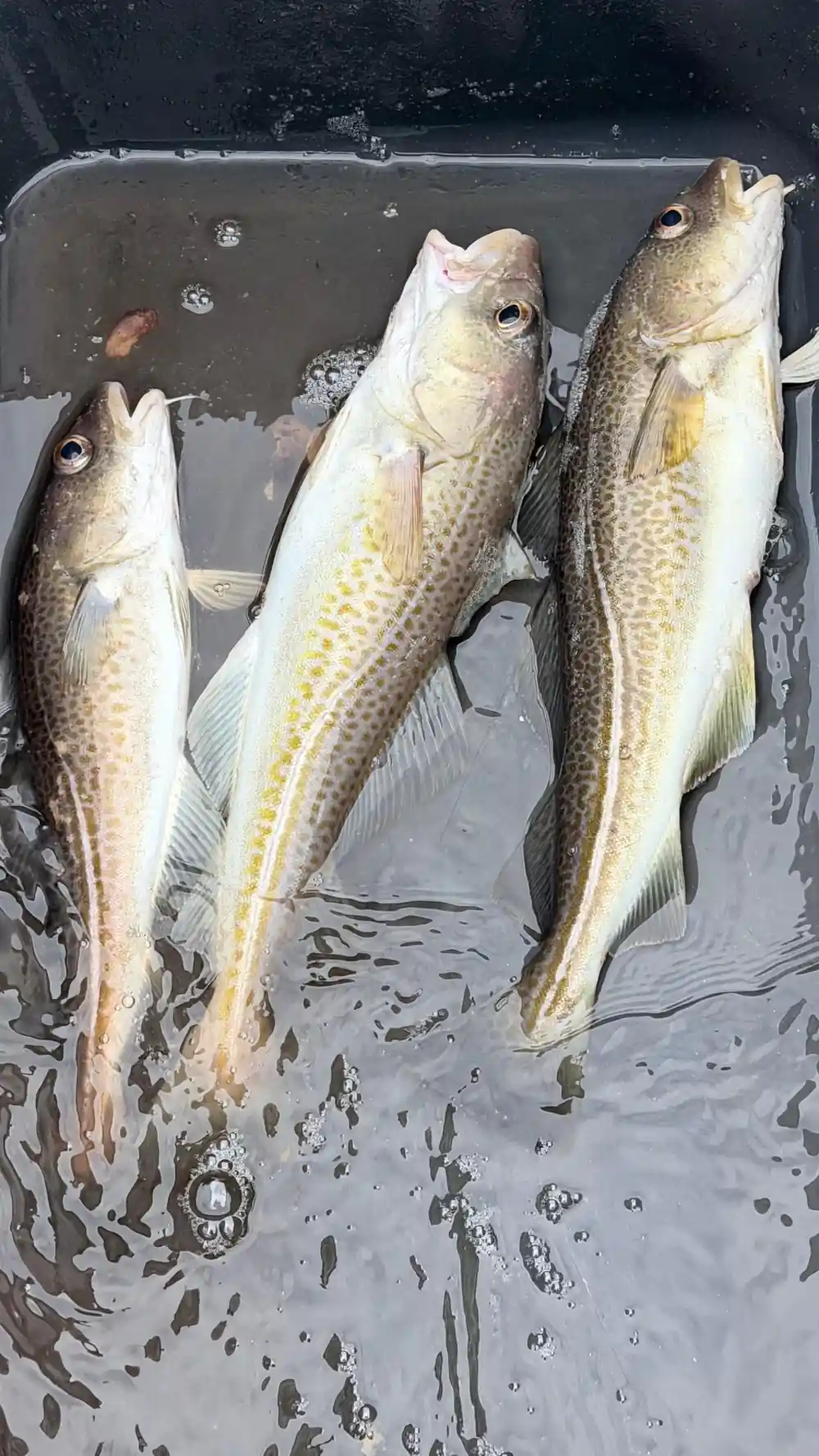
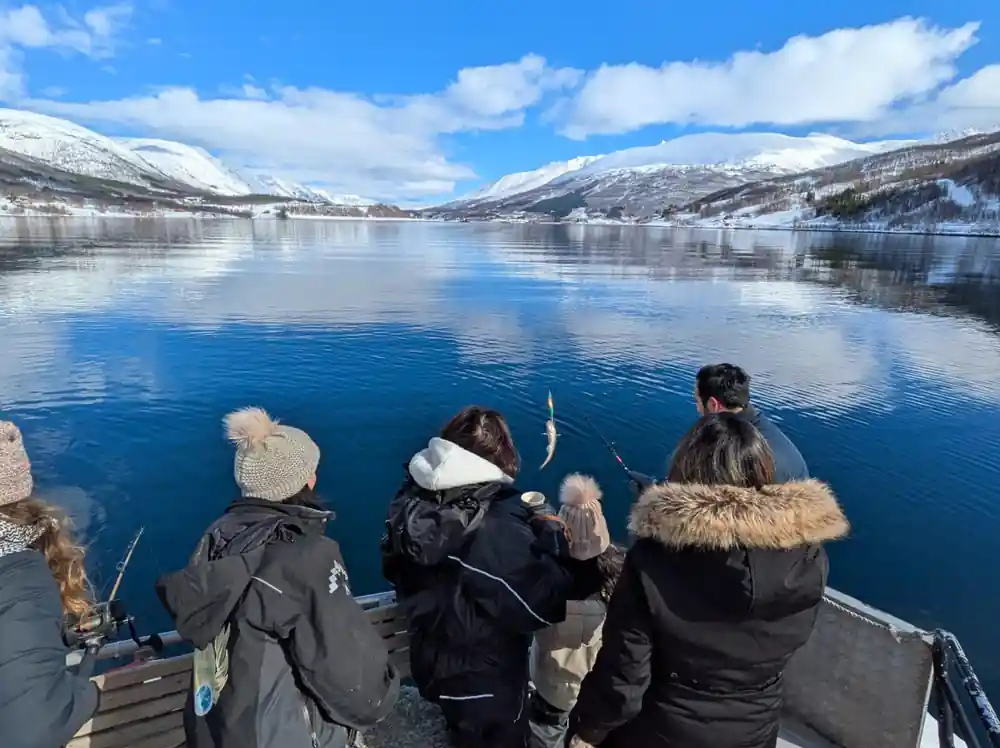
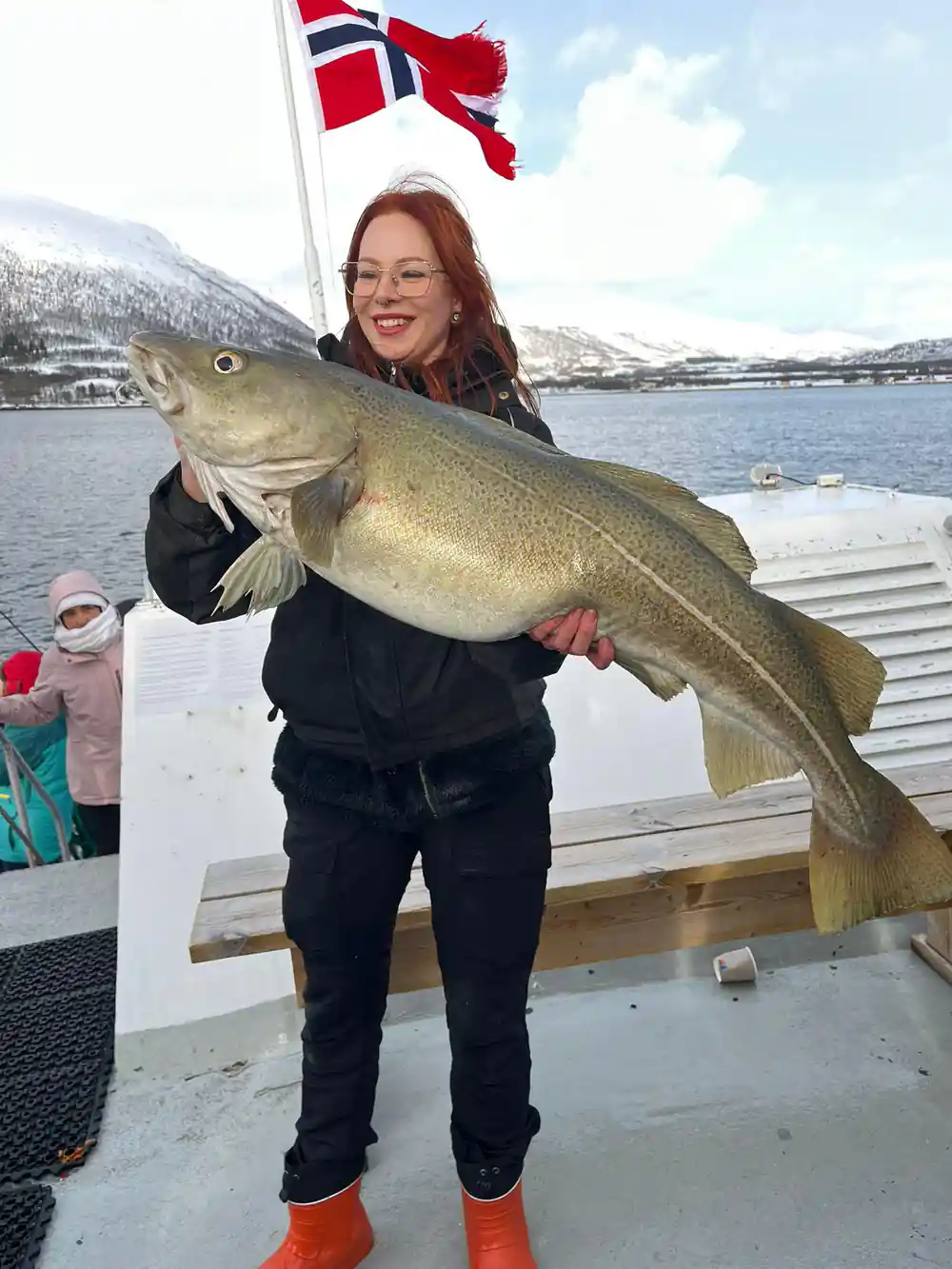
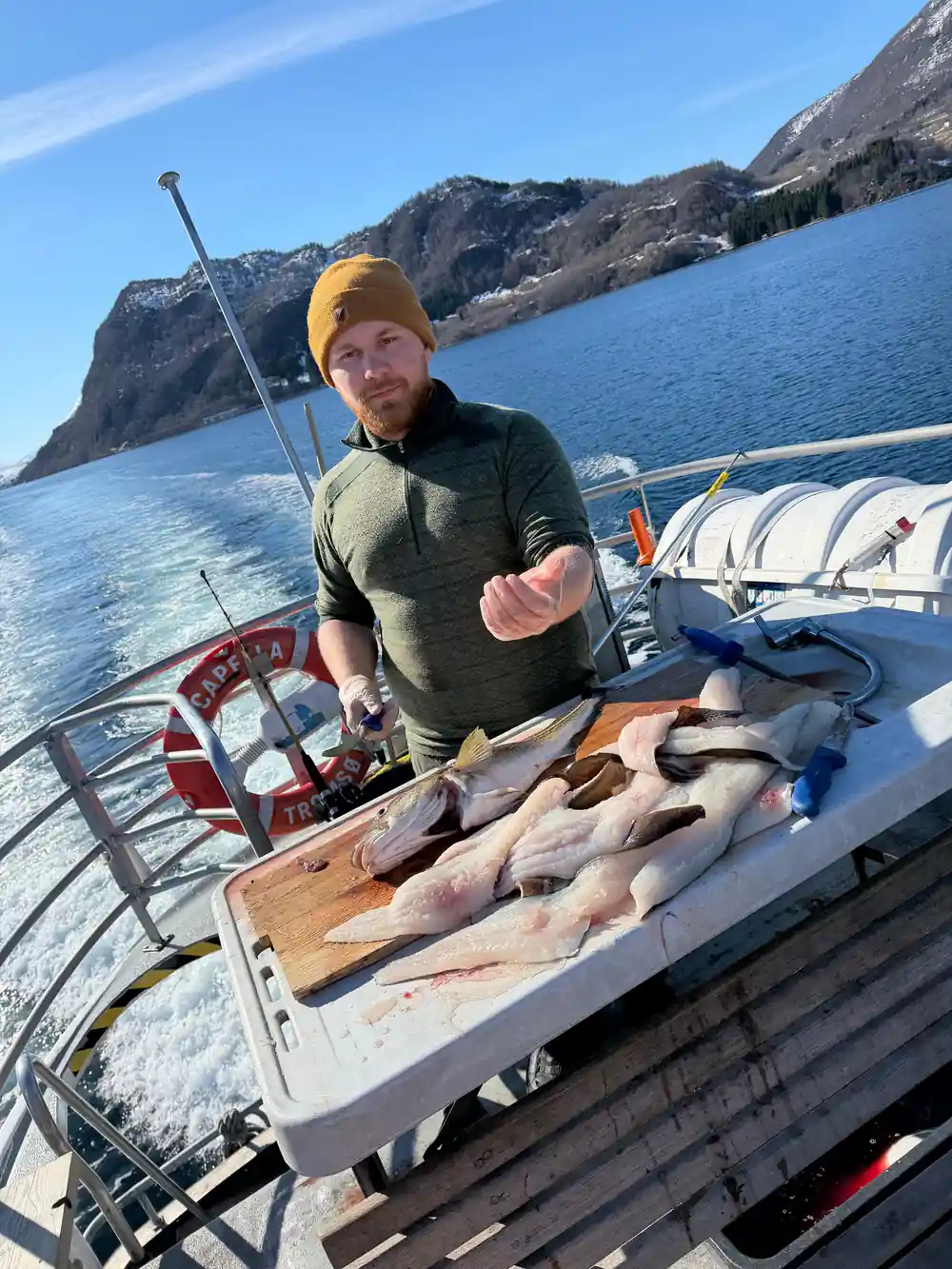
You will be handed a rod and told roughly where to drop it. The 1908 volume of the great topographical survey lists the same job in the old vocabulary: saithe is fished on the trolling line, on the jig and on the saithe hook, with a sinking seine, and with nets in autumn. [1]
That is four methods and a season. The jig, which is what you will actually be using, is the oldest of them and the one that needs no boat power at all.
It worked. In September 1915 a paper carried a line written from Tromso on 21 August: the saithe fishing at Torsvag has been the best in many years. [6] And the 1899 trade magazine Farmand sets the calendar that governed everything: in the months from July to November falls the great export from Tromso and Finnmark of round fish, saithe, oil and other fish products. [5]
The boat under you had one ancestor
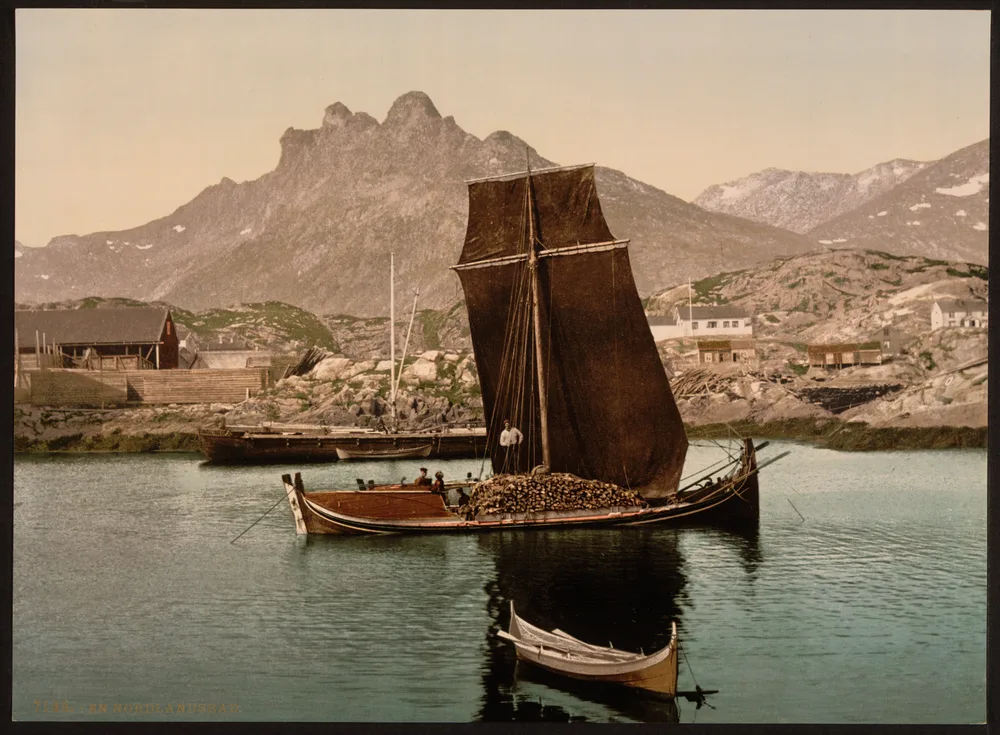
In March 1884 a northern paper made a claim that would have been uncontroversial to every reader: hitherto, as is well known, the so-called Nordland boat has been almost sole master within the whole of the Tromso diocese. [2]
Sole master. One hull form, from Lofoten to the Russian border, for centuries.
An 1868 account explains why nothing else would do: here one needs boats as easily beached as our Nordland boat, but south of Tromso that is hardly the case in most places. [3] No harbours, no quays; you land on the beach or you do not land.
And they were fast. A 1924 note on Norwegian farm names records, almost in passing, that with a fembering and a very good wind one can travel from Tromso to Vardo in two days, a distance of seventy-five steamer miles. [4] That is an open boat, under sail, covering the whole of Finnmark's coast in forty-eight hours.
The fish nobody mentions on a tour
The fjord fishery was the safe half of the trade. The other half went for something considerably stranger.
In July 1925 Sondmorsposten reported a vessel coming in to Tromso with sixty-three barrels of Greenland shark oil. [7] In May 1928 three bank boats came in with eight hundred to sixteen hundred kilos of halibut each and three hundred to fifteen hundred of Greenland shark. [8]
The Greenland shark is a slow, blind, enormously long-lived animal of the deep cold water, and its liver was worth going a very long way for. In September 1935 a Tromso steam cutter came in on a Friday from the Denmark Strait, where she had been working for Greenland shark and hooded seal. [9]
By 1937 the trade was failing. In June that year Nordlys reported that several of the shark boats had tried both Spitsbergen and the Bjornoya ground without meeting any gathering of shark at all. [10] A skipper described the search in May: when the fishing fell off at Sorkapp we went up the west side of Spitsbergen and were north of Kings Bay, but there was very little there. [11]
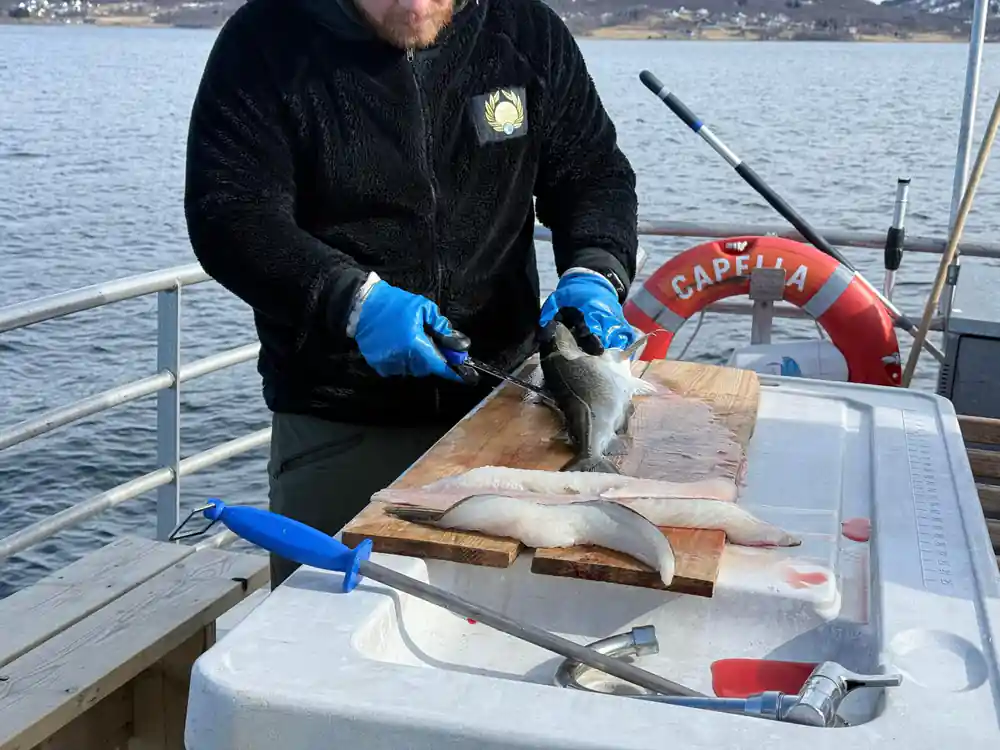
Saithe on the jig, cod from the new year to March, Greenland shark from the Denmark Strait, and one hull form that ruled the whole coast for centuries.
Where the fish were, and were not
The papers are careful about location in a way that reads as expertise rather than reporting.
In October 1871 Tromso Stiftstidende corrected an earlier account: it was not really in Balsfjorden but further down in Malangen, just inside Hekkingen, Edoya and Hillesoy, that this quantity of whale was seen. [16] The same paper that autumn recorded that so great a quantity of herring as that year's in Balsfjorden had not, so the writer was told, been seen before. [16]
In 1897 a paper noted herring locked in at Andersdalen at the mouth of Ramfjorden, and added the belief that in this fjord the herring stands and breeds. [20] That is a nineteenth-century fisherman's theory of the fjord as a nursery, and it is roughly right.
Not every report survived scrutiny. In February 1938 a fisheries scientist publicly denied the first sensational report from Tromso of halibut fishing in Solbergfjorden, calling it pure invention. [12]
Why the fjord mattered so much
This is the part a fishing trip does not convey, and the archive does.
A phenological survey records that in Balsfjorden and Malselven in 1892 the ground frost did not leave the soil in several places all summer. [18] The same source records serious fodder famine in Malangen around 10 May 1899, and again through the end of April and May. [18]
Land that does not thaw grows nothing, and animals that have no fodder in May do not last to June. When that happened, the only larder left was the water you are sitting on.
In January 1903 a paper reported the other failure mode: in Malangen they had shot eighty seals in a few weeks, but had hardly taken a single fish out of the sea. [19] Plenty of one thing, nothing of the other, and no way to eat the difference.
The man on the Fram
One last name, because it belongs to this shore. In his account of the Fram expedition, published in 1897, Nansen introduces his harpooner: Peder Leonard Hendriksen, born in Balsfjorden near Tromso in 1859, at sea from childhood, with fourteen years of it behind him. [15]
Balsfjorden is the fjord this cruise turns into. The man who threw the harpoon on the most famous ship in Norwegian history learned his trade in the water you will be fishing.
And an old sea shed on this coast, described in 1906 with the remains of a fish rack leaning against it, is what most of that history physically amounts to now. [14] Wood does not last here. The record does.
The working year, as it was recorded
1868: why the boats were shaped that way
Here one needs craft as easily beached as the Nordland boat; south of Tromso that is hardly the case. [3]
1871: the herring nobody remembered
So great a quantity in Balsfjorden had not been seen before, the writer is told. [16]
1884: one hull, one coast
The Nordland boat has been almost sole master within the whole Tromso diocese. [2]
1892: the frost that stayed
In Balsfjorden and Malselven the ground frost did not leave the soil all summer. [18]
1899: the export calendar
July to November is the great export of round fish, saithe and oil from Tromso and Finnmark. [5]
1899: fodder famine in May
Serious fodder famine in Malangen around 10 May, and again through April and May. [18]
1903: eighty seals, no fish
In a few weeks in Malangen they shoot eighty seals and hardly take a fish. [19]
1908: how saithe is taken
On the trolling line, the jig and the saithe hook, with sinking seine, and with nets in autumn. [1]
1915: the best in many years
The saithe fishing at Torsvag has been the best for a long time. [6]
1924: two days to Vardo
A fembering with a very good wind runs seventy-five steamer miles in forty-eight hours. [4]
1925: sixty-three barrels
A vessel lands Greenland shark oil at Tromso by the barrel. [7]
1935: the Denmark Strait
A Tromso steam cutter returns from shark and hooded seal off Greenland. [9]
1937: the shark runs out
Boats try Spitsbergen and Bjornoya and find no gathering at all. [10] [11]
1938: a report denied
The sensational halibut report from Solbergfjorden is called pure invention. [12]