At a glance
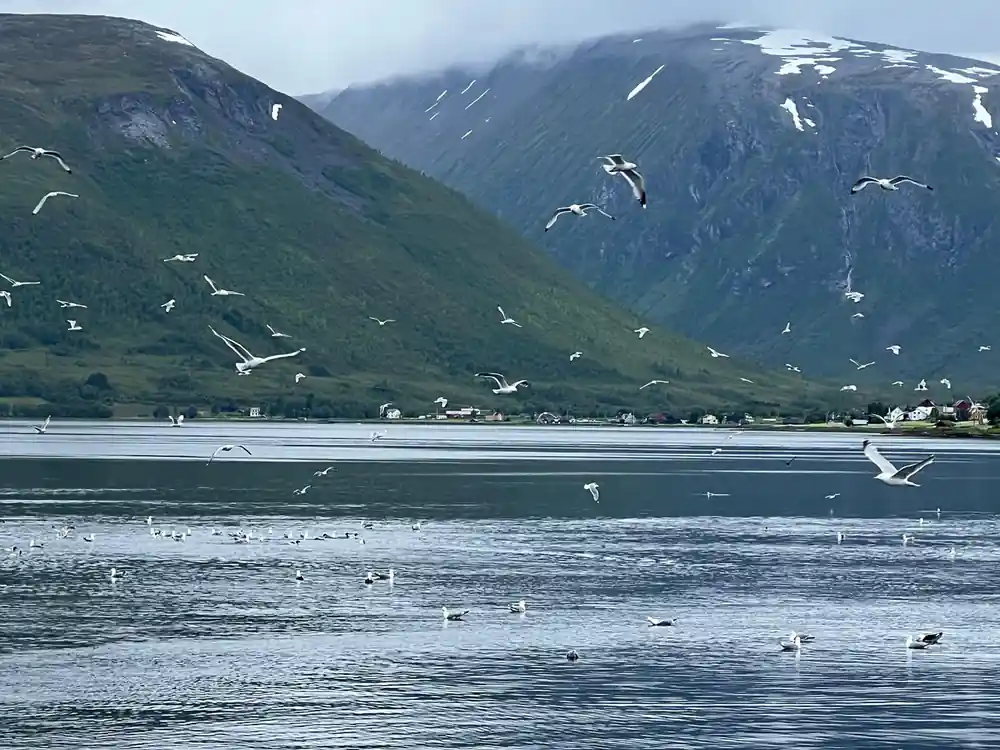
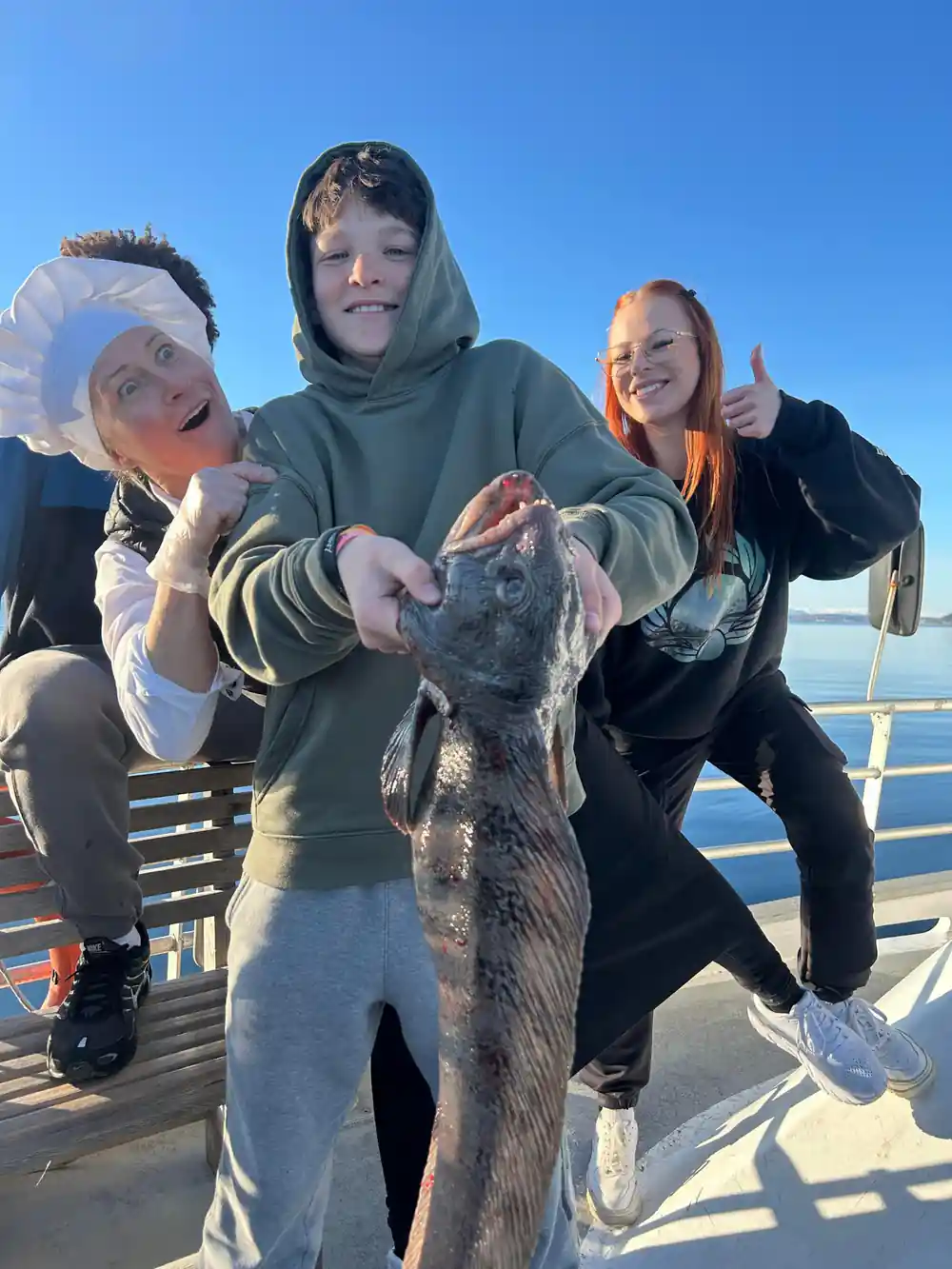
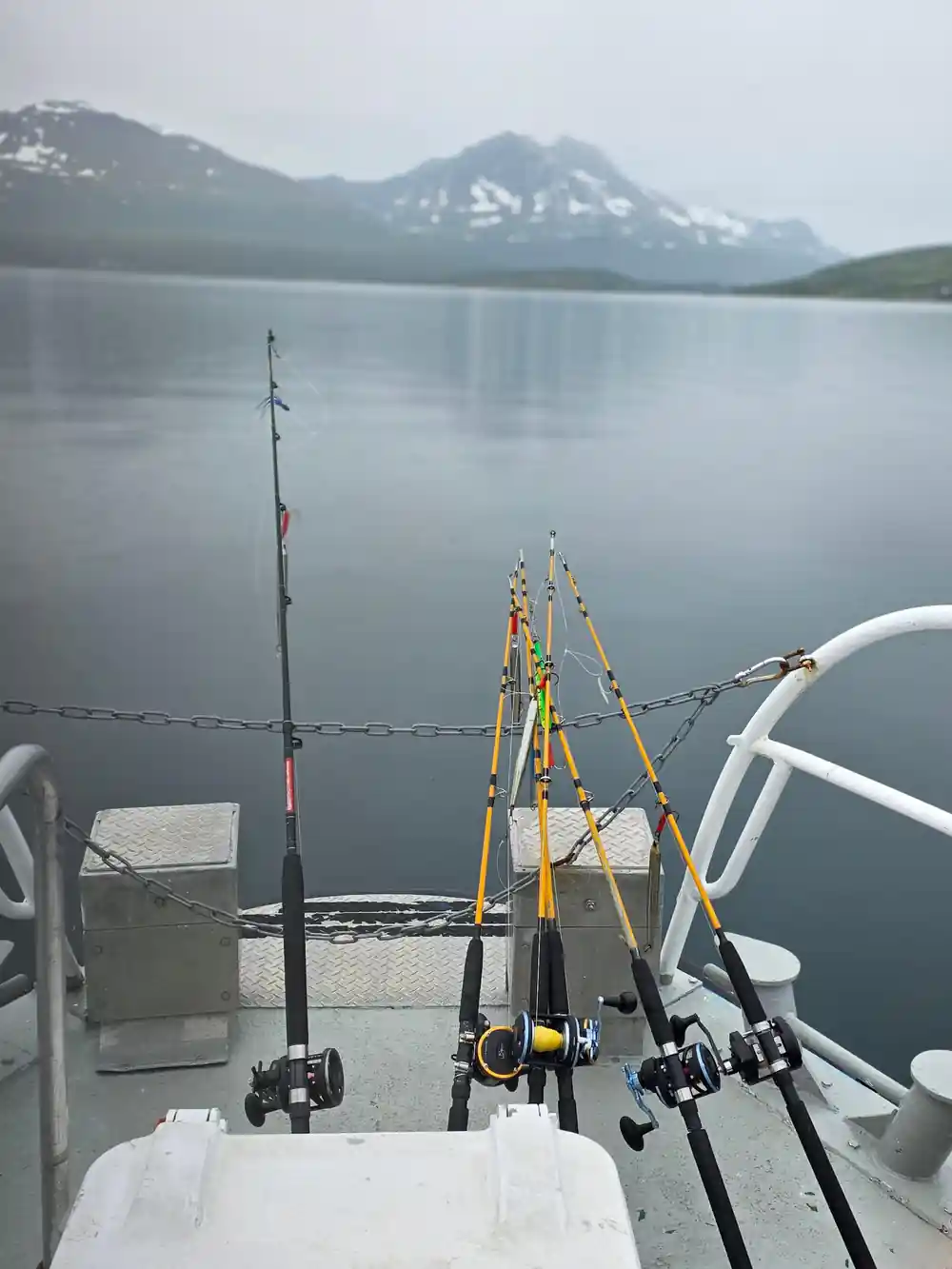
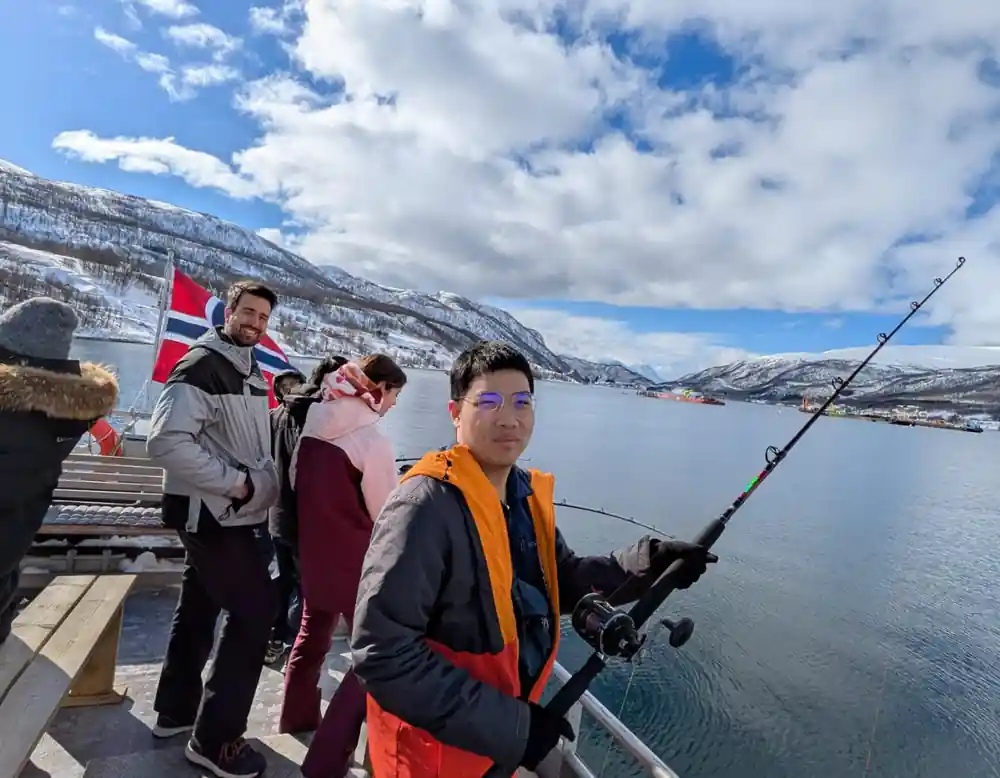
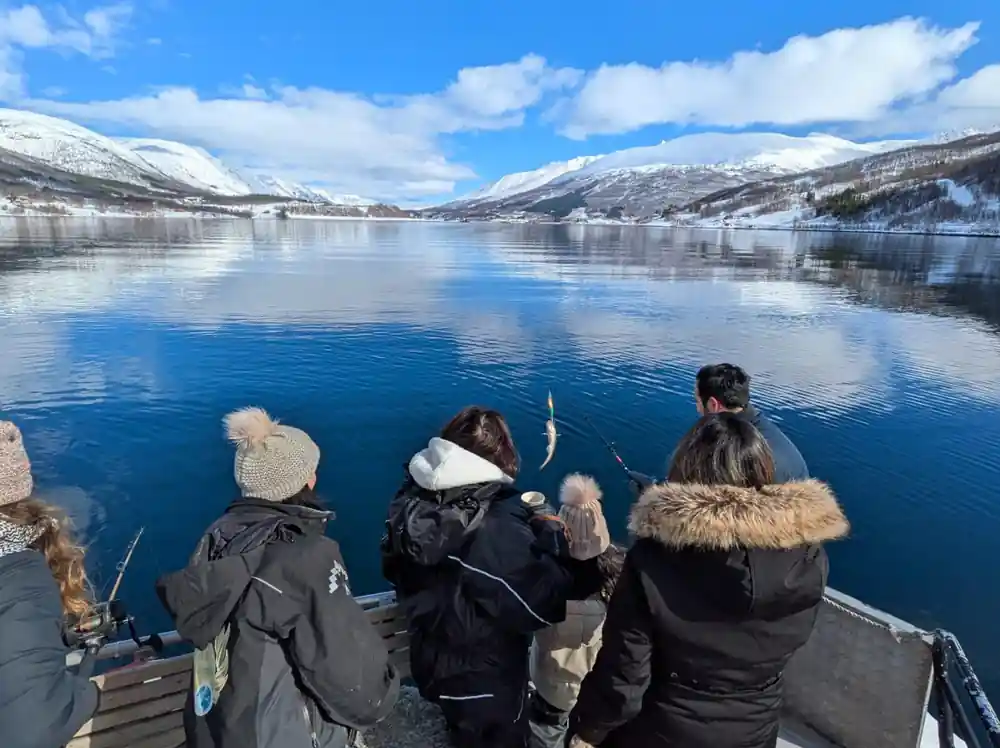
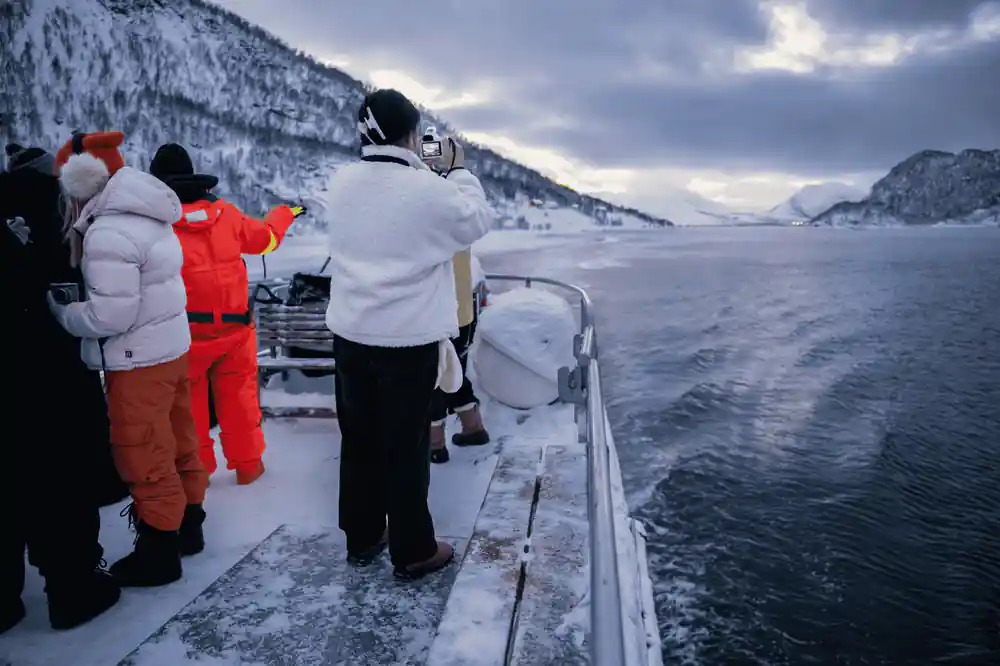
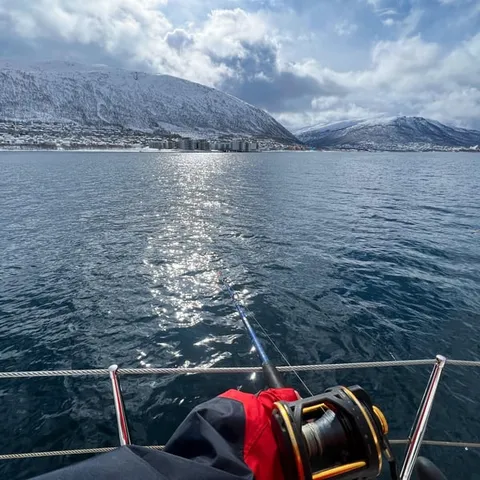
- Tromso grew up around a fjord that has fed people for centuries, and today's boat trips put you out on the same water with a rod in your hand and a view on every side.
- Summer sea water averages 10.5 C, while February air is the coldest of the year at an average of -3.2 °C.[21][22]
- Fish found in Norwegian fjords include coastal cod, saithe, pollack, haddock, herring, mackerel, and sprat.[23]
- Orcas and humpbacks follow herring into the Tromso and Skjervoy fjords roughly every November through January.[24]
- Tromso: Arctic Fjord Cruise & Fishing Experience runs 4 - 5 hours from US$136, rated 4.72 from 5,096 reviews.[25]
- Top choice Fjord Cruise & Fishing from US$136 Duration4 - 5 hours[25]Rating4.72 from 5,096 reviews[25]GuideLive tour guide: English[25]CancellationFree cancellation up to 24 hours[25] Check availability
- Fishing Sea Safari from US$173 Duration3.5 hours[26]Rating4.85 from 721 reviews[26]GuideLive tour guide: English[26]CancellationFree cancellation up to 24 hours[26] See this tour
- Arctic Fjord Cruise from US$121 Duration3.5 hours[27]Rating4.68 from 1,959 reviews[27]GuideEnglish, Norwegian[27]CancellationFree cancellation up to 24 hours[27] See this tour
During this period, the fishable component of the Norwegian spring-spawning herring stock is believed to have measured about 10 million metric tonnes.
Book it for the fishing, stay for the working coastline
Read before booking
A working fjord, not a backdrop
Tromso fjord fishing history is not a museum story. It is the reason the city sits where it sits, on an island between water and mountains, 217 miles north of the Arctic Circle and home to 75,638 people.[30] The fjords around it have fed households, filled warehouses and sent cargo south for longer than anyone has been writing it down, and the same water is still worked today. Book a boat here and you are joining a working coastline, not visiting a diorama.
Look at a map and the shape explains itself. Deep water comes close to shore, the coastline breaks into sounds and narrow arms, and the mountains above drop straight into the sea. That gives boats shelter, gives fish somewhere to gather, and gives a crew a place to land a catch within sight of home. In the darkest stretch of the year, Tromso passes through 61 days of polar night, and the harbour is still a place of lights, ropes and engines.[28]
Anyone who has stood on the quay in winter knows the other half of it: the cold, the low light, the smell of salt and diesel, the gulls working over the gutting tables. The water sets the calendar here. Fish arrive when they arrive, and the town has always arranged itself around that, from the boats at the dock to the drying racks out on the headlands.
What the cold water holds
Cold water is not empty water. Around Tromso the average sea water temperature reaches 5.2 C in winter and rises to 10.5 C in summer, cold enough to hold plenty of oxygen and to suit the species that have always lived here.[21] That range also decides how a day on deck feels and which ground the skipper will try first.
On land, February is the coldest month, with an average temperature of -3.2 °C.[22] In practice that means frost on the rails, ropes that stiffen, and a serious argument for layers: wool against the skin, a windproof shell over the top, gloves you can pull off with cold fingers, and boots with grip. Water holds its heat far better than air does, so the bite on a winter trip comes from wind and spray rather than from the sea itself.
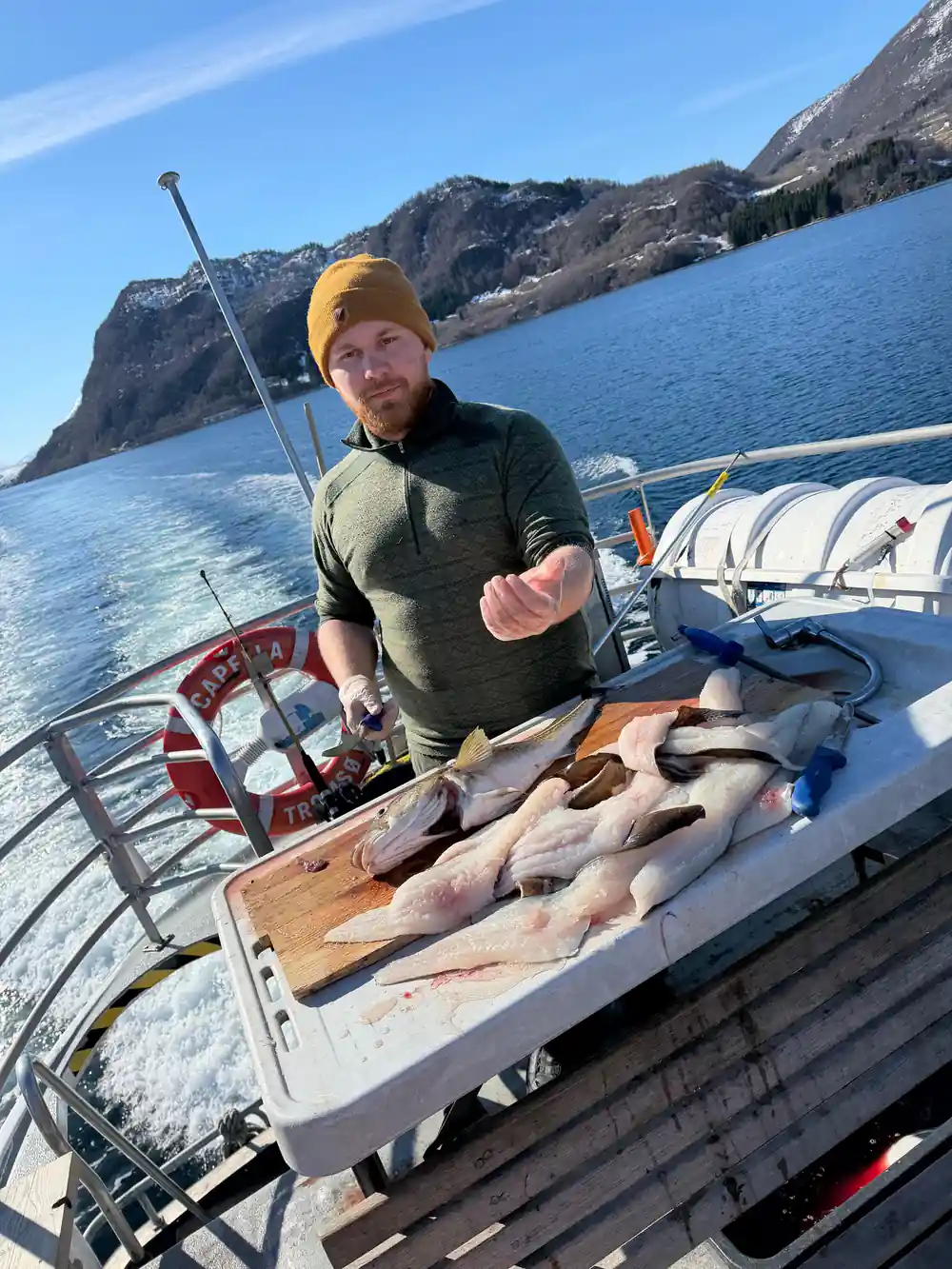
The catch list tells you what this fjord has fed people. Fish found in Norwegian fjords include coastal cod, saithe, pollack, haddock, herring, mackerel, and sprat.[23] Cod is the anchor of the northern fisheries, but a few hours on the water can bring up several of the others, and the mix shifts with the season, the depth and the ground the skipper chooses.
Fish racks on a fjord shore, standing where the wind can dry the cod
The herring years
Herring is the fish that moved money around. In the 1950s and 1960s, the fishable component of the Norwegian spring-spawning herring stock is believed to have measured about 10 million metric tonnes.[31] Shoals on that scale drew boats from the whole coast, and the salting, packing and shipping that followed them kept yards, quays and cooperages busy for decades.
Herring does not stay put, and neither does what eats it. Orcas and humpbacks follow herring into the Tromso and Skjervoy fjords roughly every November through January.[24] Winter boats keep a lookout for them between stops, and a spout or a tall black fin can turn an ordinary afternoon into the story you tell at dinner.
There is a lesson in the herring years that still shapes how people here talk about the sea. A stock that looks endless can shrink, and a coast that depends on one species learns to watch the numbers closely. The fishing that continues around Tromso today is smaller and more varied, and the old waterfront now shares its quays with tour boats, kayaks and a fish market that still sells whatever comes off the boats.
Fish racks and the drying wind
Walk any fjord shore in the north and you will eventually spot wooden frames on the rocks: fish racks, built where wind and salt air can do the work of a freezer. Cod hung there in pairs dries hard as board, keeps for a long time without ice, and travels well. It was one of the first great exports of this coast, and the racks are still part of the landscape rather than a ruin.
One present-day cruise makes that history physical. Tromso: Arctic Fjord Cruise With Stop On Land At Fish Racks runs 4 hours, is wheelchair accessible and sails with a live tour guide in English, from US$156 and rated 4.52 from 2,609 reviews.[32] Its stops read Tromso, Ramfjorden, Rystraumen, Rya, Store Grindoya and Tirpitz-platen, so you see working shoreline as well as scenery.[32]
If you do go ashore, look at where the racks stand: usually where the wind reaches them, not where the view is best. Look at the wharves and boathouses too, at the slipways and the sheds. This plain working architecture of a coast that fed itself from the sea explains more about the place than any monument, and much of it is still in use.
from US$136
The tour booked from this site, the Tromso: Arctic Fjord Cruise & Fishing Experience, sails the fjord with a live English-speaking guide.[25]
Greenland shark oil and the lamps
Before electricity, northern Europe burned oil, and a great deal of it came from the sea. The Greenland shark lives in cold, deep water, and its liver is heavy with oil that burns with a steady flame. In the centuries of train oil and whale oil that made it a valuable cargo, and the Greenland shark oil Tromso traders once shipped south lit lamps and greased machinery far from the Arctic.
Getting it was slow, cold, unpleasant work. Crews fished deep lines in the dark, hauled heavy fish over the rail and rendered the livers ashore in sheds that smelled for miles. The trade belongs to the same centuries as the stockfish racks, when the north of Norway was a supplier of raw materials to a wider world and the price was set somewhere far to the south.
You will not find shark oil for sale on the waterfront now, and the fishery that produced it has gone from these waters. What remains is a useful way of reading the coast. The best harbour, the best drying ground and the deepest water tend to sit close together, and the old trades followed the same geography that today's boats do.
Boats shaped by this coast
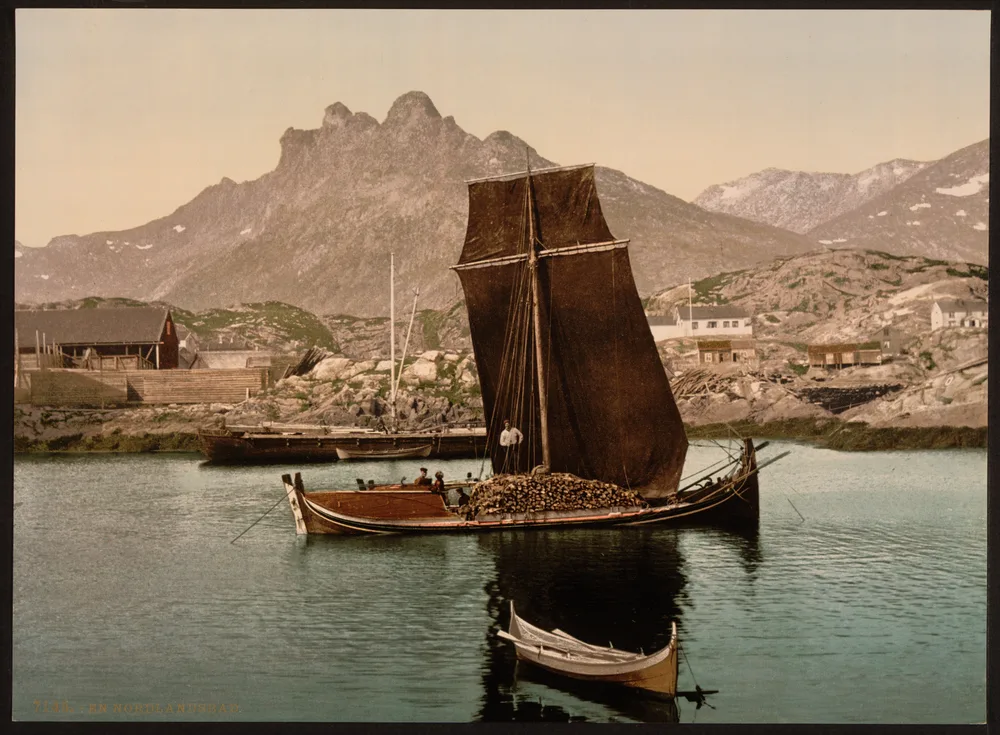
The Nordland boat is a family of designs rather than one vessel. Along this coast they were clinker built, with overlapping planks riveted together, light enough to row and steady enough to sail, and sized to the crew and the fishing grounds they served. The largest of the type, the femboring, carried several pairs of oars and a square sail.
These were working tools, not exhibits. They were launched and hauled on slipways, patched every spring, and used for fishing, ferrying and moving goods between farms with no road. When small engines arrived, the hulls kept much the same shape because the shape worked: a narrow stern, a broad middle, and a bow that could take a chop in open water.
You can still read those lines in the harbour. Wooden boats kept by enthusiasts and small museums around Tromso show the same profile, and some fjord trips run in sturdy, traditional-style hulls. Sitting low to the water in one, with the mountains standing straight up on both sides, is the quickest way to understand how a small crew once worked this coast.
Fishing the fjord today
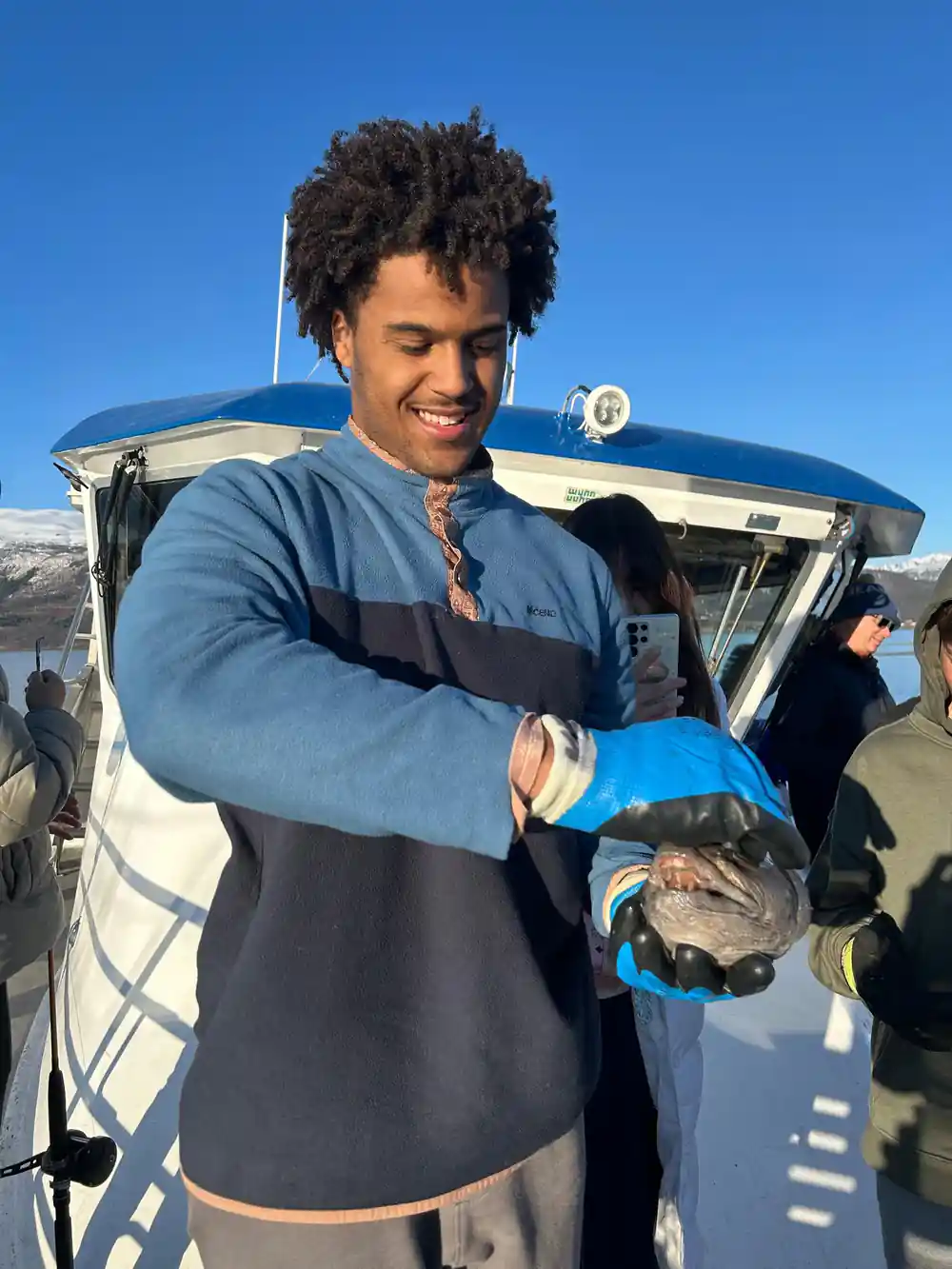
The Tromso: Arctic Fjord Cruise & Fishing Experience is the trip booked from this site. It runs 4 - 5 hours with a live tour guide in English, starts from US$136, and is rated 4.72 from 5,096 reviews.[25] The route takes in Ryoya and Ramfjorden, and the terms are easy: reserve now & pay later, and free cancellation up to 24 hours in advance for a full refund.[25]
Other boats suit other days. The Fishing Sea Safari runs 3.5 hours from US$173 and is rated 4.85 from 721 reviews.[26] The Arctic Fjord Cruise in Polar Landscapes runs 3.5 hours from US$121, rated 4.68 from 1,959 reviews.[27] Fishing & Fjord Cruise runs 4.5 hours from US$200, rated 4.87 from 534 reviews.[33]
Wildlife is part of the draw, above and below the surface. Norway has 2,500 breeding pairs of white-tailed sea eagles, the largest breeding population in Europe, so keep an eye on the cliffs and the air above the boat.[29] In Norwegian waters, red king crabs rarely exceed 8 kg or 23 cm carapace length, and they turn up in pots and on menus along this coast.[34] Boats are getting quieter too: electric and hybrid propulsion systems from Siemens Energy can cut vessel fuel consumption, emissions, and costs up to 90 percent.[35]
Fjord fishing trips from Tromso, from-price in US dollars
From-prices in US dollars for five Tromso fishing and fjord trips:[25][26][33][36][37]
What a fishing day on the fjord costs
From-prices in US dollars per person:[25][26][33][36][37]
When to go on the fjord
How to plan your fjord day
Pick your season
Summer brings the mildest air and the longest light, winter brings the herring, the whales and the dark. Decide which of those you want first.
Book the boat early
Good fjord boats fill up in the aurora months. Reserve your place as soon as your dates are fixed and note the free cancellation window.
Dress for the deck
Wool against the skin, a windproof shell on top, gloves you can pull off and boots with grip. The deck is colder than the town.
Keep a dry bag
Spray, rain and wet hands are part of a day on the fjord. A small dry bag keeps a phone, a camera and a spare layer safe.
Watch the water
Keep an eye on the cliffs for sea eagles and on the surface for whale spouts. Tell the crew what you spot, they know where to slow down.
Book the Tromso fjord cruise and fishing day
from US$137Reserve now & pay later