At a glance
- The Arctic Fjord Cruise & Fishing Experience runs 4 - 5 hours, costs from US$136 and holds a 4.72 rating from 5,096 reviews.[1]
- A short boat rod, a weight and a baited hook or soft lure are the working parts, and the method is a steady lift and drop rather than a long cast.
- Licence and permit questions are best put to the operator before you book. Keep the answer with your booking confirmation in case you are asked on the day.
- Fish found in Norwegian fjords include coastal cod, saithe, pollack, haddock, herring, mackerel, and sprat.[2]
- Sea water averages 5.2 C in winter and 10.5 C in summer, and February air temperatures average -3.2 °C.[3][4]
- Top choice Fjord cruise & fishing from US$136 Duration4 - 5 hours[1]Rated4.72 from 5,096 reviews[1]Live guideEnglish[1]CancellationFree cancellation up to 24 hours[1] Check availability
- Fishing sea safari from US$173 Duration3.5 hours[5]Rated4.85 from 721 reviews[5]Live guideEnglish[5]CancellationFree cancellation up to 24 hours[5] See this tour
- Polar fjord cruise from US$121 Duration3.5 hours[6]Rated4.68 from 1,959 reviews[6]Live guideEnglish, Norwegian[6]CancellationFree cancellation up to 24 hours[6] See this tour
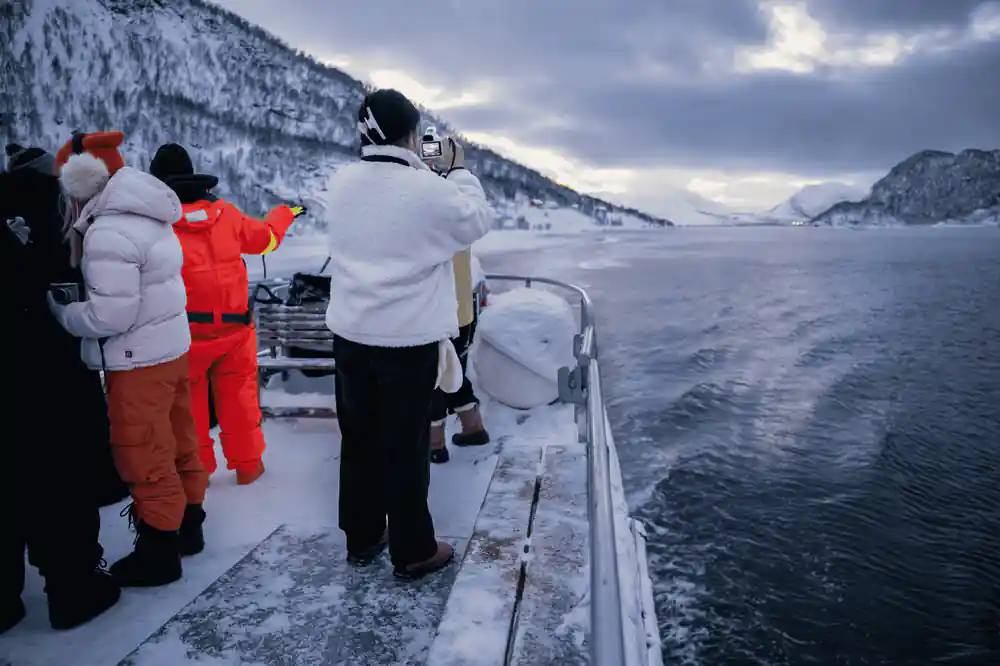
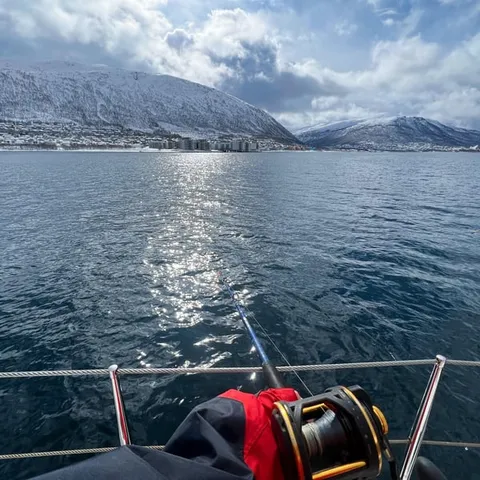
Fish found in Norwegian fjords include coastal cod, saithe, pollack, haddock, herring, mackerel, and sprat.
Is the Tromsø fjord fishing cruise worth it?
Read before booking
On the day
- Warm mid layers, a waterproof outer layer, hat and gloves
- Take seasickness tablets before you step aboard, not after
- Sunglasses and sunscreen for bright days on reflective water
- Ask about licences, about keeping fish and about allergies
Fishing Gear and How the Tackle Works
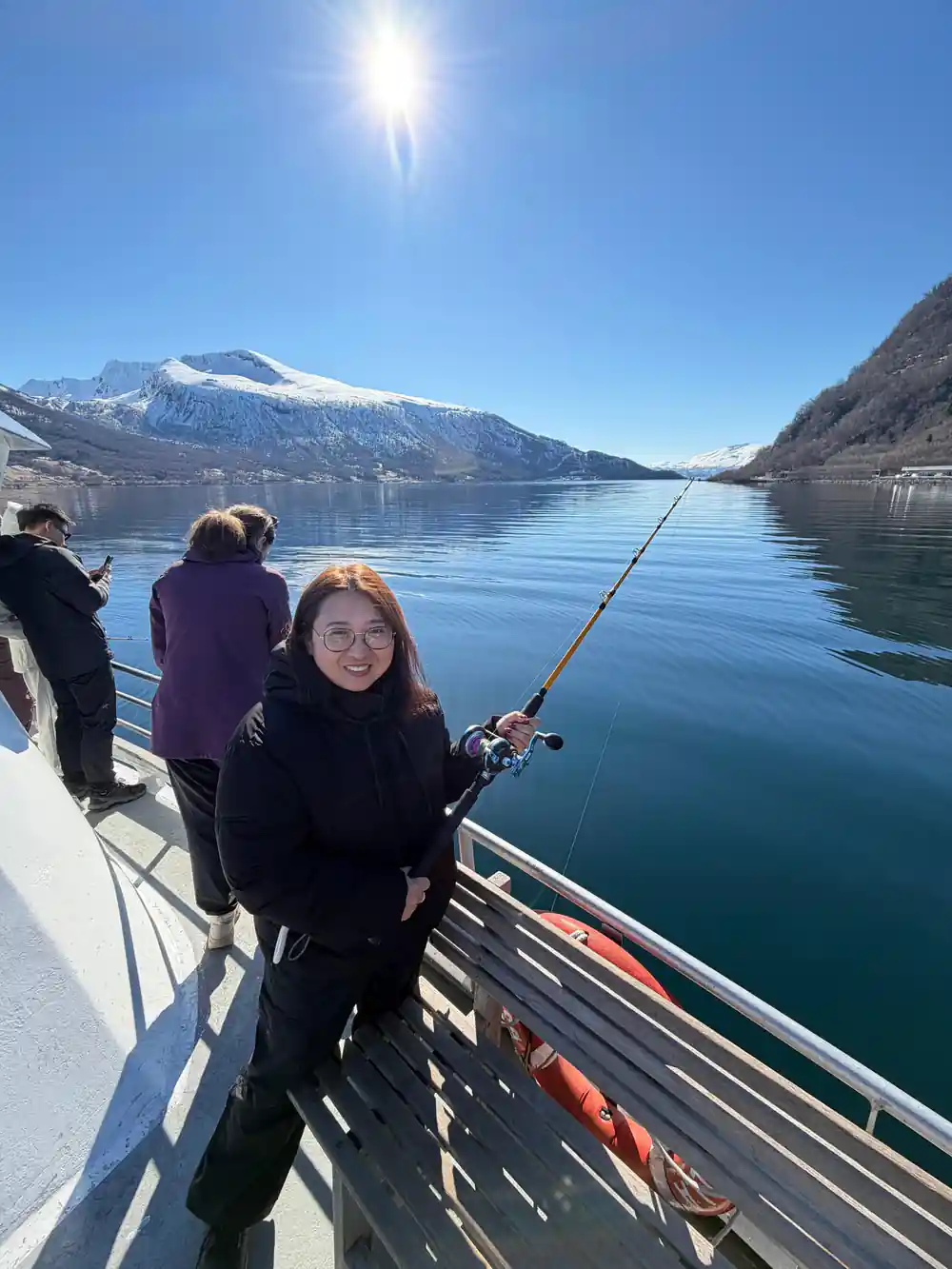
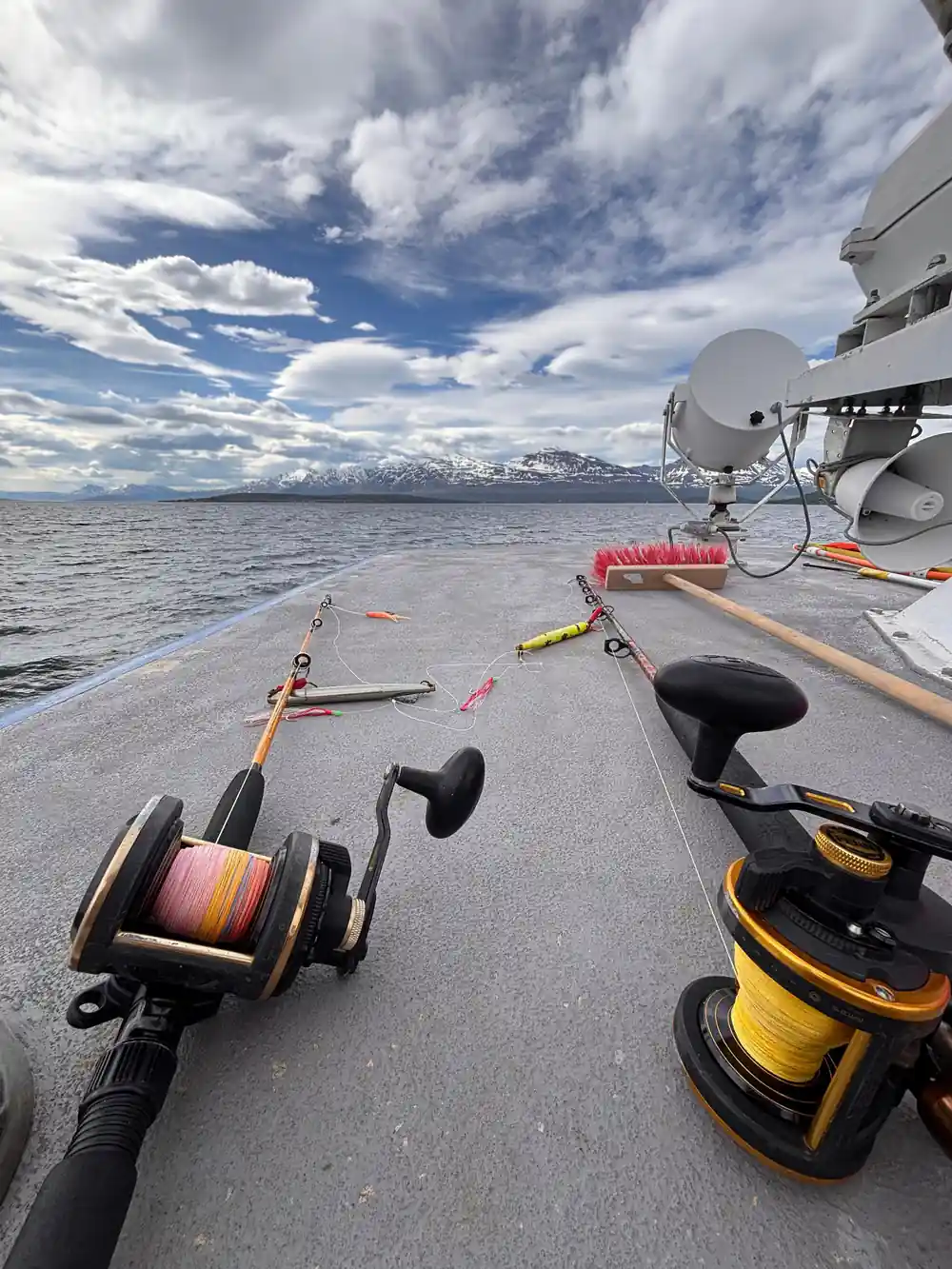
Fjord fishing in Tromsø is not complicated kit. A short boat rod, a reel loaded with braid, a weight and either a baited hook or a soft lure do most of the work. The line goes straight down, you feel the weight touch bottom, then you lift the rod tip and let it fall again. That gentle rhythm is the whole technique, and it is what makes a cod or a haddock commit. On a moving deck in cold air, keep the rod tip low, watch the line where it enters the water, and let the drift do the searching.
Hands matter more than muscle. Wet rope and cold metal bite quickly, and thin gloves with rubber palms are worth the small loss of feel, while a dry towel in a pocket saves a lot of fumbling. Hold the rod with the reel underneath and your thumb near the spool, ready to give line if something heavy pulls. If you have never fished before, say so early. The lift, drop and wait routine takes a few minutes to learn, and the rest of the day is patience, scenery and the odd burst of noise when a rod bends.
Fishing Licences: What to Check Before You Go
This is the question most visitors ask first, and it is a fair one. Sea fishing rules in Norway sit with the national authorities rather than with the boat, and they are not something any website can freeze in place for your travel date. That is why fishing license questions are best asked before you book rather than on the dock, when you are already pulling on a float suit. Message the operator when you reserve and ask what applies to the water you will be fishing and to everyone in your group.
If you are travelling with children or a group of mixed nationalities, ask about each person rather than only the person who booked. Keep the reply with your booking confirmation so it is on your phone when you are standing on the quay without a signal. Rules are revised from time to time, and a quick check the week before you fly costs nothing. The tour booked from this site is a guided boat trip with a live guide on board who speaks English.[1]
Snow-covered peaks mirrored in still water between the fjord walls.
Species You Will Find in These Arctic Fjords
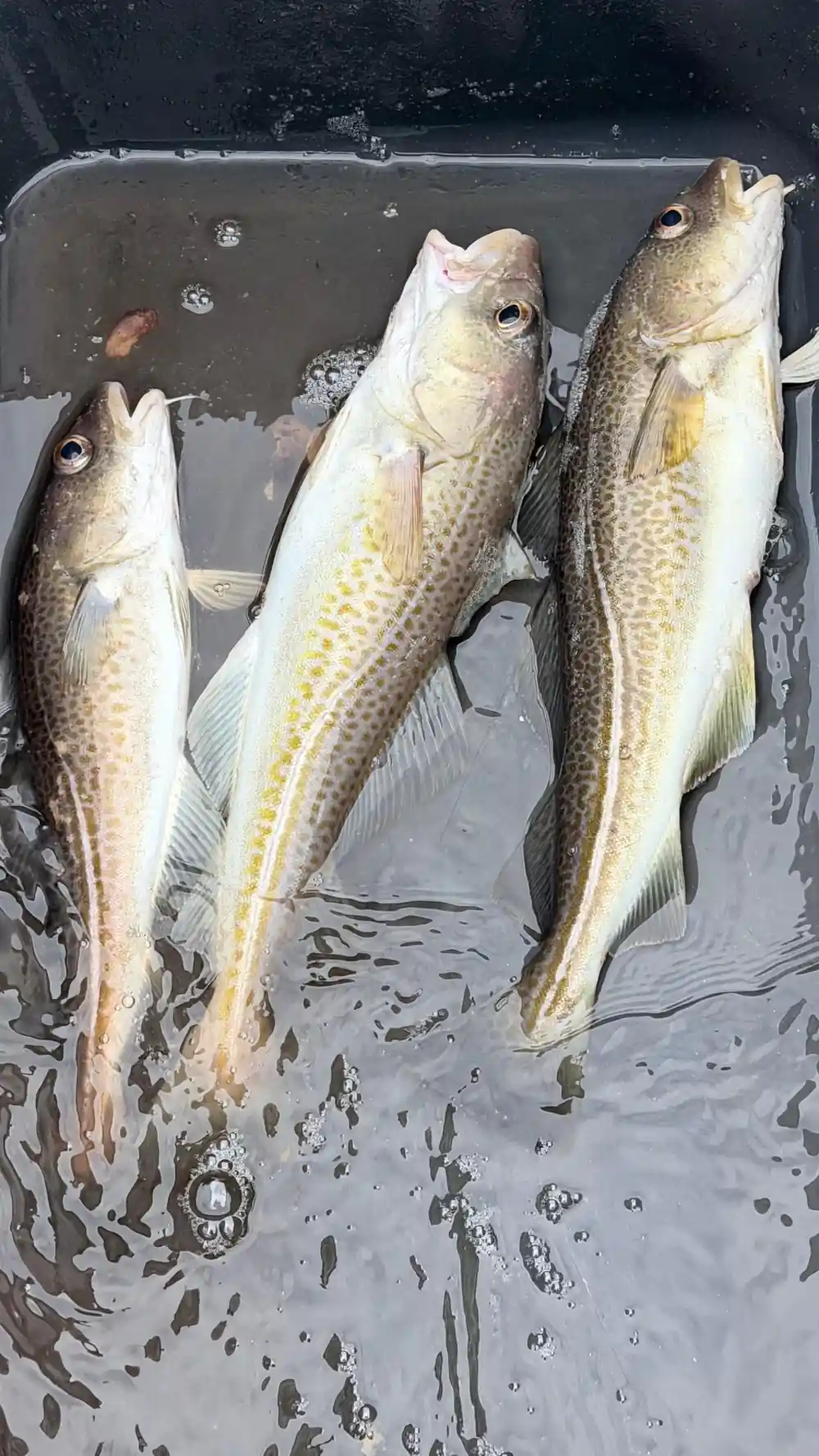
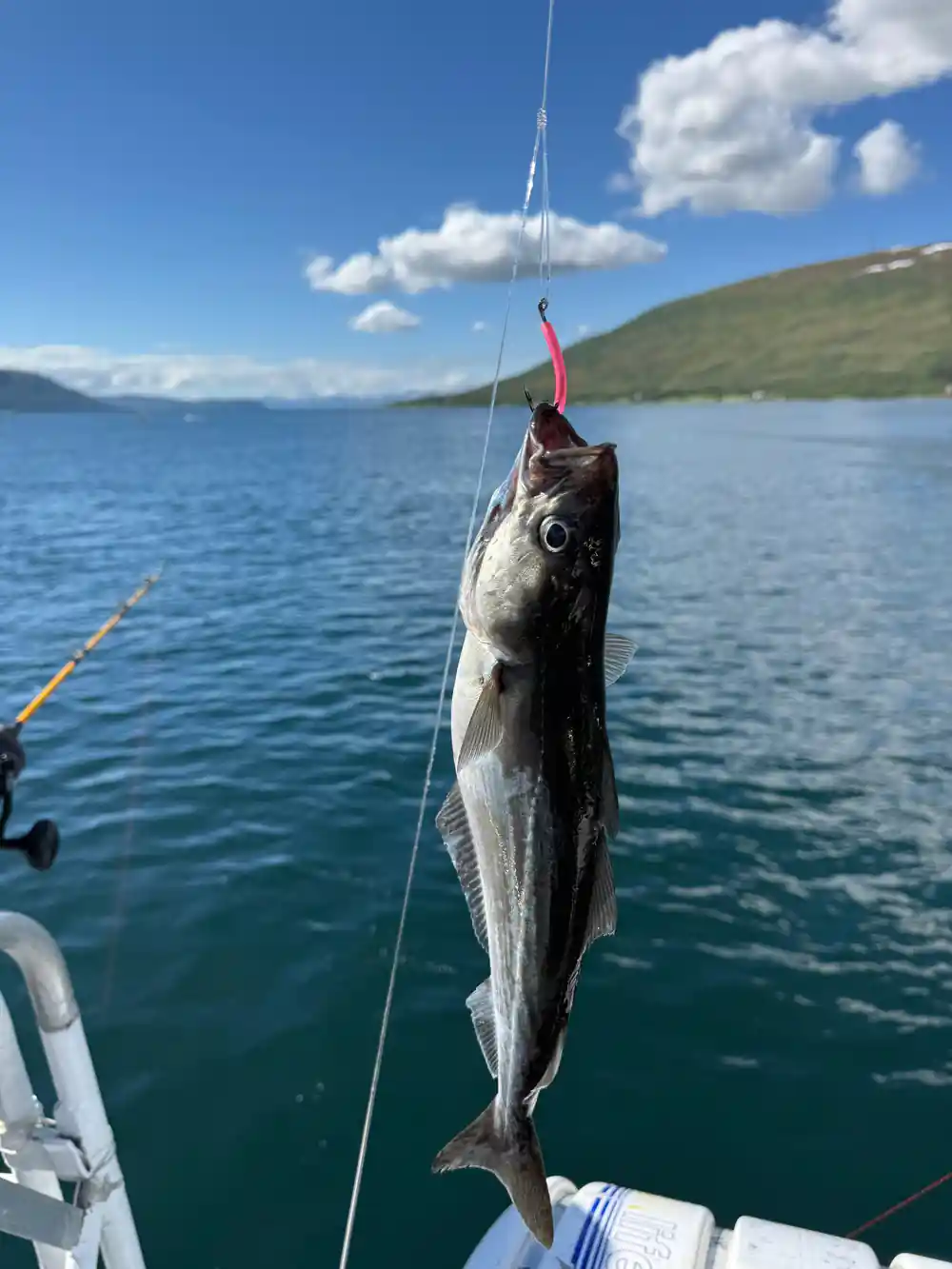
The cold, well oxygenated water here carries a mixed bag. Fish found in Norwegian fjords include coastal cod, saithe, pollack, haddock, herring, mackerel, and sprat.[2] Cod and saithe are the everyday catch on a short trip, greedy and not fussy, and a bait fished close to a rocky slope often produces something within minutes. Mackerel arrive with the warmer water and hit fast moving lures. What you meet on any single drift varies with depth, current and time of year, which is half the interest of it.
Above the water the fjord is busy too. Norway has 2,500 breeding pairs of white-tailed sea eagles, the largest breeding population in Europe, and they watch boats closely, sliding down to the surface when a fish goes back.[7] On the seabed, red king crabs in Norwegian waters rarely exceed 8 kg or 23 cm carapace length, and they turn up in pots rather than on a hook.[8] Herring is the fish that shapes everything here: in the 1950s and 1960s, the fishable component of the Norwegian spring-spawning herring stock is believed to have measured about 10 million metric tonnes.[9]
Depth and Duration of the Fishing Stop
The boat works sheltered, deep water rather than heading for the open sea. Lines go down over the rail, often a long way, with the fjord floor shelving steeply a short distance from shore. You do not need to judge depth yourself. The drift, the weight and the feel of the bottom do that work for you. A stop can be short and productive or long and quiet, and boats commonly move on when a spot goes cold.
The Arctic Fjord Cruise & Fishing Experience runs 4 - 5 hours, with stops listed at Ryøya and Ramfjorden and a live guide on board who speaks English.[1] Check availability when you book for the starting times on your date.[1] Much of that time goes on travelling along the fjord and taking in the view, with the fishing worked in along the way. Free cancellation is available up to 24 hours in advance for a full refund, and you can reserve now and pay later.[1]
from US$136
The Arctic Fjord Cruise & Fishing Experience runs 4 - 5 hours and carries a 4.72 rating from 5,096 reviews.[1]
Beginners and Children: Can They Catch Fish
Yes, and often on the first drop. Fjord fish are not shy, and the technique is a lift and a drop rather than a long cast. Children tend to enjoy the novelty and then discover the snacks, which is fine. A shorter rod and a lighter weight make things easier for small hands, and an adult standing close by keeps everyone safe near the rail. If the boat is rolling, sit low, look at the horizon and keep something plain in your stomach.
Cold is the real challenge, not skill. Layers, a hat, gloves and boots that grip a wet deck do more for a beginner's day than any tackle. Seasickness tablets are worth taking before you step aboard rather than after. A flask of something hot and a spare pair of gloves in a dry bag can rescue an afternoon. And if nothing bites for a while, the compensation is right there: mountains falling into dark water, sea eagles overhead, and the chance of something heavy taking the line just as you stop paying attention.
What Happens to Your Catch On Board
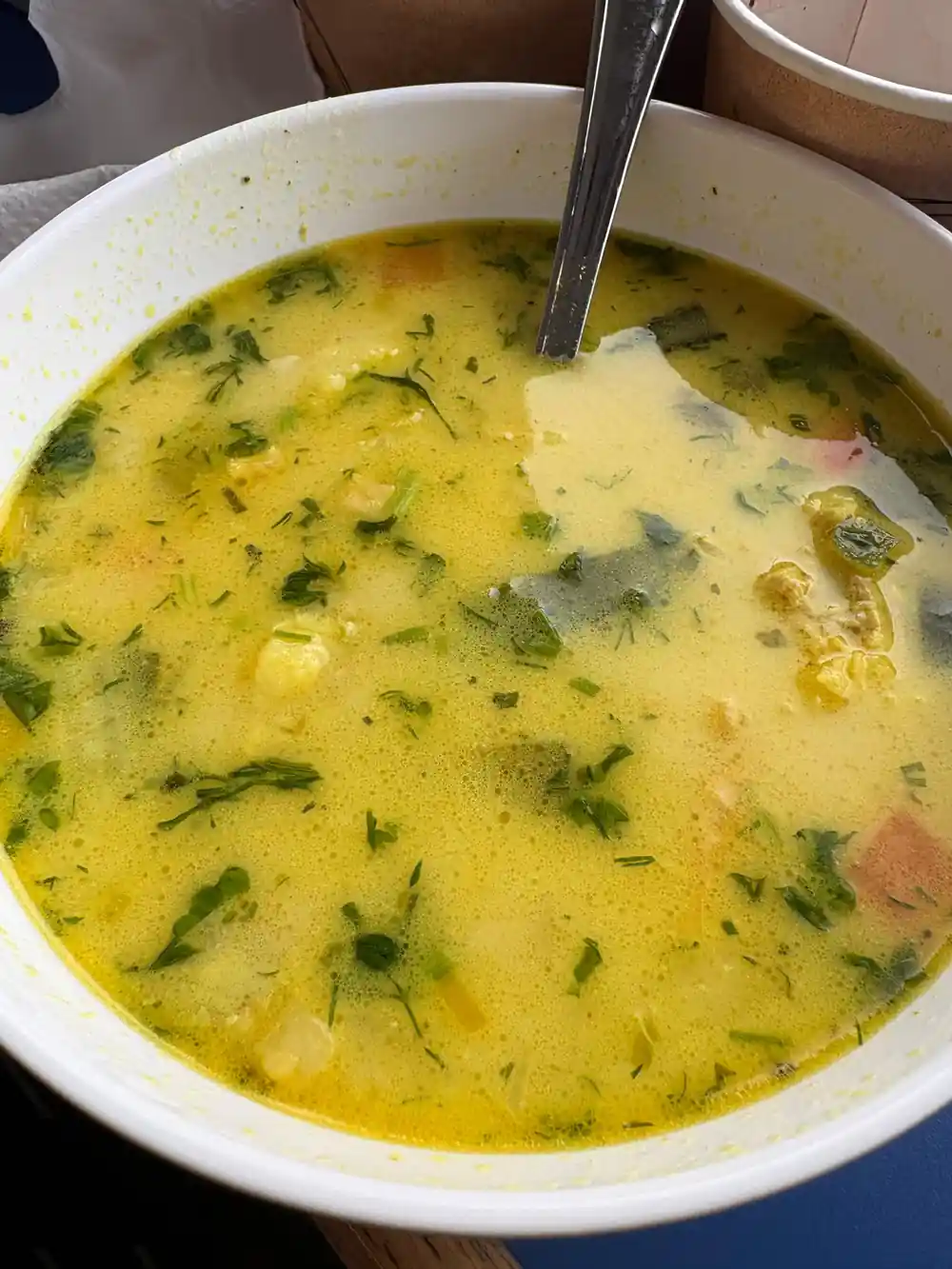
Practice differs from boat to boat and from season to season, and this is a good thing to ask about when you book. Some crews keep and fillet what is caught, some release most of it, and some cook a portion later in the day. Ask whether fish is kept, released or cooked, whether you can take any of it away with you, and whether anything served on board can be adapted for allergies or for people who do not eat fish.
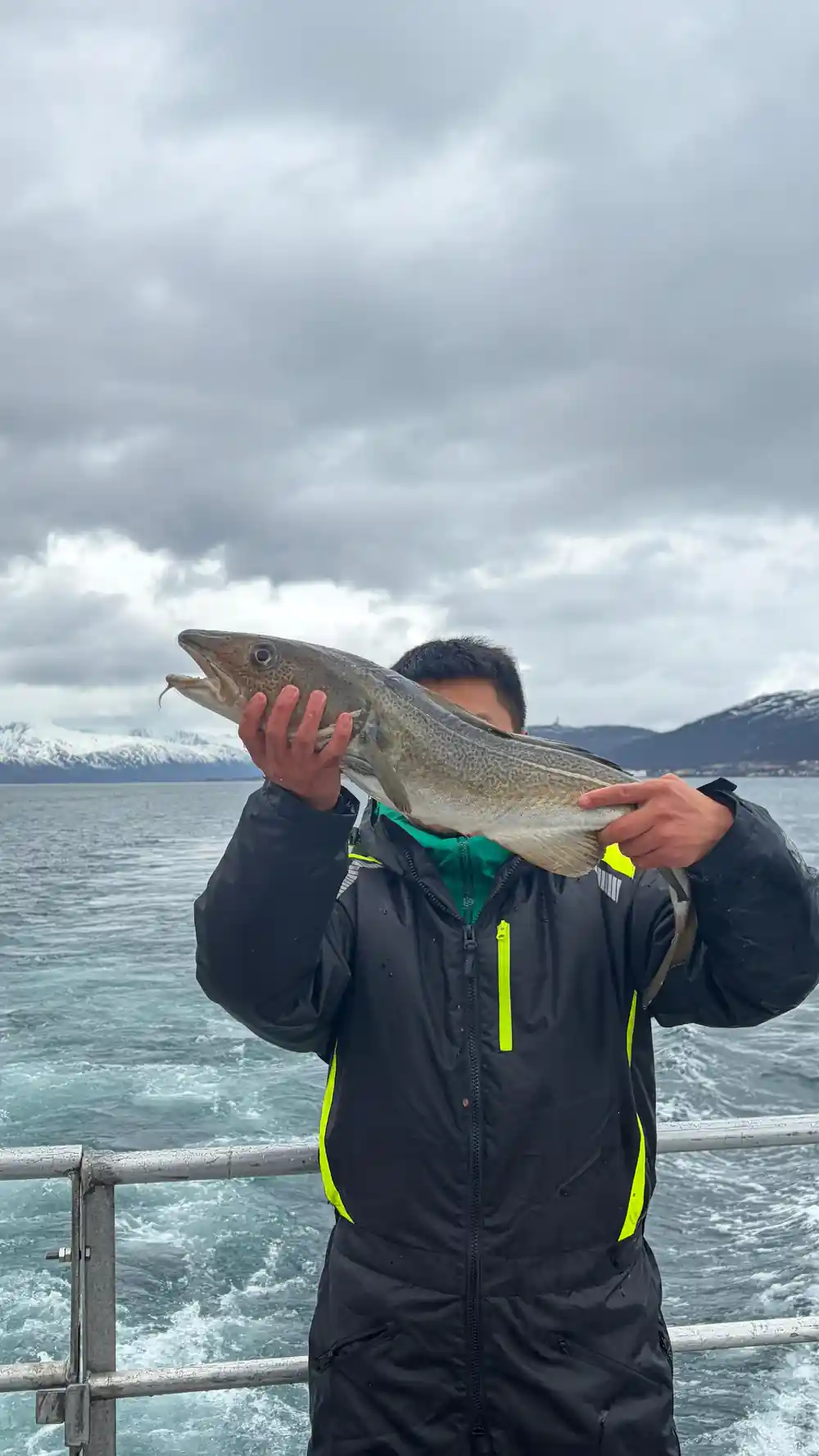
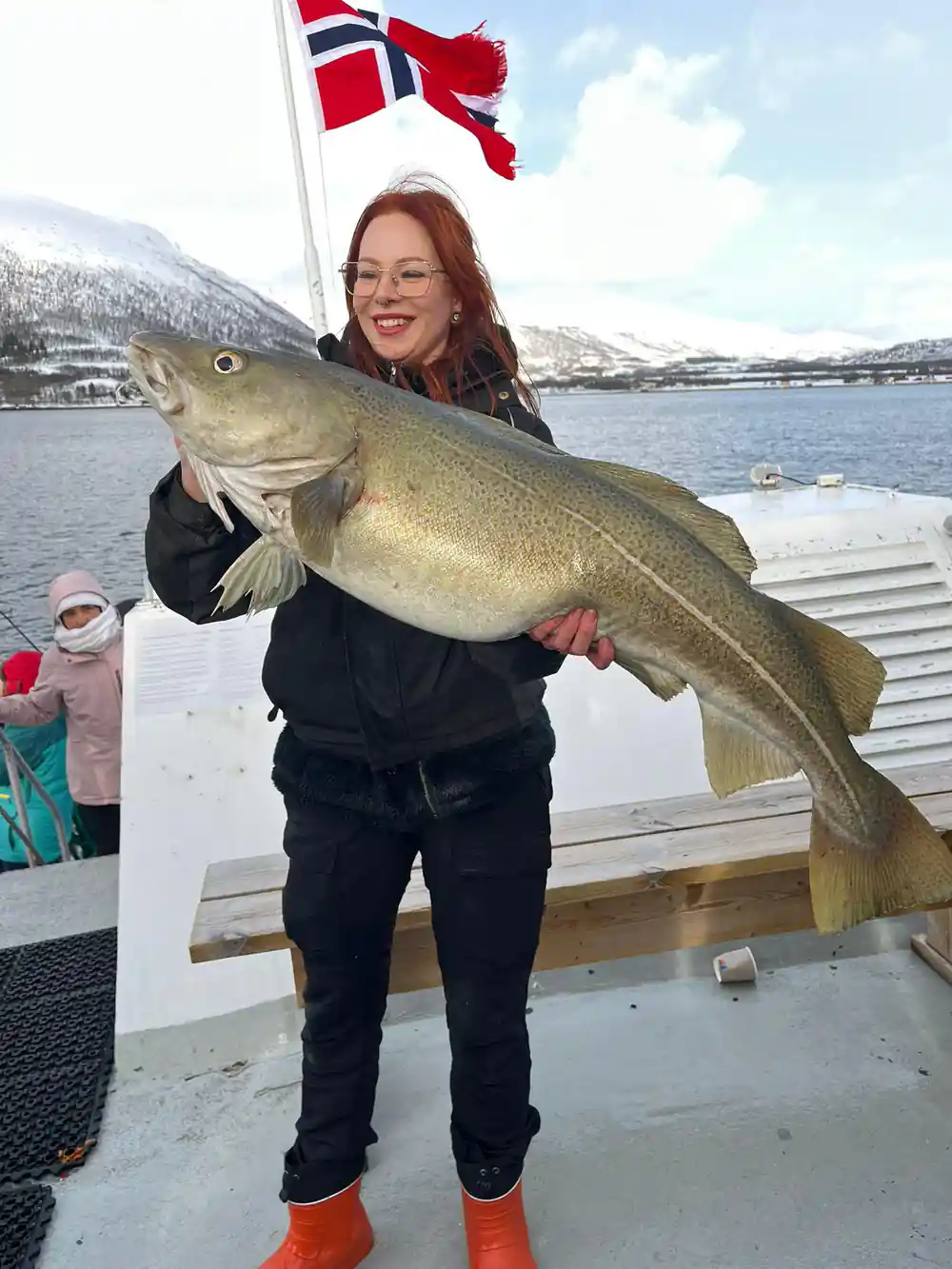
If you plan to keep a fish, handle it quickly and keep it cool. A wet cloth or a pair of gloves helps your grip, and a fish that is bled and chilled straight away tastes far better that evening. Photographs take ten seconds and are worth it, since a large cod or a bright mackerel against grey water is a fine picture. Then wash your hands, zip your jacket and get the line back down. The next drift may be the good one.
Seasonal Variation and Weather Considerations
Tromsø lies 217 miles north of the Arctic Circle and has a population of 75,638, and the light here swings hard through the year.[10] Tromsø has 61 days of polar night.[11] Average sea water around Tromsø reaches 5.2 C in winter and 10.5 C in summer.[3] In Tromsø, the average temperature of the coldest month, February, is -3.2 °C, and the warmest month, July, averages 12.5 °C.[4]
In January the statistical chance of seeing the aurora in Tromsø is at its highest, at 75-80%.[12] Orcas and humpbacks follow herring into the Tromsø and Skjervøy fjords roughly every November through January.[13] Fishing weather is mostly about wind and swell, and both can change within an hour. Dress for the water rather than the forecast: a waterproof outer layer, a warm mid layer, a hat that stays on in a breeze, and gloves you can still tie a knot in. The fjords give plenty of shelter when a breeze picks up, and in summer the light lasts long into the night while winter days stay dim.
Review counts for five Tromsø fjord tours
Review counts as listed for these Tromsø fjord tours.[1][5][6][14][15]
From-prices on the booking page
From-prices in US dollars for the tour booked from this site and three other Tromsø listings.[1][5][6][14]
When to book a Tromsø fjord fishing trip
Your time on the water
Meet at the harbour
Check availability for starting times on your date.[1] Meet the crew and get your bearings on deck before the ropes go.
Steam out into the fjord
The route lists stops at Ryøya and Ramfjorden, with mountains falling into dark water.[1] Cameras come out on this stretch.
Rods over the rail
Lines go down deep, and you feel the weight tap bottom before you lift and drop. Watch the line where it meets the water, not the horizon.
Learning the lift and drop
Beginners pick this up quickly: a slow lift of the rod tip, a pause, then let the weight fall back and wait for the tug.
Fish on, then back in
The trip runs 4 - 5 hours.[1] Land what bites, take a photo, and settle back in for another drift.
Fish a Tromsø fjord with a rod in your hand
from US$137Reserve now & pay later