At a glance
- The fjords around Tromsø, a city of 75,638 people that lies 217 miles north of the Arctic Circle.[1]
- Orcas and humpbacks follow herring into the Tromsø and Skjervøy fjords roughly every November through January.[2]
- Coastal cod, saithe, pollack, haddock, herring, mackerel and sprat are all found in Norwegian fjords.[3]
- Norway holds 2,500 breeding pairs of white-tailed sea eagles, the largest breeding population in Europe.[4]
- Average sea water around Tromsø runs 5.2 C in winter and 10.5 C in summer; February air averages -3.2 °C.[5][6]
- Top choice Fjord Cruise & Fishing from US$136 Rated4.72 from 5,096 reviews[7]Duration4 - 5 hours[7]Live guideLive tour guide: English[7]CancellationFree cancellation up to 24 hours ahead[7] Check availability
- Fishing Sea Safari from US$173 Rated4.85 from 721 reviews[8]Duration3.5 hours[8]Live guideLive tour guide: English[8]CancellationFree cancellation up to 24 hours ahead[8] See this tour
- Sommarøy Fjord Expedition from US$55 Rated4.73 from 5,005 reviews[9]Duration4.5 hours[9]Live guideLive tour guide: English, Spanish[9]CancellationFree cancellation up to 24 hours ahead[9] See this tour
However, since they received protected status, the population has grown and Norway is now home to the largest breeding population of white-tailed sea eagles in Europe, with 2,500 breeding pairs.
Is the fjord cruise and fishing trip worth it?
Read before booking
Why the Tromsø fjords are so full of life
Tromsø sits inside a web of sounds, straits and open fjord mouths, with shallow shelves dropping into deep channels a short boat ride from the harbour. Cold, clear, well-mixed water and strong tidal flow keep nutrients moving through the system all year. Average sea water temperature around Tromsø reaches 5.2 C in winter and rises to 10.5 C in summer, cold enough for Arctic species and mild enough, thanks to the tail of the Gulf Stream, to keep the fjords liquid.[5] The town lies 217 miles north of the Arctic Circle and has a population of 75,638.[1]
Fish found in Norwegian fjords include coastal cod, saithe, pollack, haddock, herring, mackerel, and sprat.[3] A shoal of small fish is a moving larder, and in these fjords the larder often sits within sight of land. A boat trip here is rarely a crossing of empty sea: you drift over shelves, drop-offs and current lines where birds and mammals concentrate. Look for the seam between two shades of water, the line of disturbed surface where tide meets rock, and the gulls working above a shoal. The cast of species changes with the season, but the structure of the place, shallow banks beside deep water, stays the same.
White-tailed sea eagles: the fjord's apex hunters
If there is one bird to hope for on a Tromsø fjord cruise, it is the white-tailed sea eagle. Norway has 2,500 breeding pairs, the largest breeding population in Europe.[4] They are not shy. A sea eagle will sit on a rock or a fish rack and watch a boat go by, then lift off with slow, heavy wingbeats, the white tail flashing as it turns. Scan the tops of small islands, the low skerries and any tall perch near a fish station. A big dark shape that does not flap like a gull is usually your bird.
Eagles are opportunists. They take fish and seabirds, and they also scavenge and rob other birds of a catch, working the same current lines and fishing grounds the boats use. A slow drift with the engine low often brings one overhead. Watch the water for a splash, then the sky above it. Keep a fast shutter speed ready, and keep your own food out of the spray; a bird that has learned to link boats with food can come startlingly close.
A white-tailed sea eagle scanning the surface for a meal
Orcas and humpbacks: whales of the winter fjords
Herring drives the winter. Whale season in Tromsø, Norway: orcas and humpbacks follow herring into the Tromsø and Skjervøy fjords roughly every November through January.[2] The runs were once enormous, and in the 1950s and 1960s the fishable component of the Norwegian spring-spawning herring stock is believed to have measured about 10 million metric tonnes.[10] Whale-watching boats run from Tromsø and from Skjervøy further north, and a good day on the water can bring both species within sight of the same boat.
January offers the highest statistical chance of seeing the aurora in Tromsø, with 75-80% success.[11] A winter visit can pair whale watching in the short daylight with aurora hunting after dark. Vessel design is changing as well: whisper-quiet electric and hybrid propulsion systems from Siemens Energy can cut vessel fuel consumption, emissions, and costs up to 90 percent.[12]
Whale watching etiquette matters here. Boats should approach slowly and let the animals choose the distance, and a whale that surfaces beside a stationary boat is worth more than a chase. If the herring are somewhere else that week, the fjord still has eagles, seals and mountain light to fill a day on the water.
Harbour porpoises and seals near the boat
Not every sighting is dramatic. Harbour porpoises are the small, round-headed cetaceans that surface with a soft puff and a quick roll of a triangular fin before they vanish. You often hear one before you see it. They tend to keep their distance from a moving boat; watch the flat water ahead and to the side rather than the wake. An Arctic seal is a colder-water speciality rather than a routine sighting, while the everyday seals around Tromsø are harbour and grey seals, which haul out on low skerries and watch a passing boat with one eye above the waterline.
A seal's curiosity has limits. Give hauled-out animals a wide berth, keep the engine steady and let them decide whether to stay. Pups are left on shore while adults feed, and a lone pup is rarely abandoned. Porpoises are harder to watch well: they rarely bow-ride, and a boat that changes speed or direction will lose them. Patience and a pair of binoculars beat chasing every splash.
from US$136
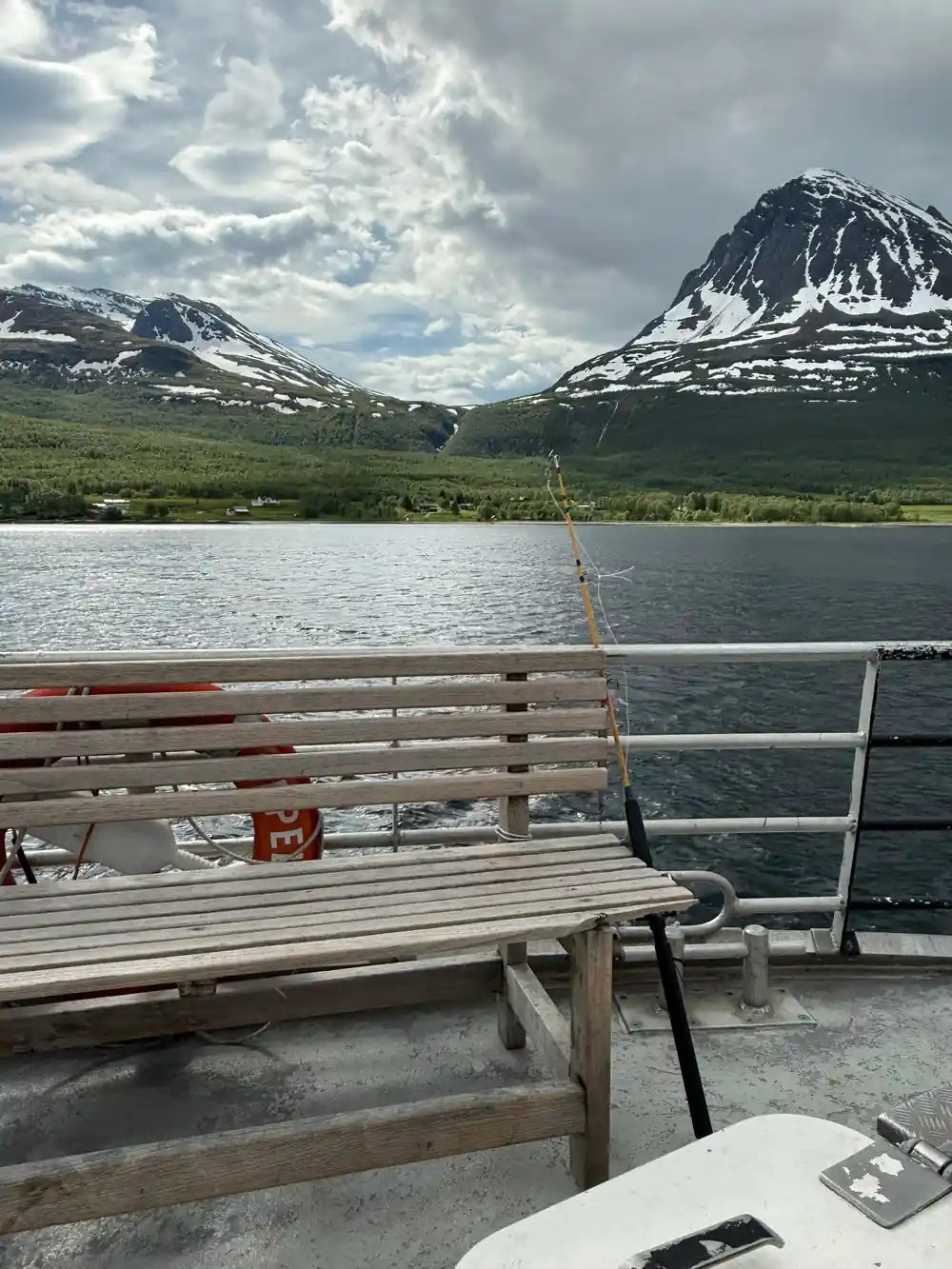
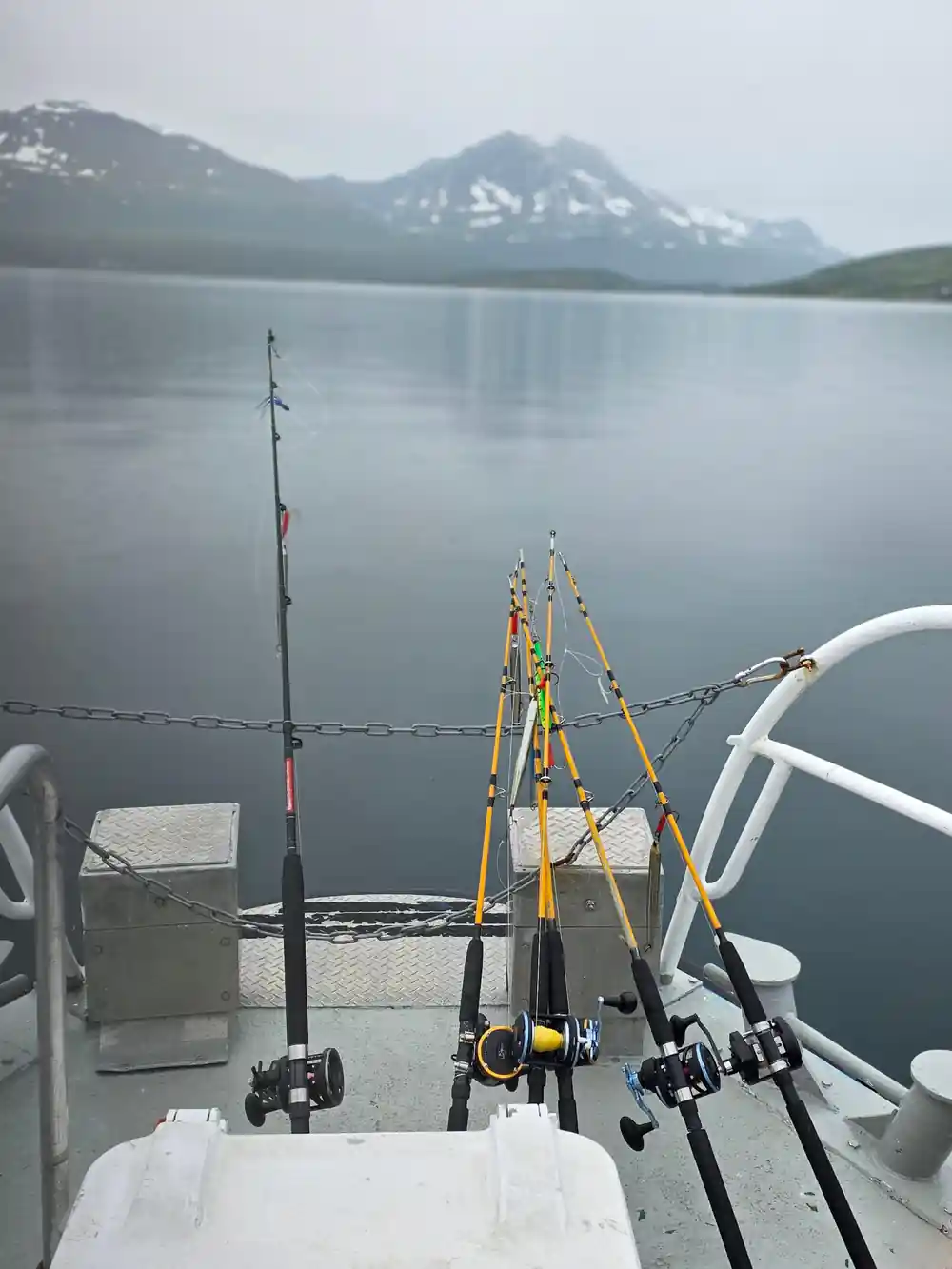
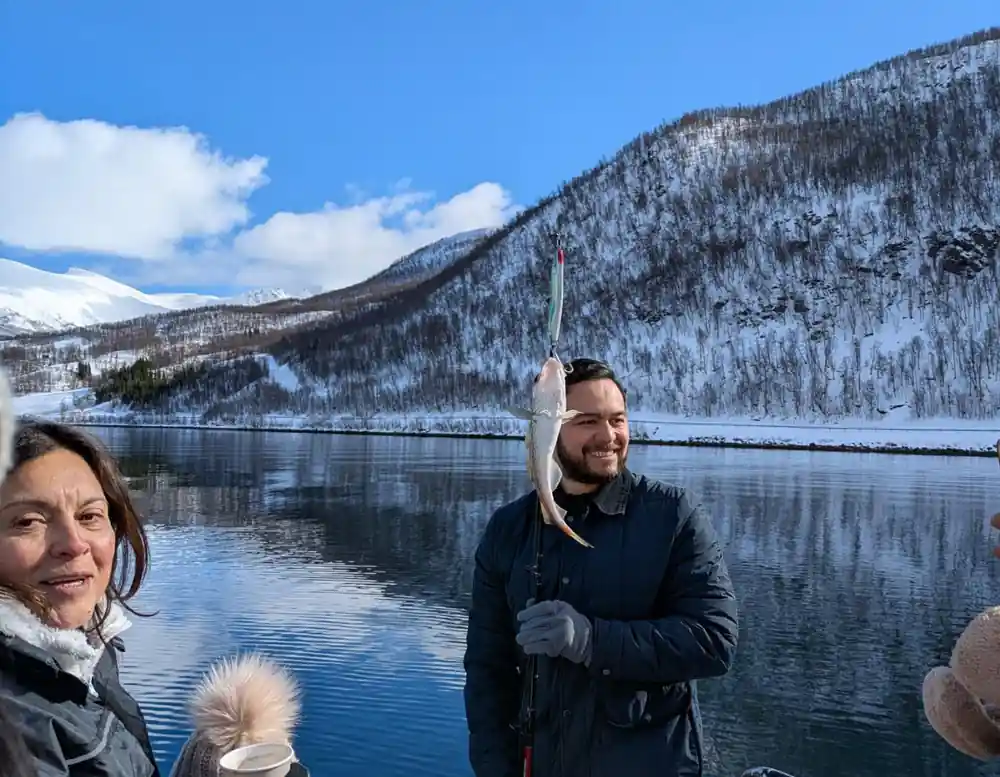
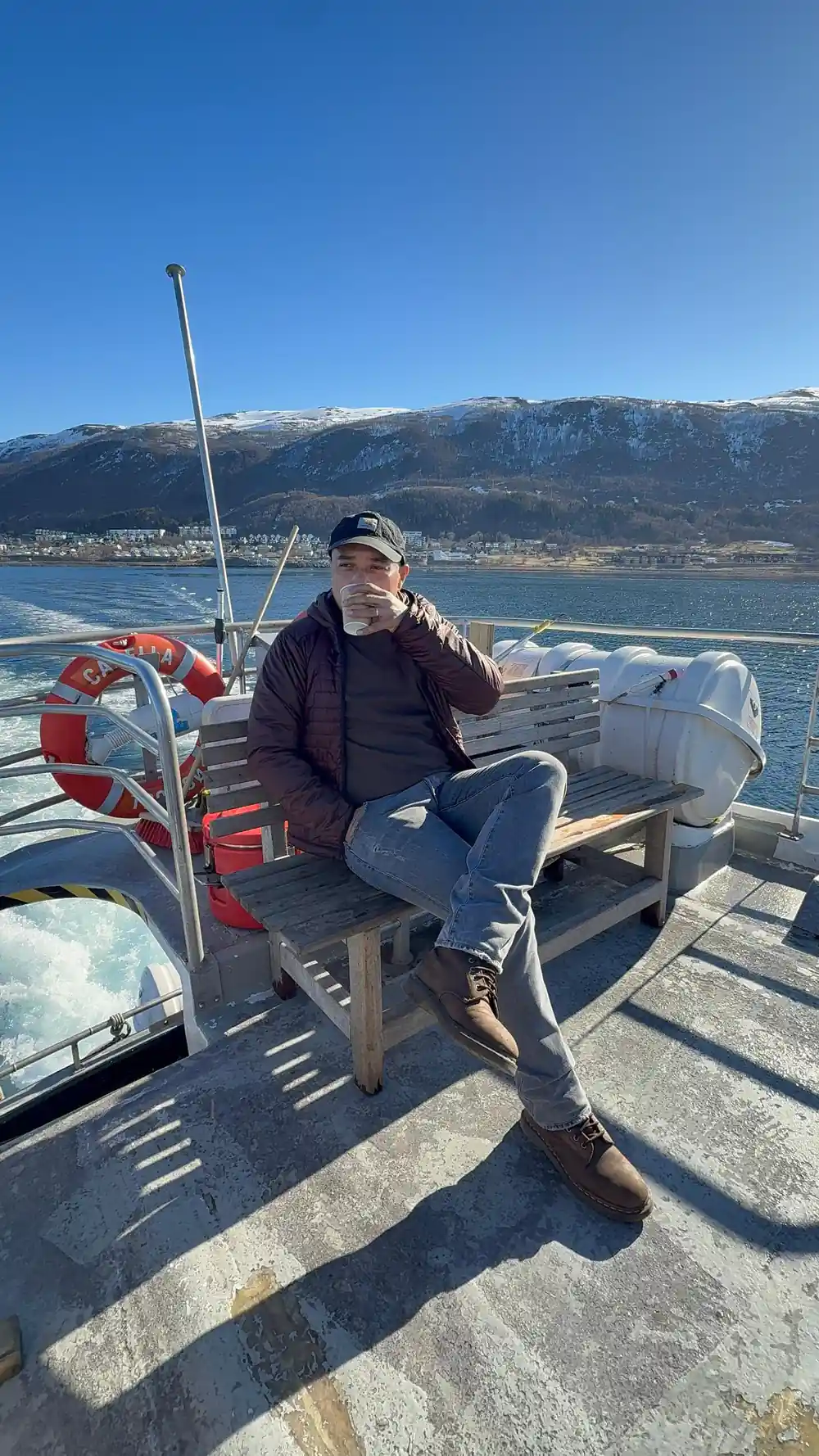
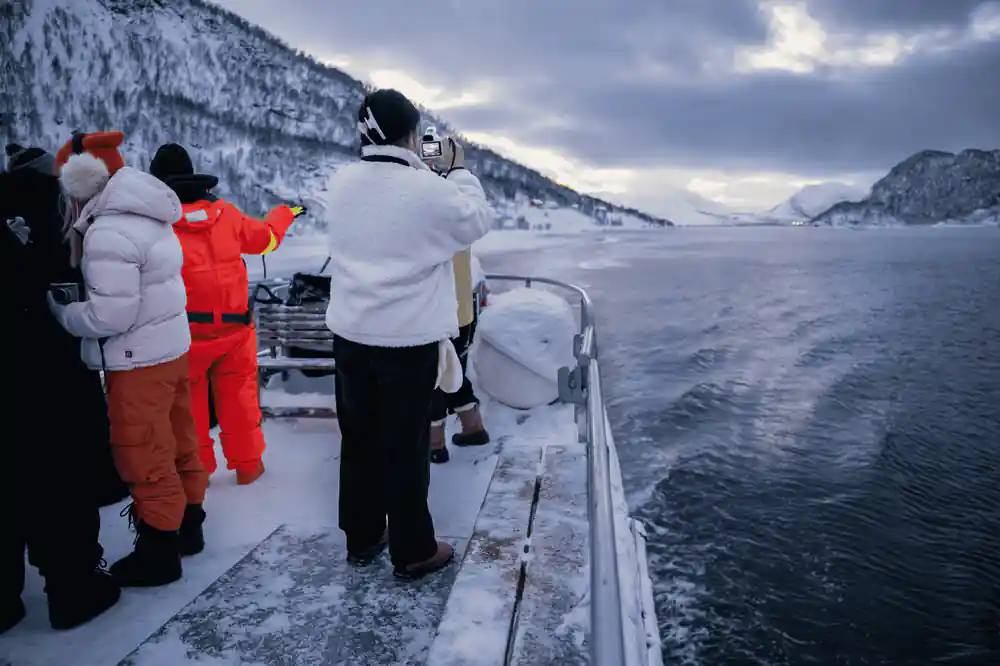
Arctic Fjord Cruise & Fishing Experience: 4 - 5 hours on the water with a live English guide, rated 4.72 from 5,096 reviews.[7]
Seabirds that follow the fishing boat
Birds find a boat quickly. Gulls, kittiwakes and cormorants appear within minutes, and an eagle may not be far behind if there is anything worth stealing. Arctic terns nest around the coast in summer, and the arctic tern migration carries them between northern breeding grounds and southern feeding grounds and back each year. Look for the small, fork-tailed birds hovering and diving over shallow water, and listen for the harsh, scraping calls that give a tern colony away.
Closer to shore you get black guillemots, eiders and rafts of ducks and gulls sitting on the tide lines. Sea eagles are the exception to all the noise: when one crosses the boat, everything else goes quiet for a moment. Binoculars turn a distant dot into a bird, and a drifting boat gives you plenty of time to use them. Watch too for the low, fast flight of a cormorant heading for a rock to dry its wings.
Feeding birds from the boat is not a kindness. Gulls that learn to expect food become aggressive, and dropped scraps pull birds into the water where they can be hurt. Watch, photograph, then let them go back to fishing for themselves.
Kelp forests and the life beneath the boat
Below the surface the fjord is not empty water. Kelp grows on rock in the shallows and shelters a busy community of crabs, urchins, starfish and small fish, with larger predators working the edges. In Norwegian waters, red king crabs rarely exceed 8 kg or 23 cm carapace length, and they walk the bottom rather than swim.[13] Drop a line near a kelp edge or over a sandy shelf and you find out what lives there. Fjord fishing is a patient, quiet business, and the catch is a bonus rather than the point.
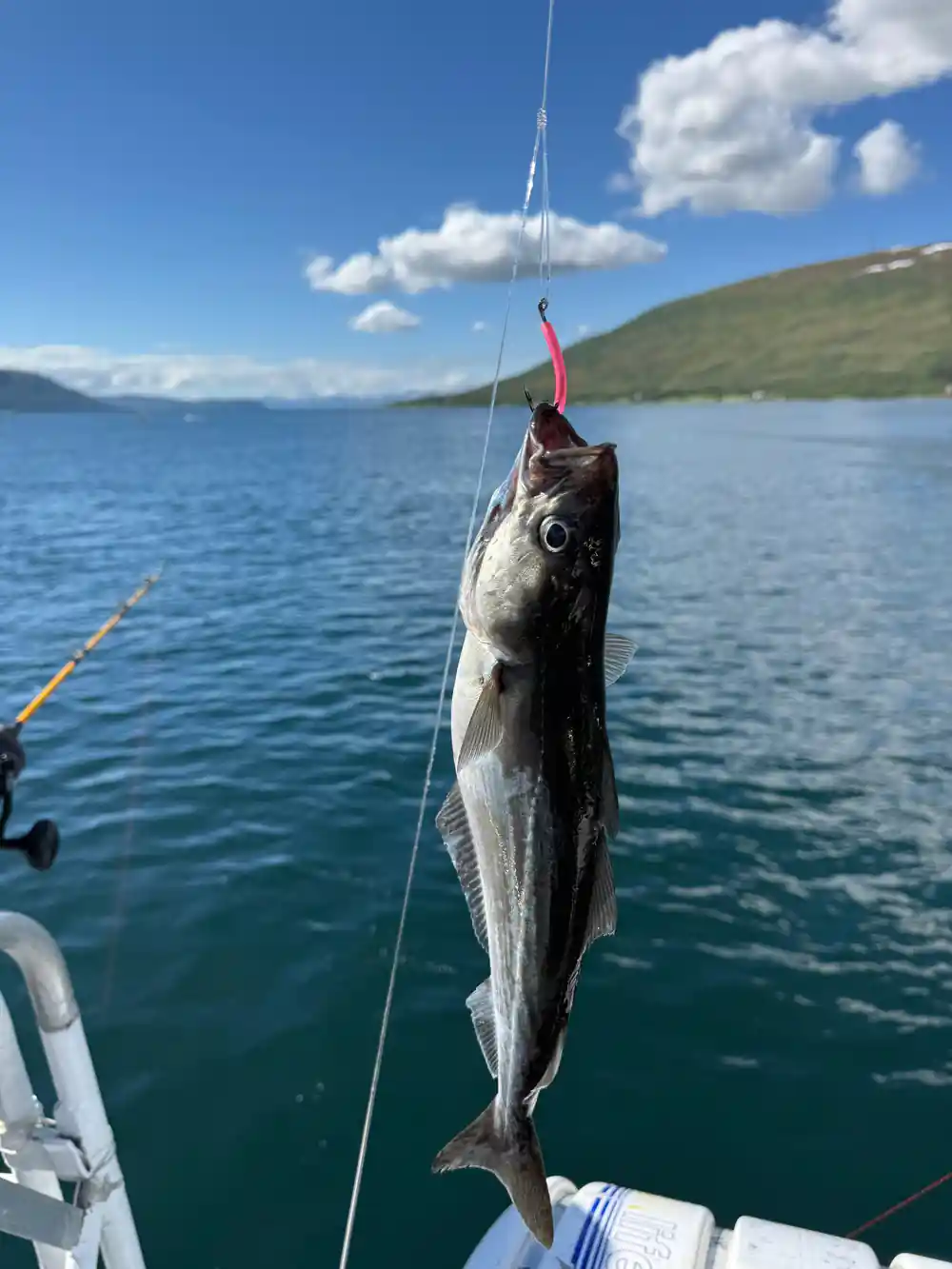
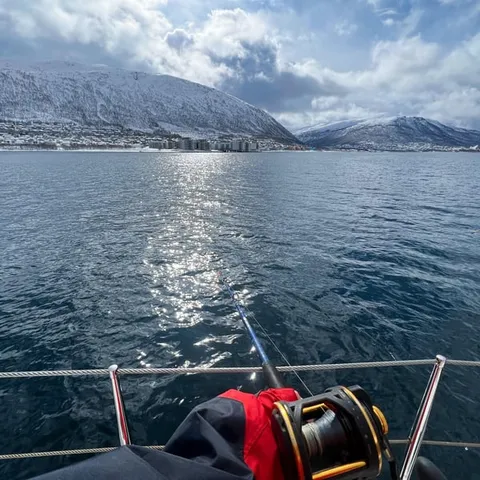
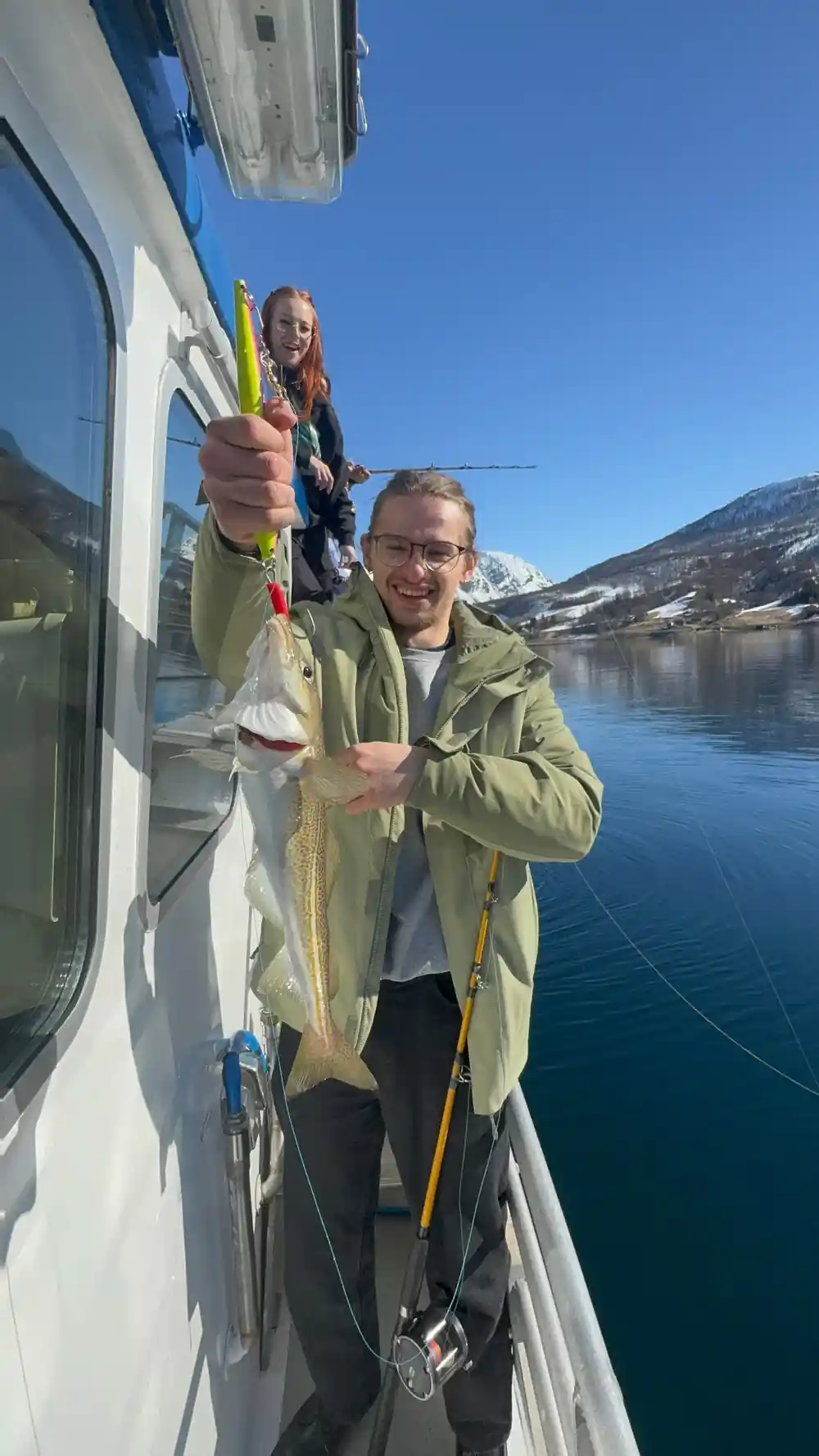
Fishing and wildlife watching share the same water and often the same hour. Lines down, engine off, boat drifting: that is when you notice the birdlife, the seals and the small movements at the surface. Ask your skipper what has been around that week; local knowledge moves with the tide and the season. Small boats have an advantage here, since you can hold position over a mark, cut the engine and let the drift do the work.
Shoreline wildlife and the land around the fjord
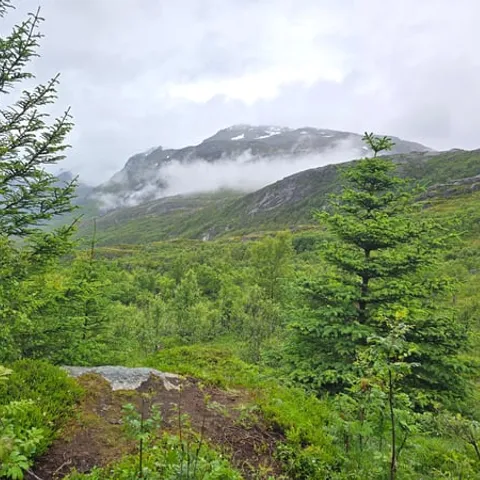
The land matters as much as the water. Tromsdalstinden, the big mountain visible across the bridge from downtown Tromsø, has a summit elevation of 1,238 m, and the fjord walls around Kvaløya and Sommarøy rise steeply enough to shape where snow lies and where birds nest.[14] On shore, look for reindeer grazing on open slopes, otters working the tideline and the occasional arctic fox on higher ground. These are glimpses rather than certainties, and that is part of the appeal.
A good skipper will slow near a skerry or a fish station so you can watch from the deck. Stay on marked paths on any shore stop, keep dogs away from nesting birds, and never push towards a seal haul-out or a reindeer herd. Winter is genuinely cold: in Tromsø the average temperature in February, the coldest month, is -3.2 °C.[6] Layers, a windproof shell, a hat and gloves are the difference between a happy few hours and a miserable one.
From prices for four Tromsø fjord and fishing tours
From prices for four Tromsø listings, exactly as shown on each GetYourGuide page; check each listing for what is included.[7][8][9][15]
What a fjord day costs, from prices in US dollars
From prices in US dollars for the tours above, as listed. Child prices are not shown on these listings.[7][8][9][15]
When to go for what you want to see
Plan a fjord wildlife day
Check the season first
Match your dates to what you want to see. Whales are a winter story and January has the best aurora odds.[2][11]
Pick the boat you want
The Arctic Fjord Cruise & Fishing Experience combines both and runs 4 - 5 hours.[7]
Layer up properly
Bring windproof layers, a hat and gloves. February air averages -3.2 °C and winter sea water averages 5.2 C.[5][6]
Watch the edges
Scan rocky skerries and island tops for a big dark shape with a white tail. Norway has 2,500 breeding pairs of sea eagles.[4]
Leave wildlife alone
Keep distance, stay quiet and never feed the birds. A calm boat and a patient passenger see far more.
Ride out into the fjord with a rod in your hand and eagles overhead
from US$137Reserve now & pay later