At a glance
- The Arctic Fjord Cruise & Fishing Experience runs 4 to 5 hours and is rated 4.72 from 5,096 reviews, from US$136.[1]
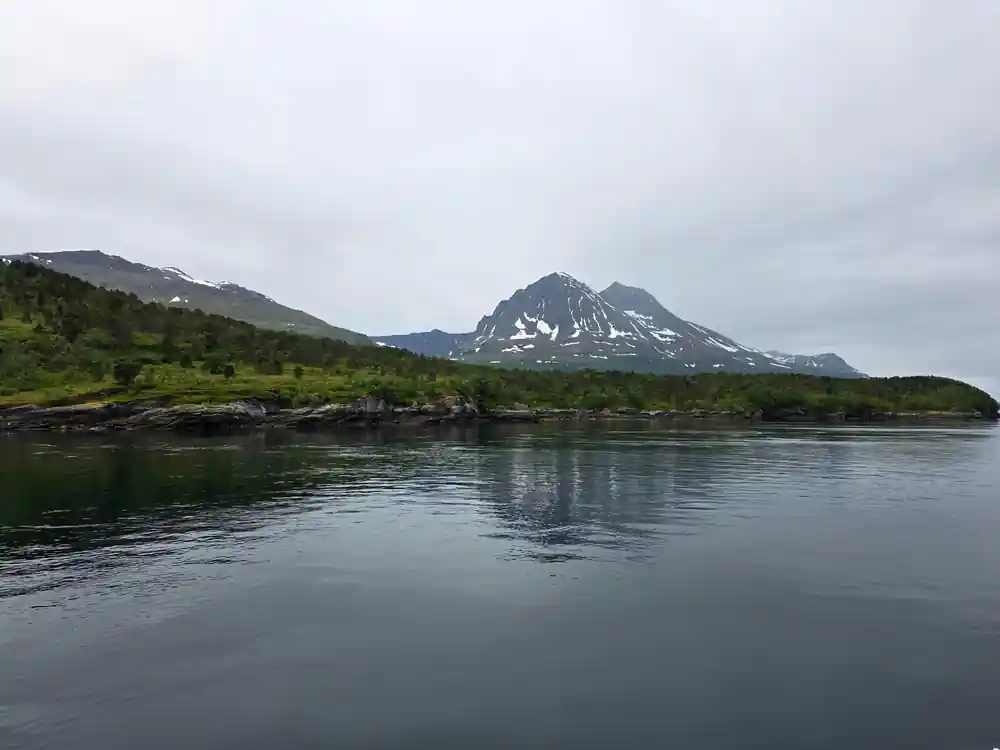
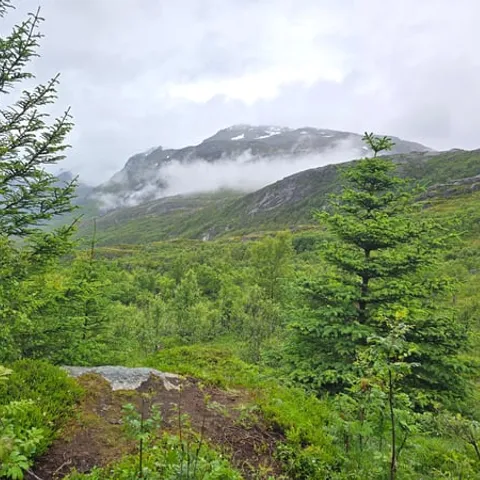
- The route has stops at Ryøya and Ramfjorden, past working harbours, open water and snow-covered peaks.[1]
- Ask what Tromsø is famous for and the answers come back the same: polar expeditions, dried fish, and a harbour that has never stopped working.
- Norwegian fjords hold coastal cod, saithe, pollack, haddock, herring, mackerel and sprat, which is a long list for a fishing trip.[2]
- January offers the highest statistical chance of aurora at 75-80 percent, February averages -3.2 °C and summer sea water reaches 10.5 C.[3][4][5]
- Top choice Fjord Cruise & Fishing from US$136 Duration4 to 5 hours[1]Rating4.72 from 5,096 reviews[1]GuideLive guide: English[1]CancellationFree up to 24 hours before[1] Check availability
- Sommarøy Fjord Expedition from US$55 Duration4.5 hours[6]Rating4.73 from 5,005 reviews[6]GuideLive guide: English, Spanish[6]CancellationFree cancellation up to 24h[6] See this tour
- Polar Landscape Cruise from US$121 Duration3.5 hours[7]Rating4.68 from 1,959 reviews[7]GuideLive guide: English, Norwegian[7]CancellationFree cancellation up to 24h[7] See this tour
During this period, the fishable component of the Norwegian spring-spawning herring stock is believed to have measured about 10 million metric tonnes.
Verdict: fish where the cod built a town
Read before booking
On the day
- Sunglasses help: low sun bouncing off snow and water is bright.
- Layer up. February averages -3.2 °C, and the sea breeze adds bite.[4]
- Keep your footing on a moving deck and take the safety briefing seriously.
- Keep your booking confirmation on your phone for boarding.
The Skrei: Arctic Cod That Built an Empire
Every winter, cod leave the Barents Sea and swim south to spawn in the shallow coastal water, and the fish that arrive off northern Norway are known as skrei. They were the reason small harbours along the fjords grew into trading posts, and why boats went out in weather that would keep most people indoors. A winter season on the skrei grounds was cold, wet and often dangerous, but it paid.
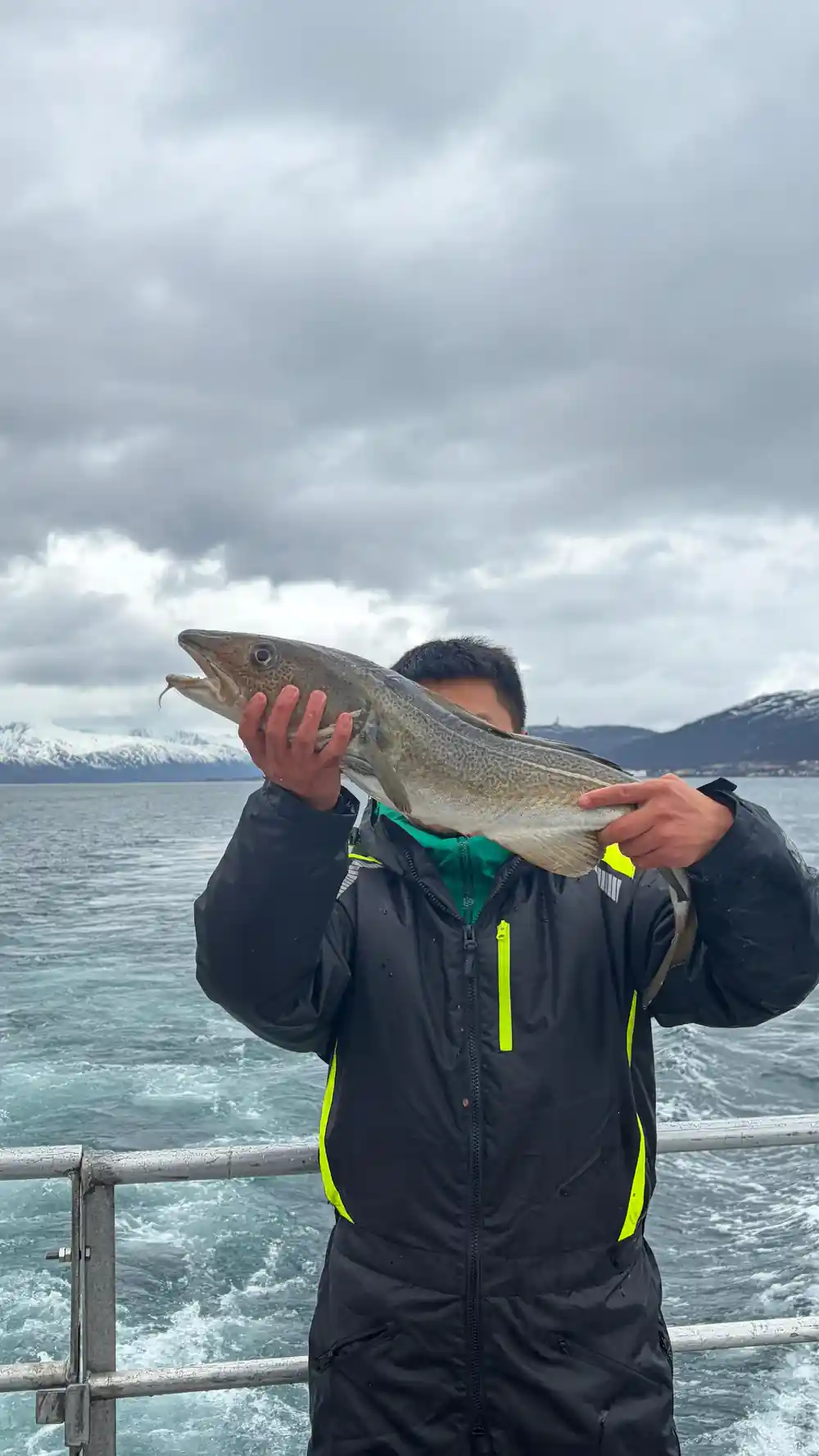
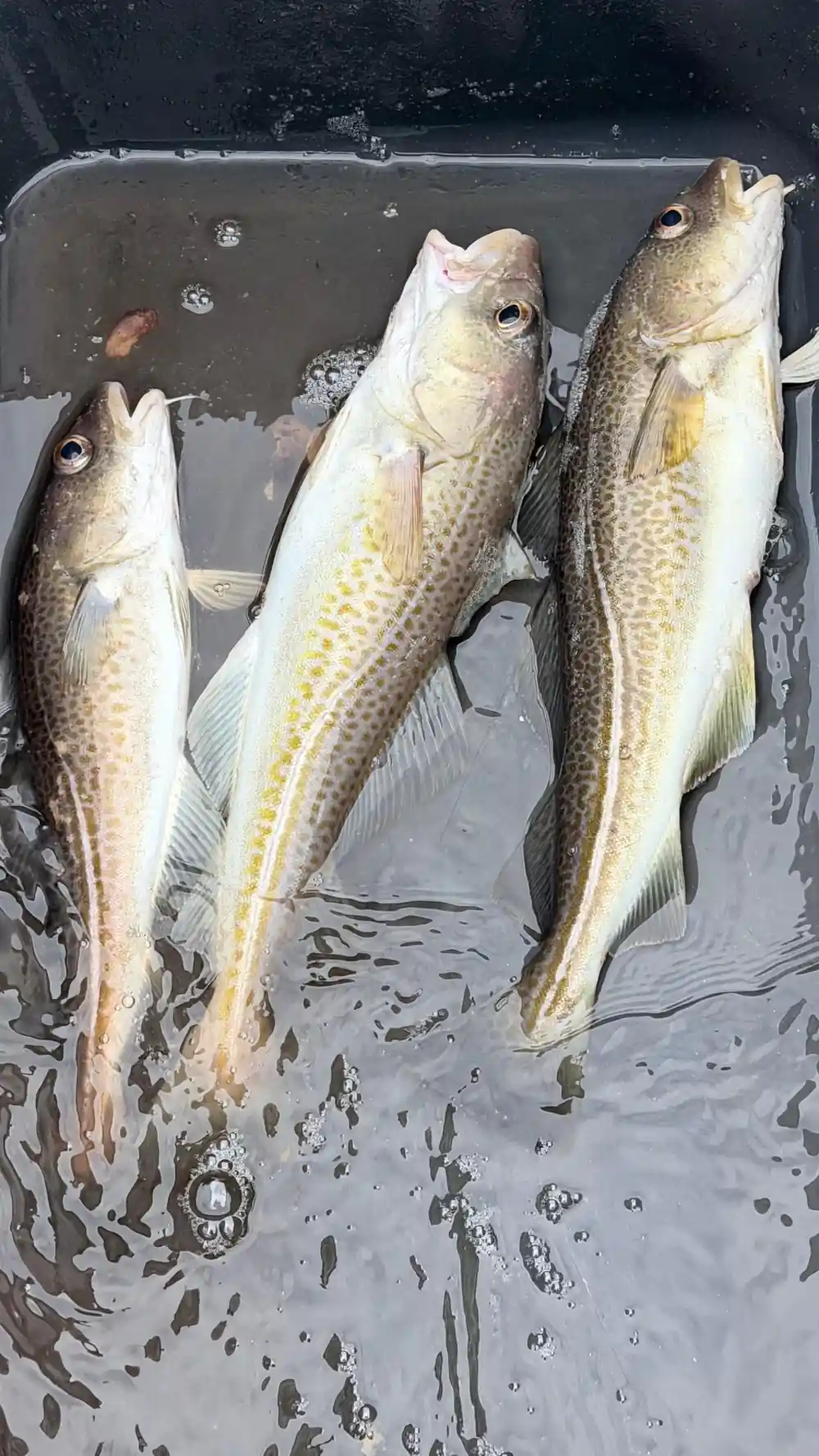
The fjords around Tromsø still hold a broad mix of fish. Coastal cod, saithe, pollack, haddock, herring, mackerel and sprat are all found in Norwegian fjords.[2] Water temperature shapes what bites and when: around Tromsø the sea averages 5.2 C in winter and 10.5 C in summer.[5] A fishing cruise here is not a novelty trip. You are casting into the same cold, clear water that fed the old harbours, with the mountains standing straight up behind you and the line running down into the dark.
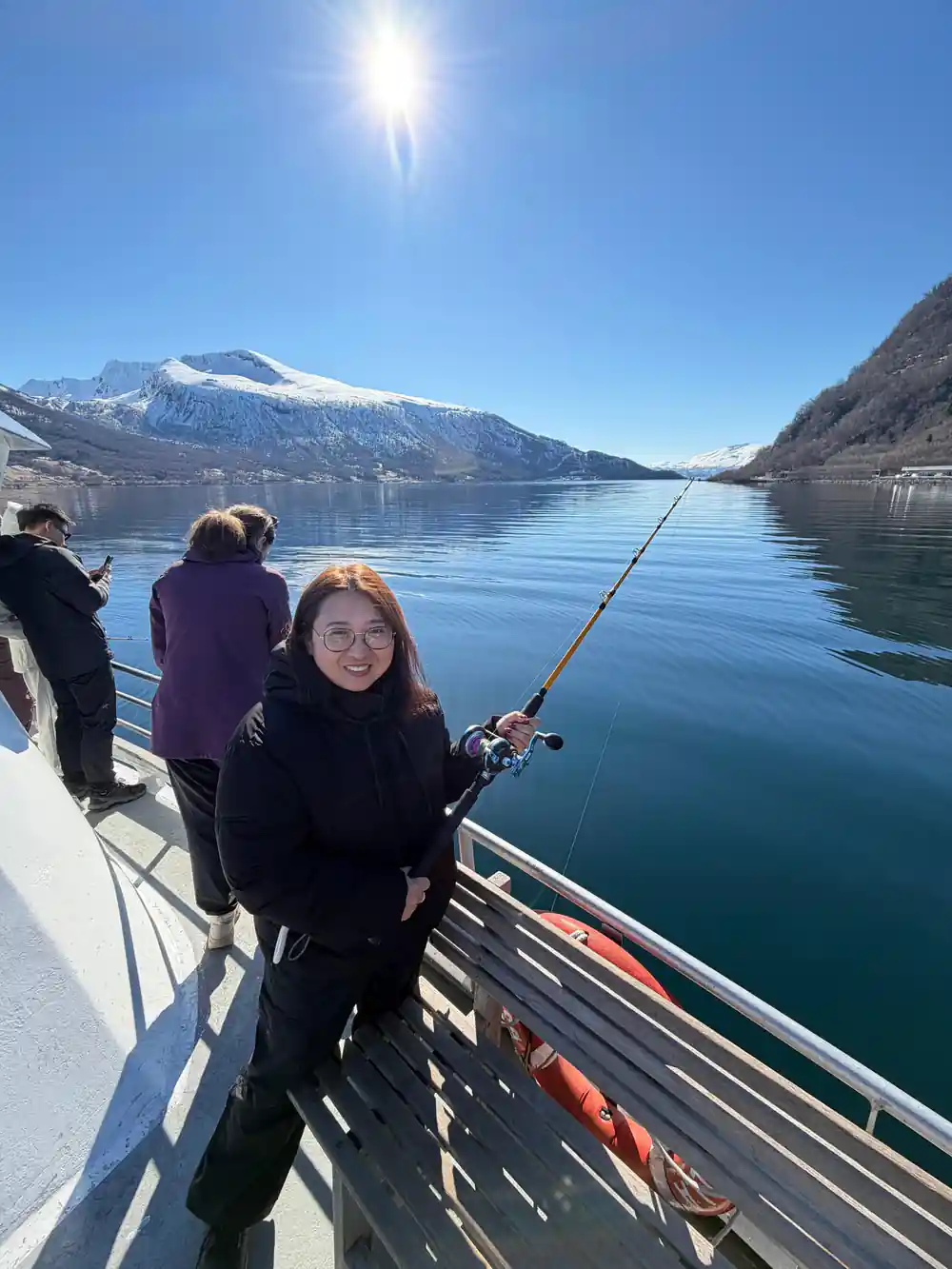
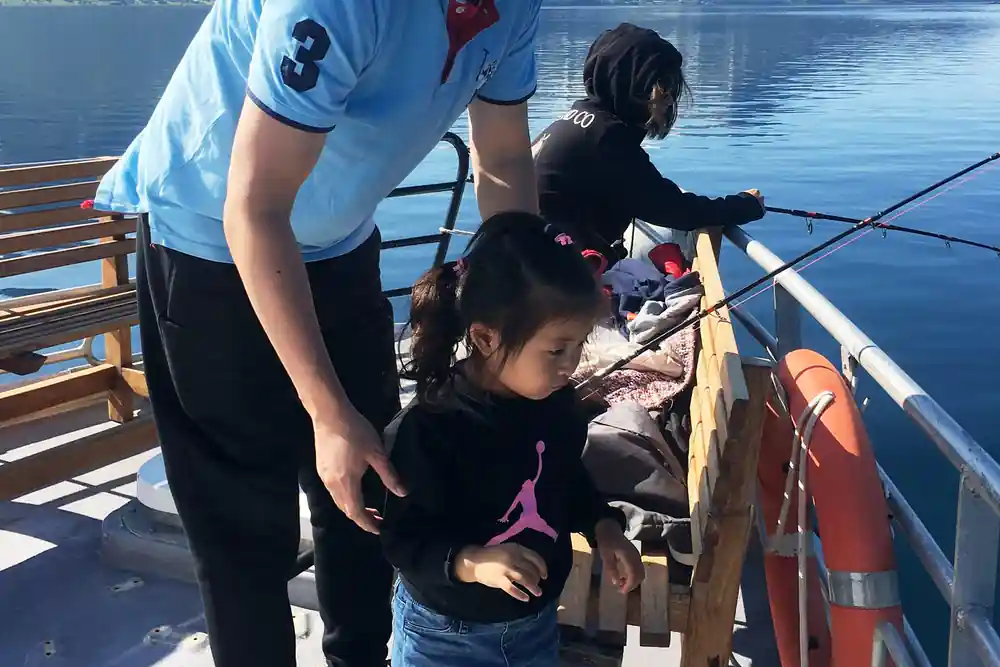
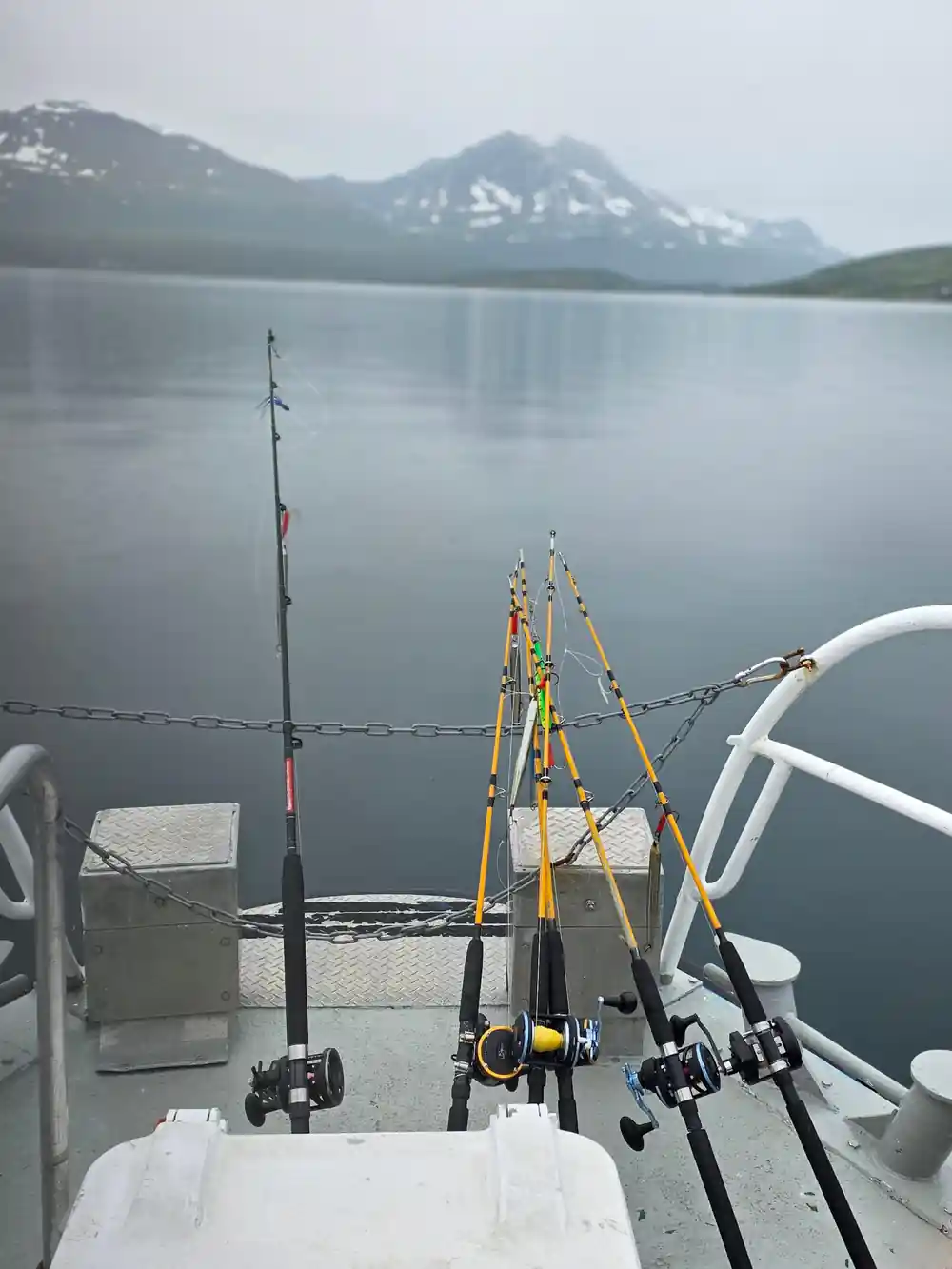
Fishing from a boat in a fjord is not complicated. You drop a lure or a baited line, let it sink to the depth the skipper calls, and lift and drop in a slow rhythm. Cod and saithe hit hard and pull well on light tackle. Even a modest fish feels substantial in deep, cold water, and the first one usually decides whether you spend the rest of the trip with a rod in your hand or a camera.
Stockfish: The Art of Preservation Without Salt
North Norwegian families dried cod on wooden racks, and the cold, windy air did the work that salt does elsewhere. Fish hung in pairs over the hjell through late winter and spring, losing water, gaining flavour and turning hard as boards. The product travelled south by sea, first to Bergen and then to markets far beyond Norway, and it turned a lean coast into a trading one.
Herring wrote a bigger and more volatile chapter. In the 1950s and 1960s, the fishable component of the Norwegian spring-spawning herring stock is believed to have measured about 10 million metric tonnes.[8] Boats followed the shoals, whole districts emptied into the fishery, and the sea gave and then took away. Standing on a fjord deck today, with a jigging rod in your hands, it is easy to picture the fleets that once worked this water.
You still see the empty racks in spring, bare frames on the headlands waiting for another season, and in town the dried fish is sold by weight in vacuum packs. It is a strange thing to eat at first, chewy and deeply marine, and it is best torn into strips with a little salt and butter. Buy a small piece and try it; you will understand the trade that paid for half the houses you walk past.
Empty drying racks on a northern headland, waiting for the next spring season.
Polar Explorers and the Gateway to the Arctic
Tromsø sits 217 miles north of the Arctic Circle and has a population of 75,638.[9] Its harbour was a fitting-out point for ships heading into the ice, where crews took on coal, food, dogs and clothing and tested gear in conditions much like the ones ahead. Walk the waterfront and the geography explains itself: deep water close to shore, shelter from the open sea, and mountains that give a ship's crew something to steer by.
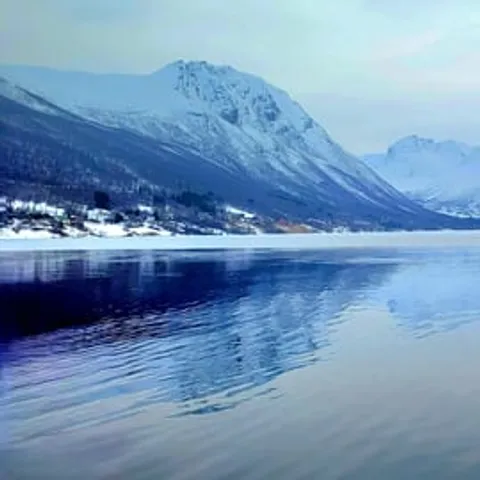
Winter here is not a short dark spell. Tromsø claims 61 days of polar night.[10] February is the coldest month, with an average temperature of -3.2 °C.[4] January offers the highest statistical chance of seeing the aurora, at 75-80 percent.[3] For a traveller, that shapes what goes in the bag: thermal layers, a windproof shell and boots that stay dry, whether you come for the lights, the fishing or both.
A practical note. The polar night is not black around the clock in the way people imagine. There is a long blue twilight in the middle of the day, snow holds what light there is and throws it back, and the town keeps working. Bring a head torch for the walk back to your room, and keep spare camera batteries warm inside a jacket pocket.
Fjord Boats Built for Harsh Northern Waters
The small Norwegian fishing boat, the sjark, is short, beamy and built to bob rather than slice. A high bow, a deep cockpit and a wheelhouse pushed forward leave room to work lines at the stern, and the hull copes with steep chop when wind runs against tide. Modern versions are still working boats: sturdy, unglamorous and made to come home.
The machinery under the deck has changed more than the hull. Whisper-quiet electric and hybrid propulsion systems can cut a vessel's fuel consumption, emissions and costs by up to 90 percent.[11] From the water you also read the landscape. Tromsdalstinden, the mountain that stands across the bridge from downtown Tromsø, has a summit of 1,238 m, and on a clear day it pulls the eye away from every rod on board.[12]
Working boats here still leave early and come back with the tide. Watch how a skipper reads the water ahead, easing off where the chop steepens and turning into the lee of a headland. Those small decisions, repeated over a lifetime, are the real heritage of a coast like this, and they are easiest to see from a deck with a rod in your hand.
from US$136
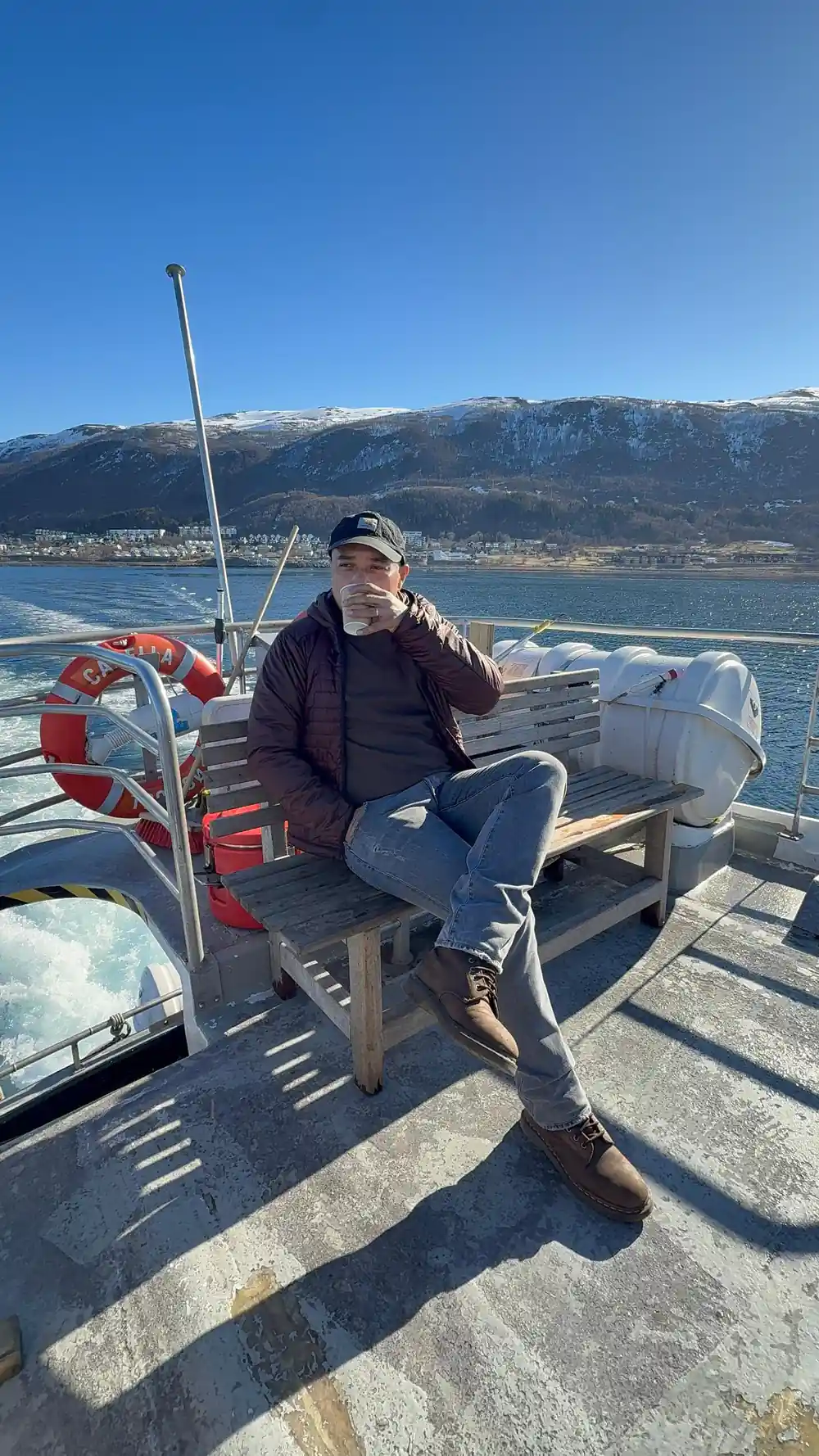
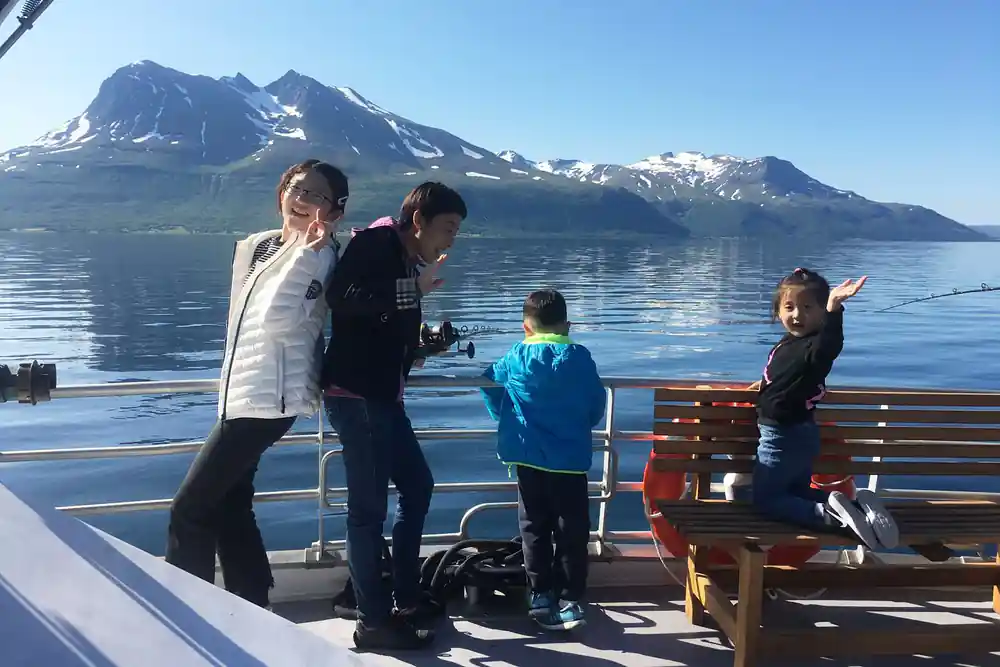
The Arctic Fjord Cruise & Fishing Experience runs 4 to 5 hours out of Tromsø, with stops at Ryøya and Ramfjorden.[1]
Sami Coastal Traditions and Arctic Seafaring
Sami communities along the coast fished, kept small animals and moved with the seasons, and the sea was part of that pattern alongside reindeer herding further inland. Boats, nets and drying racks were made by hand and repaired by hand. Knowledge of ice, current and weather came from watching, season after season, and it passed from one generation to the next by word of mouth rather than in writing.
That knowledge still shows in small ways. People here read a shoreline the way others read a street map: where the current pulls, where the birds are working, where a boat can safely sit. Coastal Sami culture is part of Tromsø too, in place names, food, craft and language, and it is worth looking for rather than passing through.
For visitors, the respectful version of this is simple. Buy from local makers, ask before you photograph people, and treat the harbour as a workplace rather than a set. In Tromsø the sea is not a backdrop. It is the reason the town stands where it does.
Arctic Hunters and Sealers: A Wider Arctic Economy
Sealing and Arctic hunting once sent ships and crews from northern Norway into the ice for months at a time, and both the profits and the losses landed back in these harbours. The trade faded and the coast turned to other catches. One of them is the red king crab, a species that now supports a fishery of its own. In Norwegian waters, red king crabs rarely exceed 8 kg or 23 cm carapace length.[13]
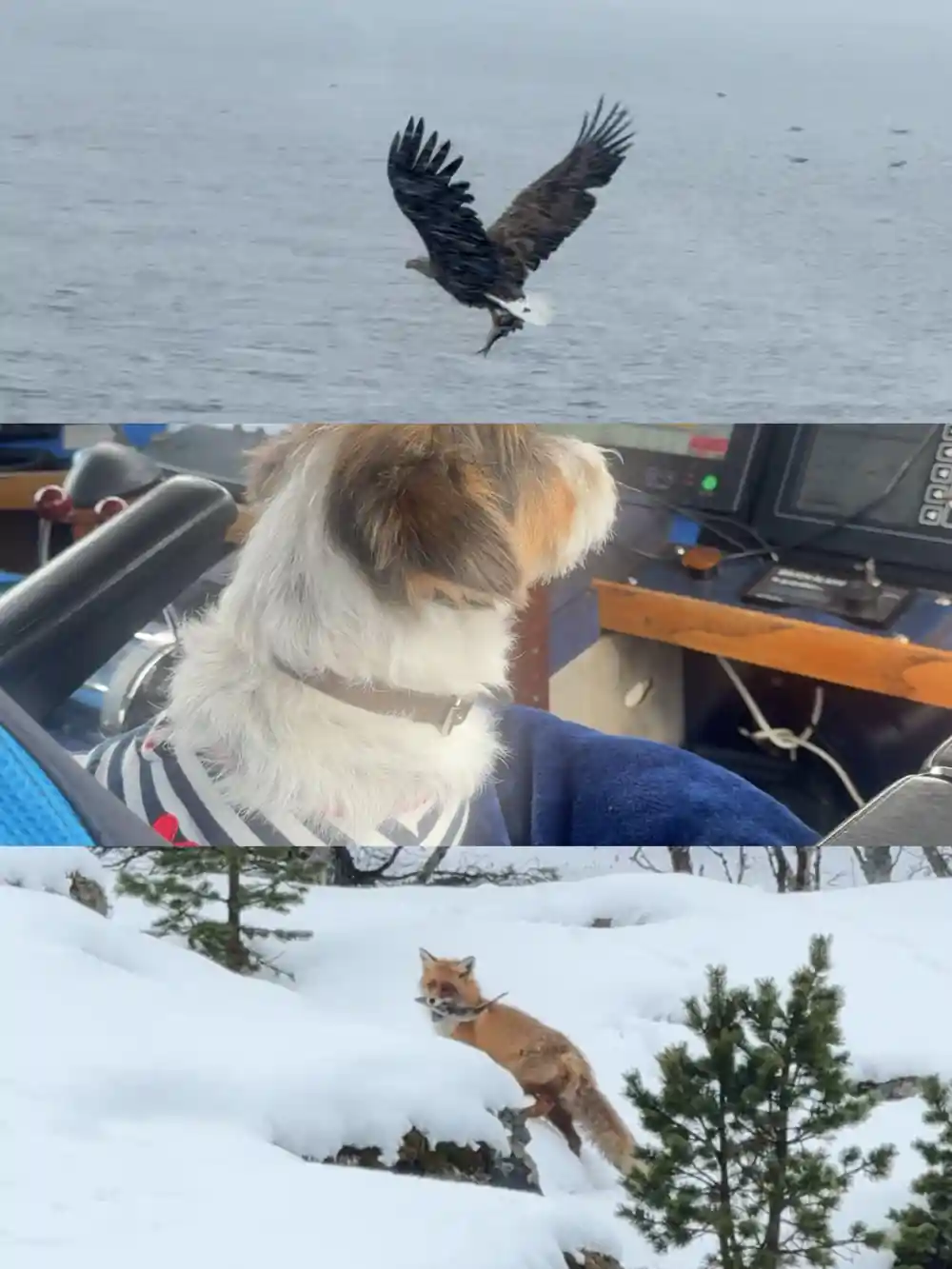
Sea eagles took the scraps then and still do. Norway has 2,500 breeding pairs of white-tailed sea eagles, the largest breeding population in Europe, and they are a familiar sight around working boats.[14] In winter the picture changes again, when orcas and humpbacks follow herring into the Tromsø and Skjervøy fjords roughly every November through January.[15] A cruise in the right week can turn into a wildlife watch without anyone planning it.
For a traveller the practical upshot is that a boat trip here is never only about the fish. Bring binoculars if you have them, a cloth for spray on the lens, and patience. The fjord does not perform on request, but it rarely stays quiet for a whole trip either.
Experiencing This Heritage on the Fjord Today
The Tromsø: Arctic Fjord Cruise & Fishing Experience is the short version of all of this. It runs 4 to 5 hours, with stops at Ryøya and Ramfjorden, and a live tour guide who speaks English.[1] The listing is rated 4.72 from 5,096 reviews and starts from US$136.[1] You can reserve now and pay later, and cancellation is free up to 24 hours in advance.[1]
There are other shapes to the day on the same water. A Sommarøy fjord expedition with a salmon picnic starts from US$55.[6] An Arctic fjord cruise in polar landscapes starts from US$121.[7] A fishing sea safari starts from US$173.[16] Each one puts you in the cold, fish-rich water with the same mountains above and the same working coast alongside.
Whichever boat you take, the shape of the day is similar. You leave the harbour, the town shrinks to a line of coloured houses, and the mountains step forward. Then the engine drops to idle, the lines go over the side, and the history you read about on shore becomes something you can feel through your gloves.
From-prices on Tromsø fjord and fishing tours
Every bar is a from-price in US dollars for one tour listing:[6],[7],[1] and[16].
What a boat day in Tromsø costs
From-prices per adult in US dollars for listings[1],[6],[7] and[16].
When to come, and what it brings
How to plan the day
Pick your season
January offers the highest statistical chance of seeing the aurora in Tromsø, at 75-80 percent.[3]
Book before you fly
Reserve now and pay later, and note the free cancellation window of up to 24 hours in advance.[1]
Dress for a moving deck
Thermal layers, a windproof shell, gloves you can fish in and boots with grip. Winter air here is dry and sharp.
Find the right pier
Tromsø's waterfront is a working harbour with several berths, so arrive with time to spare and read the meeting point carefully.
Fish, watch, repeat
Drop your line, watch for sea eagles and passing boats, and let the skipper choose where the boat goes next.
Ready to fish a working Arctic fjord?
from US$137Reserve now & pay later