At a glance
- Tromsø claims 61 days of polar night, so winter cruises sail in blue twilight and the aurora becomes the main event on clear nights.[1]
- January offers the highest statistical chance of seeing the aurora, with 75-80% success, and it is also the coldest and busiest stretch.[2]
- Sea water around Tromsø averages 10.5 C in summer, when the light lingers late and the boat feels far more forgiving than in midwinter.[3]
- Spring still has snow on the peaks, longer days and thinner crowds, which makes it a gentle season for a fjord cruise.
- The Arctic Fjord Cruise and Fishing Experience takes 4 - 5 hours, from US$136, with a live guide in English and a free cancellation window.[4]
- Top choice Fjord Cruise & Fishing from US$136 Duration4 - 5 hours[4]Rated4.72 from 5,096 reviews[4]GuideEnglish[4]Free cancellationUp to 24 hours in advance[4] Check availability
- Polar Landscapes Cruise from US$121 Duration3.5 hours[5]Rated4.68 from 1,959 reviews[5]GuideEnglish, Norwegian[5]Free cancellationUp to 24 hours in advance[5] See this tour
- Fishing Sea Safari from US$173 Duration3.5 hours[6]Rated4.85 from 721 reviews[6]GuideEnglish[6]Free cancellationUp to 24 hours in advance[6] See this tour
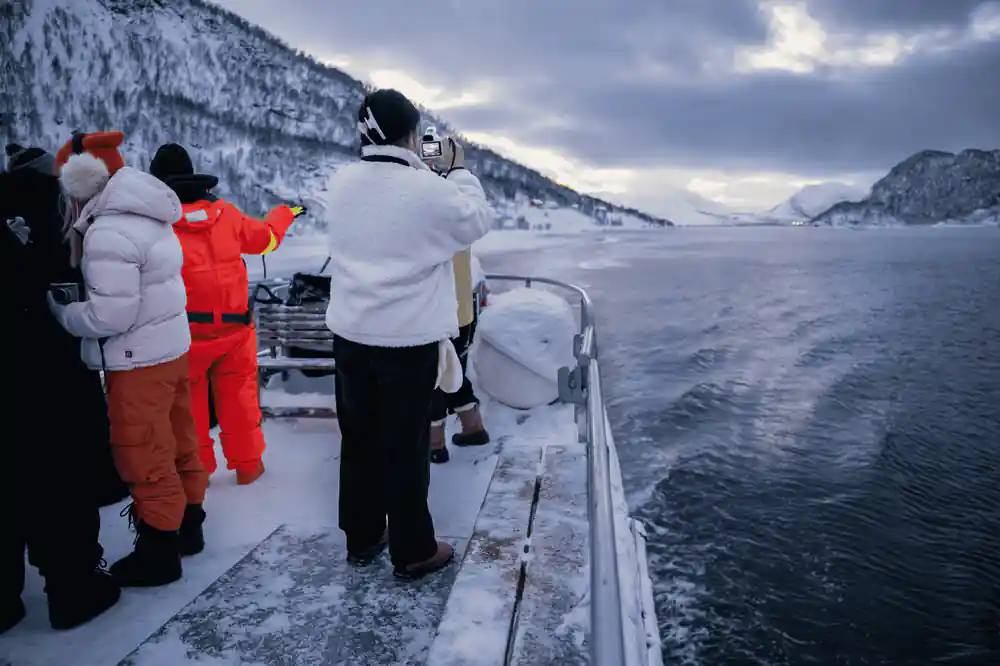
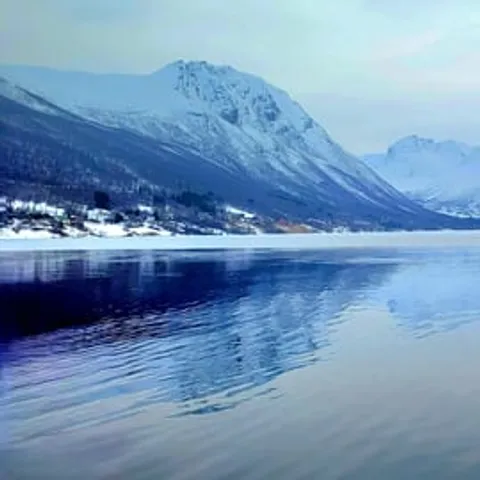
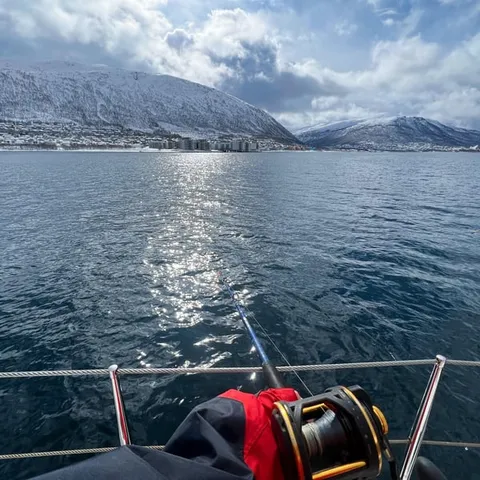
The average water temperature in Tromso in winter reaches 5.2 C, in spring 4.4 C, in summer the average temperature rises to 10.5 C, and in autumn it is 9 C.
Our verdict: pick the season you can enjoy
Know before you leave
Polar Night Afternoons: Cruising in Winter Darkness
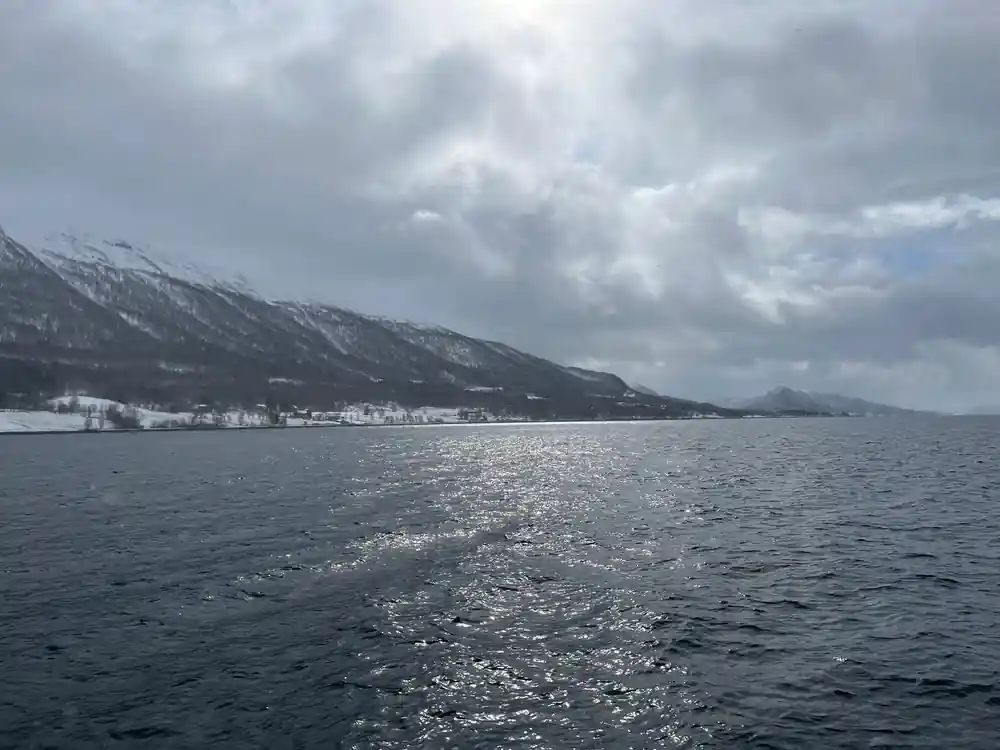
In the depths of winter the sun stops clearing the horizon in Tromsø, and the middle of the day turns into a long, soft blue twilight. People often ask how long arctic night lasts here; locally it is measured as 61 days of polar night, when the sun stays below the horizon and midday feels like late dusk.[1] On the water that light is kinder than it sounds. Snow on the peaks picks up a pink or violet glow, the fjord turns a deep ink blue, and the boat's wake is often the brightest thing in a photograph. Cruises keep running through the darkest weeks, and skippers know the sheltered channels where the water stays flat.
February is the coldest month on average, at -3.2 °C, so thermal layers, a windproof shell, a hat and gloves are not optional.[7] Decks get slick with spray and frost, and flat, grippy boots help more than anything fashionable. Hand warmers, a flask and a spare pair of gloves are small comforts that keep you out on deck instead of hiding in the cabin. Days are short, so an afternoon departure often means sailing home in the dark, with the cabin lit and the mountains reduced to silhouettes. If the aurora is what you came for, plan to be on the water at night rather than in the middle of the day.
Aurora Season: Night Skies from the Water
January is the strongest month for the northern lights in Tromsø, with a 75-80% statistical chance of seeing the aurora.[2] Darkness helps more than cold hurts, and a boat has a genuine advantage: once you are away from the harbour lights, the sky opens in every direction, with nothing between you and it but the mast. Displays come and go in waves, so the best policy is to keep looking up rather than studying a screen. A clear, cold night with a little wind often beats a mild, cloudy one, because cloud is the one thing no skipper can sail around.
Evening cruises usually head out after the fjord has gone still, and the return can be the most beautiful part of the trip, with the mountains black against a green sky. Bring a tripod or practise holding steady, and remember that batteries drain fast in frost, so keep a spare warm in an inside pocket. Step into the cabin now and then to warm your fingers. Clear skies usually bring the coldest air of the whole trip, so dress for standing still rather than for walking, and accept a hot drink if the crew offers one.
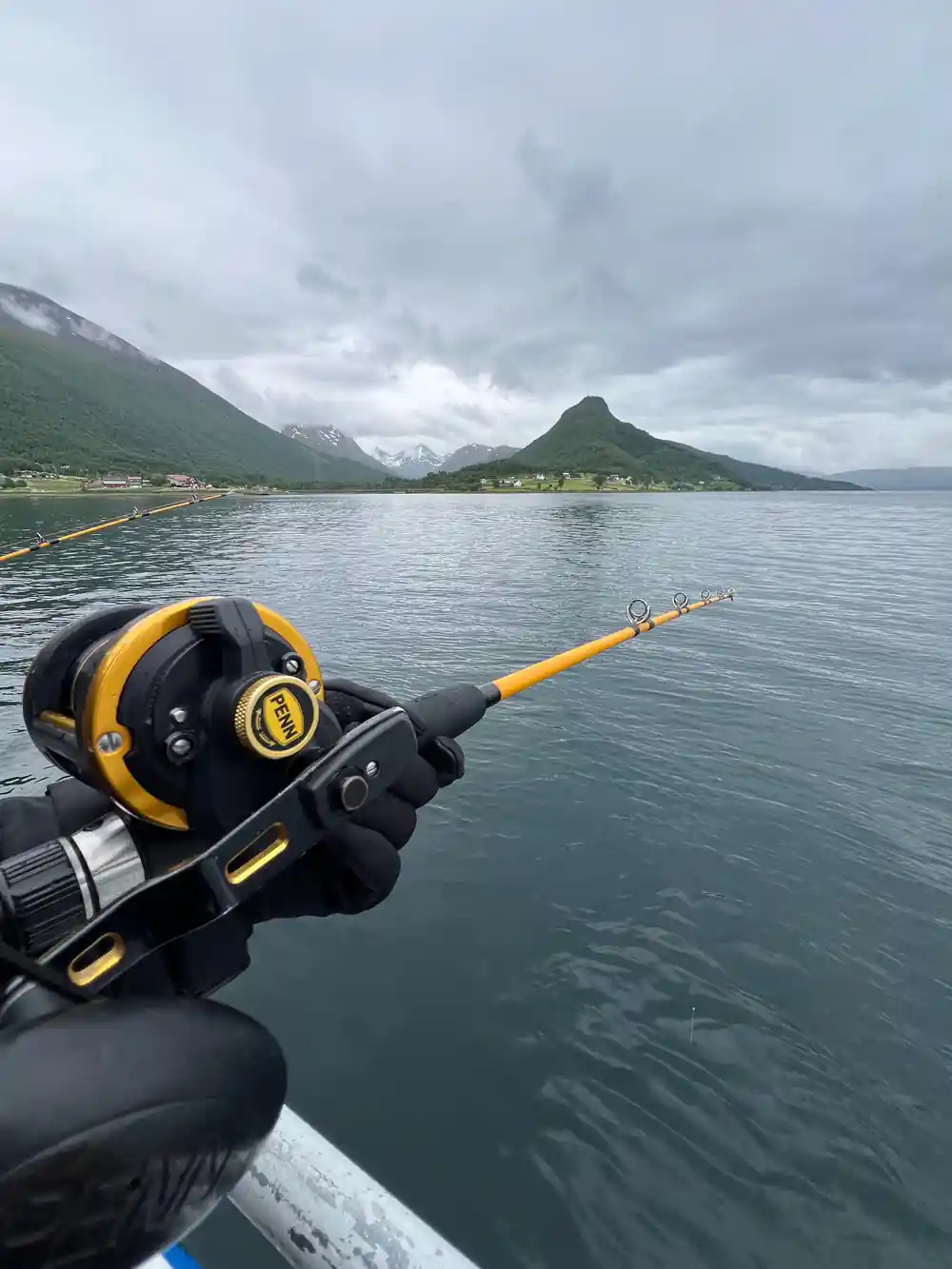
Blue hour on the fjord: snow, still water and the last light of the afternoon
Midnight Sun Sailing: Light That Never Leaves
In midsummer the light never fully leaves, the fjord holds a pale gold colour until the small hours, and photographs that would need a long exposure in winter need nothing at all. The sea is at its warmest too, averaging 10.5 C in summer, which is still bracing if you trail a hand over the side.[3] Sailing late with the sun low over the water is the opposite of the winter experience, and it changes how a fjord cruise feels: relaxed, bright and very hard to stop photographing.
Summer is quiet for the aurora but excellent for fishing, deck lunches and long evenings on the water. Families often find these trips easier because there is no frost, no heavy gear and no need to keep children up late. The water is calm more often than in winter, so smaller boats can reach places that feel exposed in a cold-season swell. Book ahead for the busiest weeks of high summer, when Tromsø fills up, and take a light jacket anyway, because fjord air stays cool even under a high sun.
Spring and Autumn: The Shoulder Seasons
Spring in Tromsø sits between two seasons. Snow still covers the peaks, the days stretch out quickly, and the fjord is usually quiet, so a cruise feels unhurried. The light comes back at a low, warm angle that flatters the mountains, and seabirds start returning to the cliffs and skerries. Expect changeable weather, with sun, sleet and wind all possible in a single afternoon, so layering still matters more than one heavy coat. Roads and boats are less crowded than in the aurora months, which suits photographers and anyone who prefers a slower day.
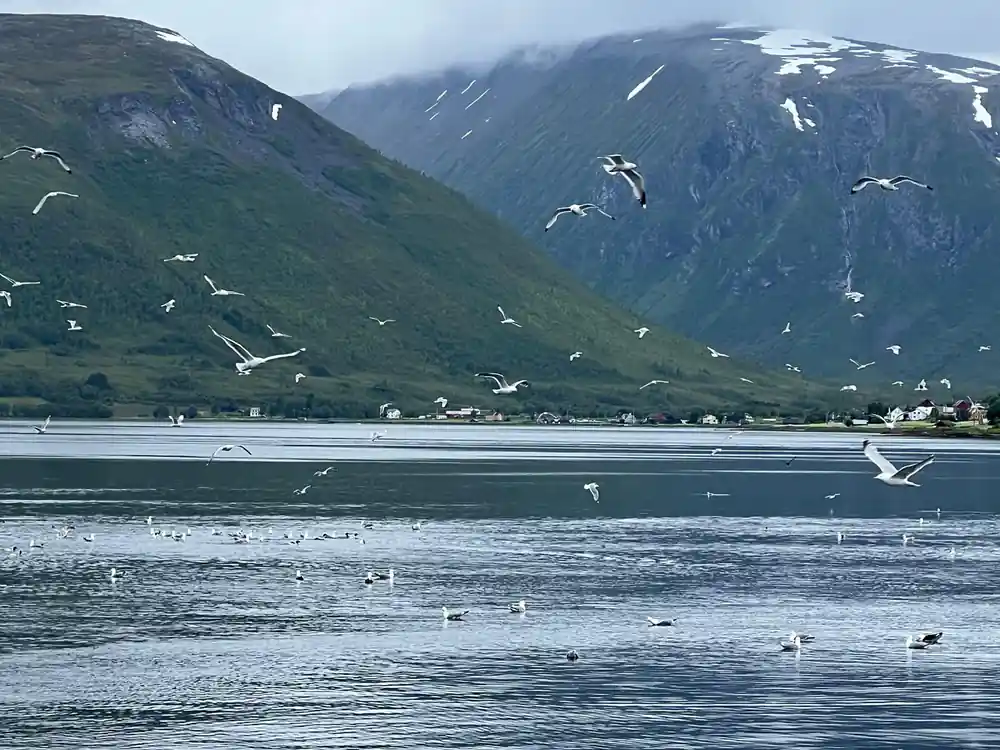
Autumn is short and often dramatic. Birch slopes turn yellow and red, the first snow dusts the summits, and the light turns low and golden before the polar night closes in. Orcas and humpbacks follow herring into the Tromsø and Skjervøy fjords roughly every November through January, so late autumn whale trips and fjord cruises share the same water.[8] Between the aurora season and the whale season, the shoulder weeks can feel wonderfully empty: fewer people on deck, moody skies, and weather that changes both the plan and the pictures every hour.
from US$136
4 - 5 hours on the fjord with a live guide in English and free cancellation up to 24 hours in advance.[4]
Fishing Weather Through the Year
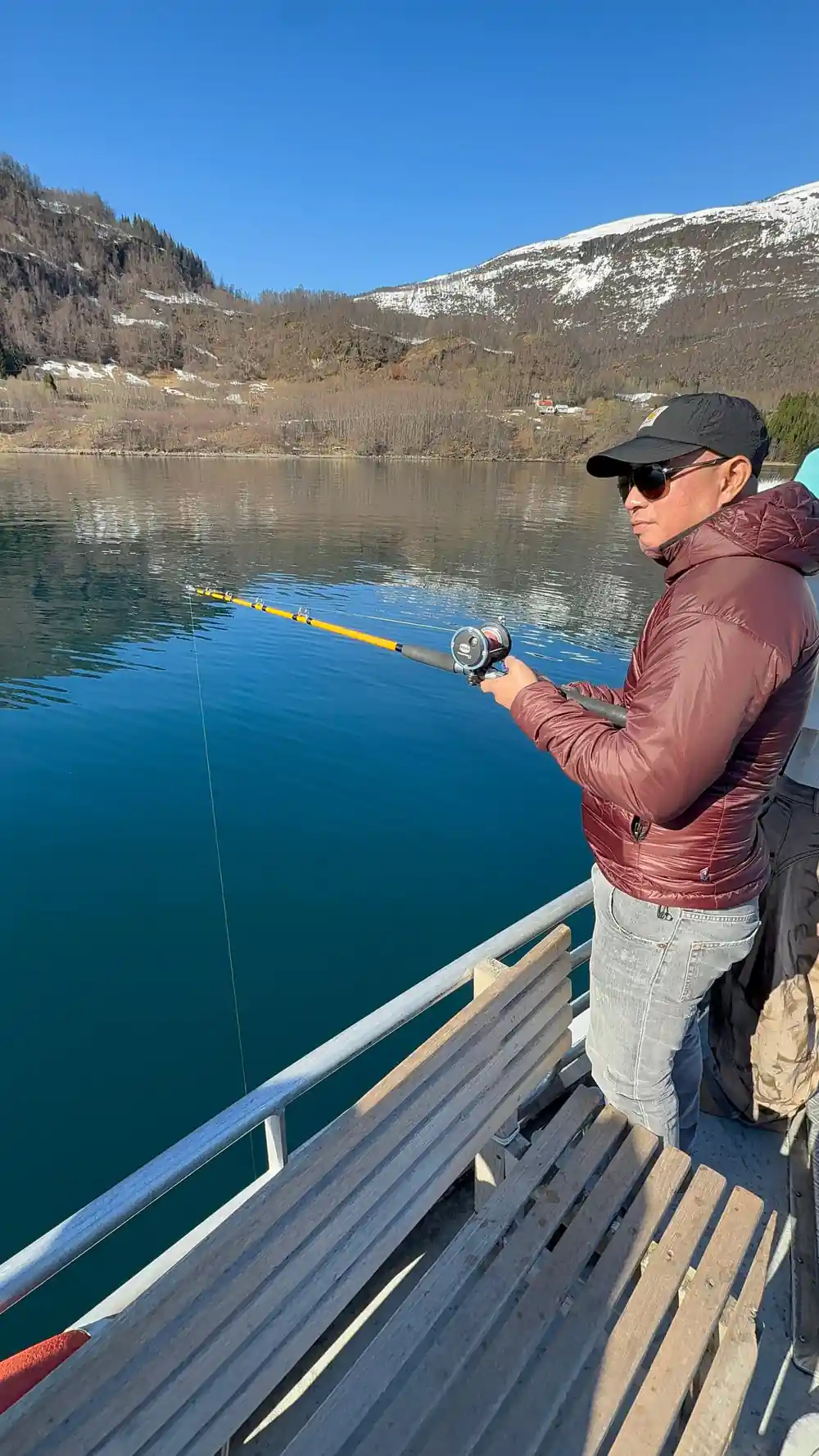
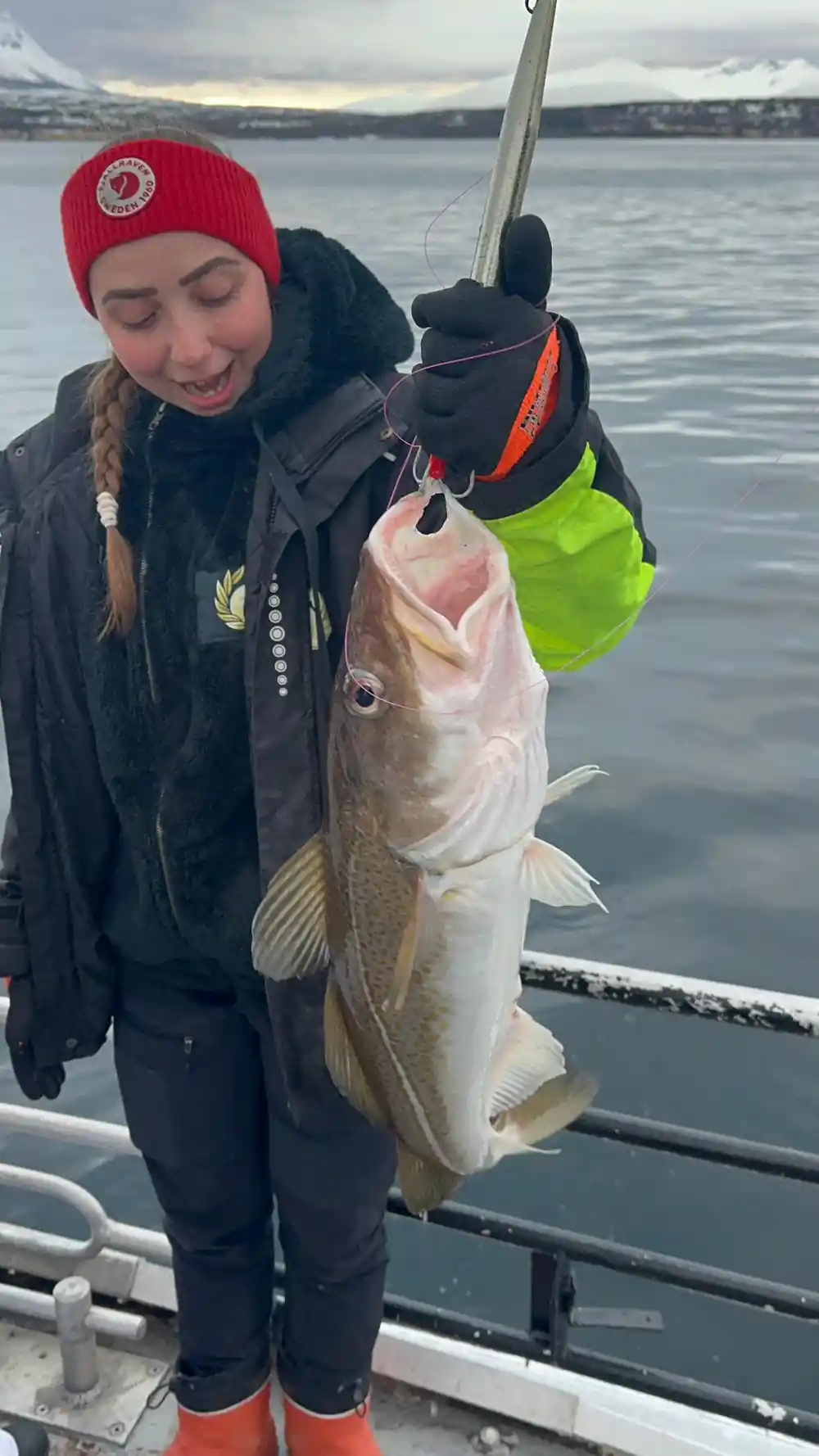
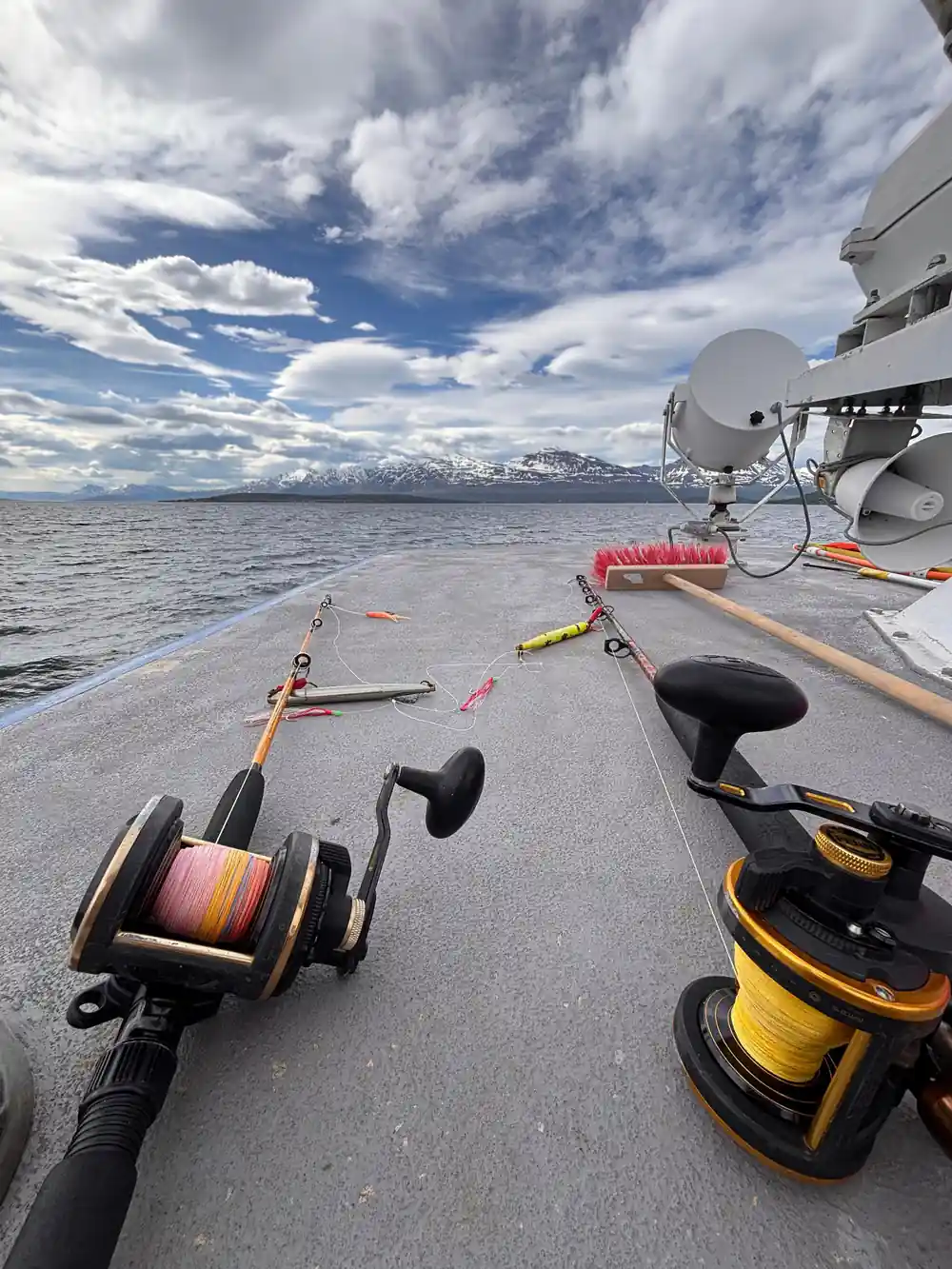
Fishing from a fjord boat works in every season, but the comfort and the technique change. Fish found in Norwegian fjords include coastal cod, saithe, pollack, haddock, herring, mackerel, and sprat, so there is usually something willing to take a lure.[9] Sea water around Tromsø averages 5.2 C in winter and 10.5 C in summer, and cold water generally means fishing slower and deeper than you would in high summer.[3] A skipper who fishes these grounds daily will read the tide, the wind and the depth, and put you over fish rather than over scenery alone.
On a guided trip the crew handles the boat, the knots and the cleaning, which matters when the wind picks up and you are holding a rod with numb fingers. Ask beforehand about licences, kit and whether you keep your catch, since arrangements differ between operators. Herring once drove enormous fisheries here, with the fishable Norwegian spring-spawning herring stock in the 1950s and 1960s believed to have measured about 10 million metric tonnes, and the fjord still runs on that same cycle of plankton, fish and seabirds.[10]
When Weather Changes the Route
Fjord weather moves fast, and the itinerary is usually decided on the day. The Tromsø Arctic Fjord Cruise and Fishing Experience lists its stops as Ryøya and Ramfjorden, and where you actually drop lines depends on wind, swell and ice.[4] A route can shift to sheltered water behind an island, which is good news for anyone who dislikes a rolling boat. Fishing spots are chosen for depth and current as much as for the view, and the crew will usually tell you why they picked one.
That flexibility is worth embracing. Sheltered channels give flatter water, longer casts and better photographs, and a skipper who knows the coast can find calm when the open fjord looks grey and choppy. Bring a waterproof bag, keep your phone in a pocket rather than in your hand, and treat a change of plan as part of the day. If you are prone to seasickness, take the usual precautions well before boarding rather than once you feel rough, and sit low and central if the swell builds.
Scenery Across the Seasons: Mountains, Snow and Light
The skyline is the reason many people book a fjord cruise in the first place. Tromsdalstinden, the big mountain across the bridge from downtown Tromsø, has a summit at 1,238 m, and it holds snow well into the year.[11] Watch for white-tailed sea eagles as well: Norway has 2,500 breeding pairs, the largest breeding population in Europe, and they often hunt along the same fjord edges the boats follow.[12] A pair of binoculars earns its place in your bag on almost every route.
Each season paints the same coastline differently. Winter is white, blue and very quiet; spring brings waterfalls, longer light and birds; summer is green under a sun that hardly sets; autumn turns the slopes red and gold before the first proper snow. Because the fjords around Tromsø sit close to town, you can see a great deal of landscape in a few hours, which matters when daylight is short. Whichever month you choose, the water is the same water, and the mountains are just as steep.
Average sea water temperature around Tromsø by season
Average sea water temperatures around Tromsø come from seatemperature.info[3].
What a fjord trip costs from
From-prices in US dollars taken from the GetYourGuide listings[4][5][6][13]
The Tromsø year at a glance
Planning your fjord cruise
Choose your light
Decide first whether you want polar night twilight, aurora darkness or endless summer light, then pick the month and the tour that fit.
Book early for the busy weeks
Reserve now and pay later is available on the main listings, which helps when places fill up in the busiest weeks.[4]
Dress for standing still
Waterproof shell, thermal base, hat and gloves. Sea water averages 5.2 C in winter, and a moving boat adds wind chill.[3]
Pack for the camera
A dry bag, spare batteries kept warm and a cloth for spray. Winter light is low, so expect longer exposures and darker frames.
Keep your plans flexible
Weather decides the route. The listed stops are Ryøya and Ramfjorden, and the crew picks the calmest water on the day.[4]
Sail, fish and watch the light change over the fjord
from US$137Reserve now & pay later