At a glance
- Dark sky, clear weather and a bit of solar activity. On the fjord you get the first two, plus water that reflects the whole show back at you.
- January offers the highest statistical chance of seeing the aurora in Tromsø, with 75-80% success.[1]
- Tromsø claims 61 days of polar night.[2] Those are the weeks when the aurora can appear at any hour you are awake.
- February is the coldest month, with an average air temperature of -3.2 °C in Tromso.[3] Layers, a windproof shell and warm gloves beat one thick coat.
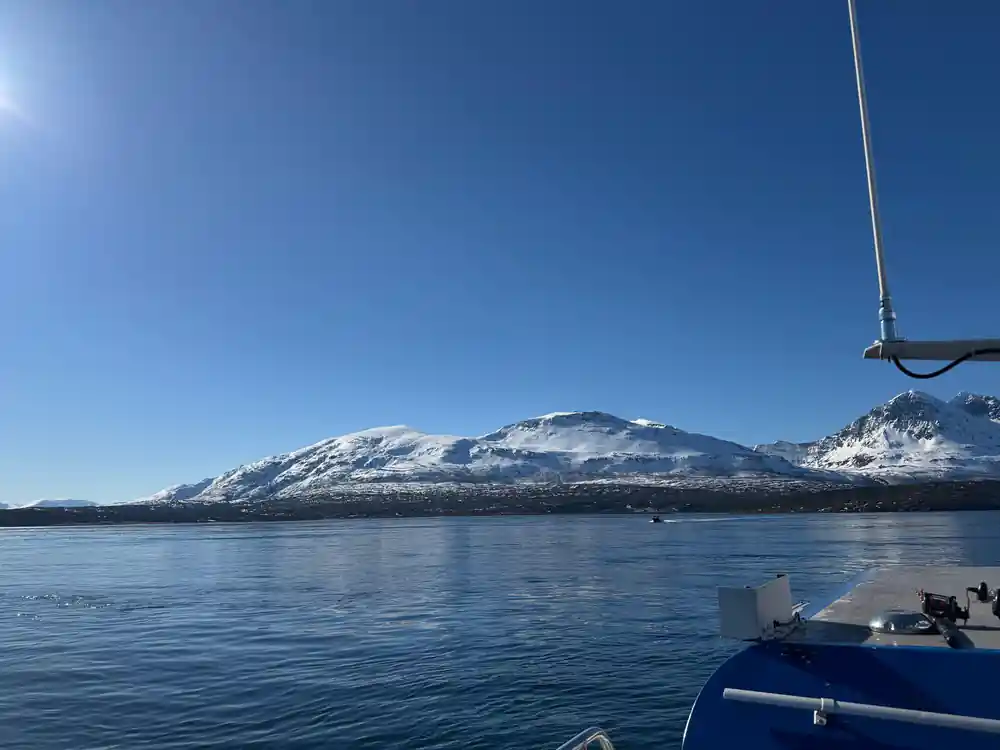
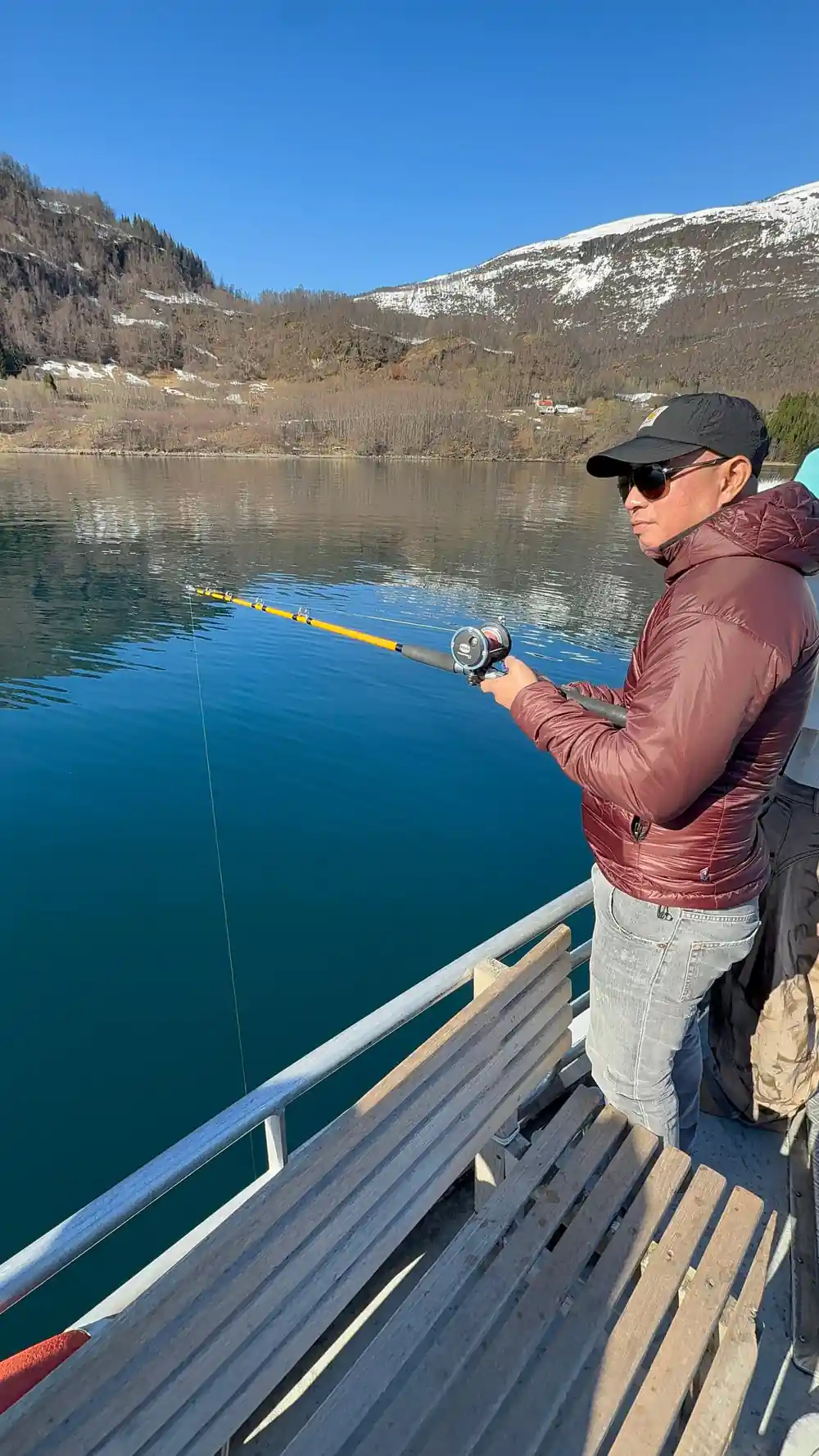
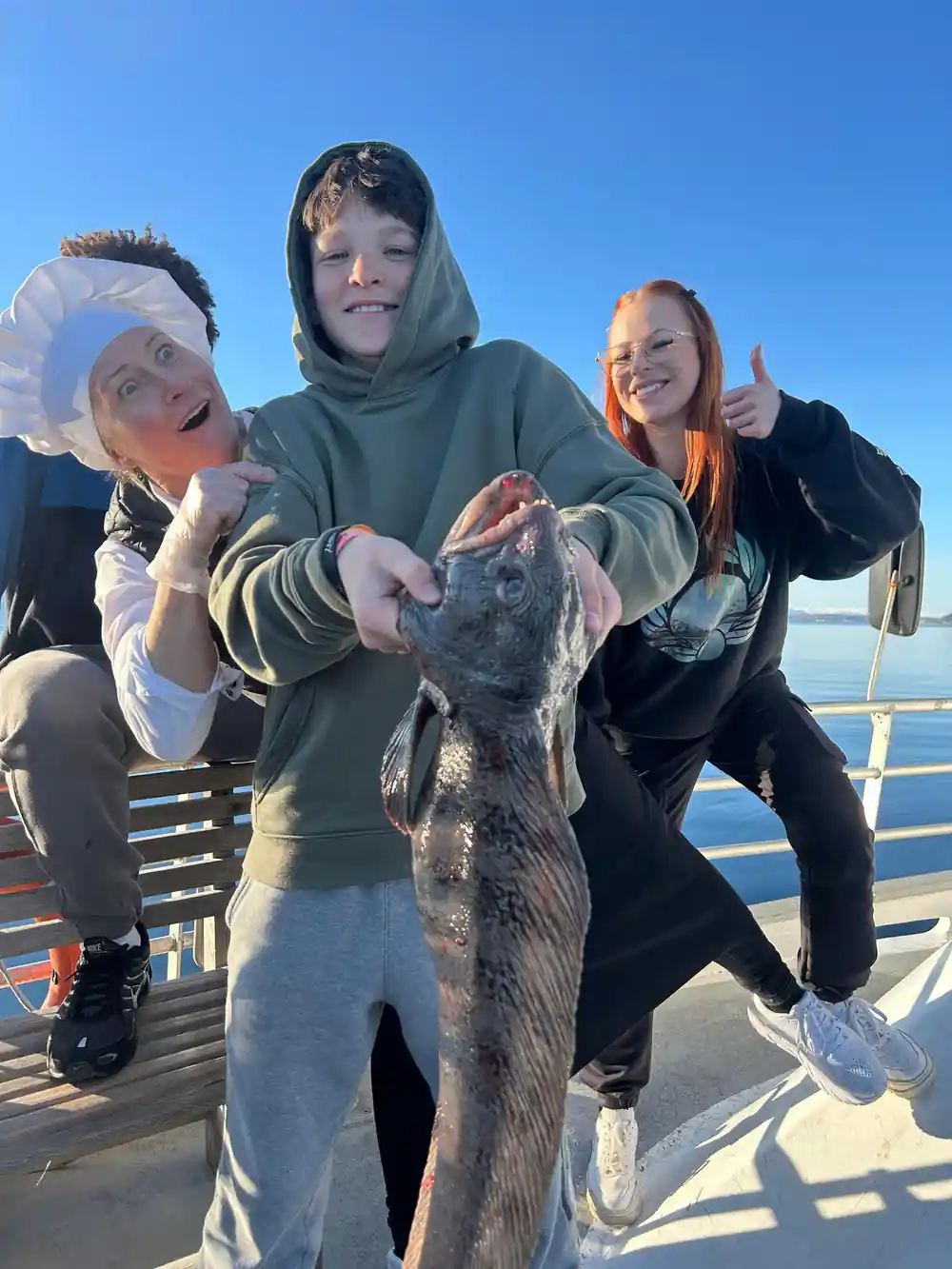
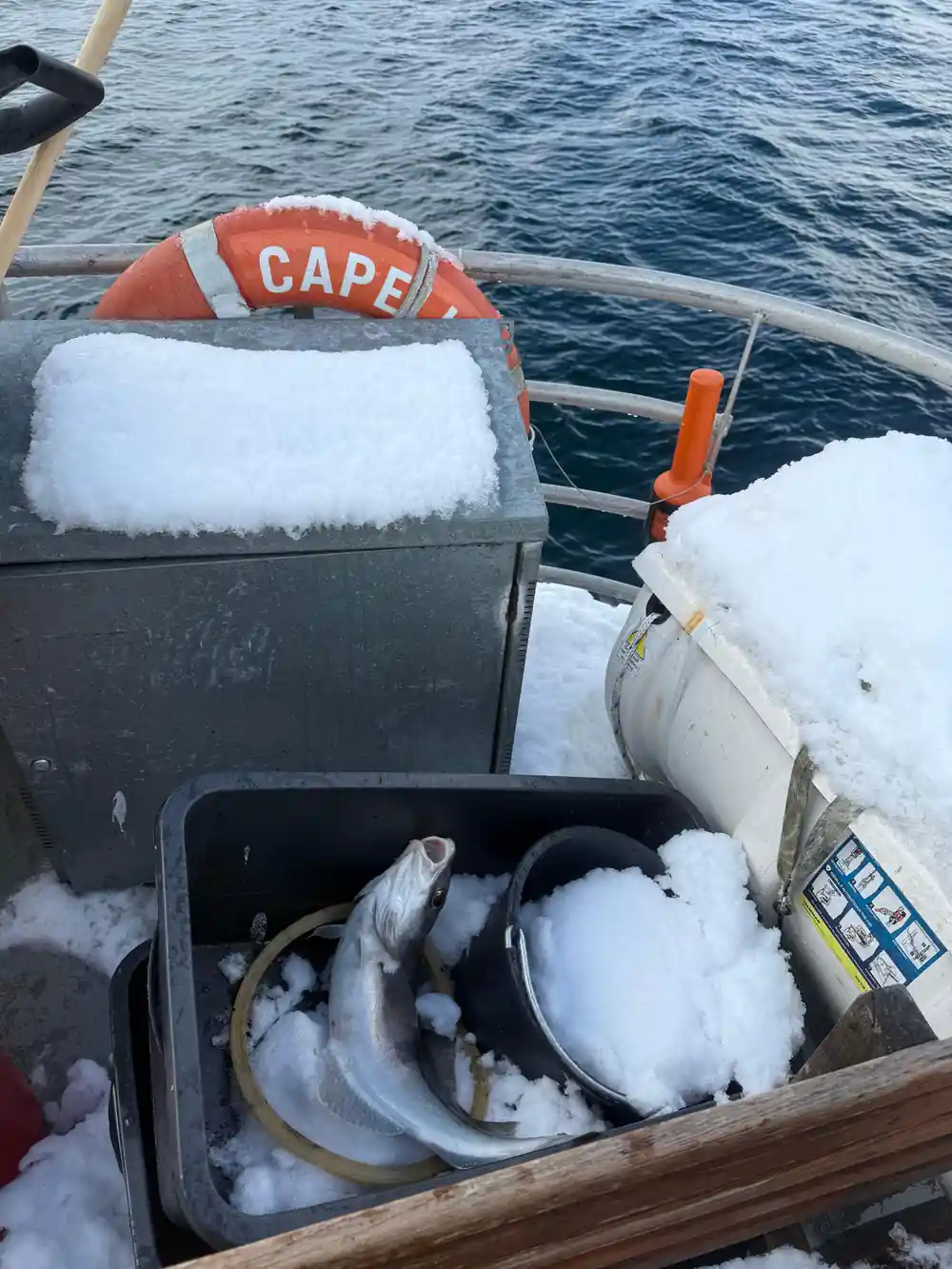
- The Tromsø: Arctic Fjord Cruise & Fishing Experience runs 4 - 5 hours from US$136, with free cancellation up to 24 hours in advance for a full refund.[4]
- Top choice Fjord Cruise & Fishing from US$136 Duration4 - 5 hours[4]Rating4.72 from 5,096 reviews[4]GuideLive guide in English[4]CancellationFree cancel 24h before[4] Check availability
- Polar Landscapes Cruise from US$121 Duration3.5 hours[5]Rating4.68 from 1,959 reviews[5]GuideLive guide in English, Norwegian[5]CancellationFree cancel 24h before[5] See this tour
- Fishing Sea Safari from US$173 Duration3.5 hours[6]Rating4.85 from 721 reviews[6]GuideLive guide in English[6]CancellationFree cancel 24h before[6] See this tour
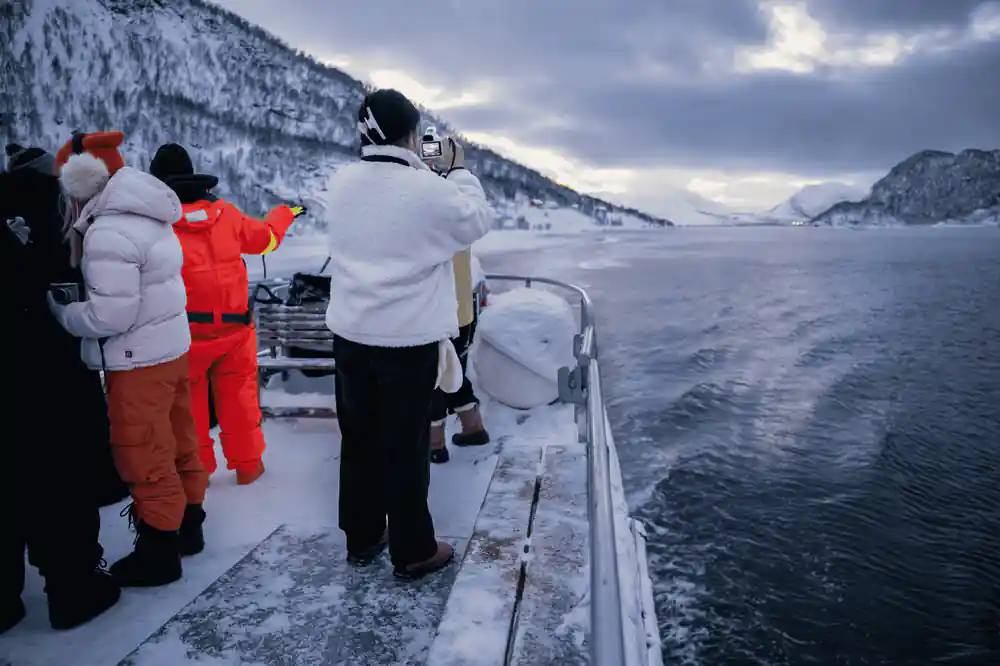
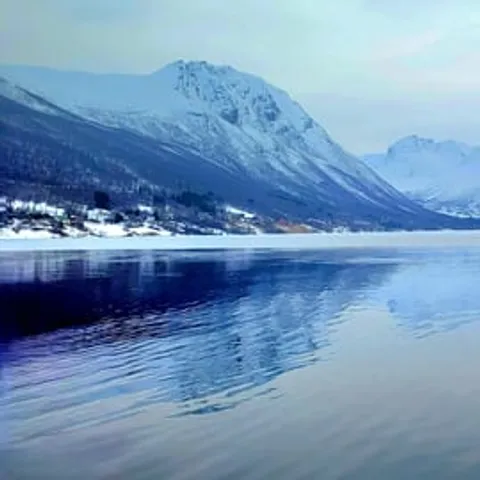
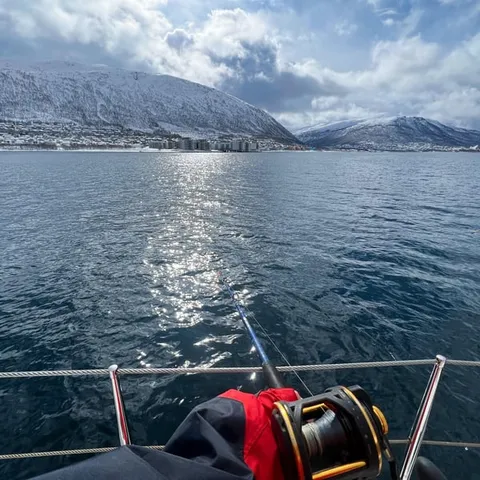
January ranks #1 with polar night darkness, stable cold weather (-10°C to -15°C), and 75-80% success though highest crowds and prices (€140-200 accommodation, €90-150 tours).
Is a fjord cruise the way to see the aurora?
Before you sail
On the night
- February averages -3.2 °C in Tromso; a windproof outer layer earns its place.[3]
- Keep your phone screen dim on deck so your night vision holds.
- Hat, gloves and hand warmers for standing still at the rail.
- A flask, a camera tripod and spare batteries make the waiting easier.
Why the Aurora Appears Over the Arctic
Tromsø sits inside the auroral oval, the ring of sky around the magnetic pole where solar particles most often come down through the upper atmosphere. That is geography rather than luck. The further north you are, the longer the aurora tends to spend overhead on an active night. Tromsø lies 217 miles north of the Arctic Circle and has a population of 75,638.[8] The city sits on an island with fjord water on most sides, so the sky above the water is usually the darkest thing in view. People who live there treat a green band over the water as an ordinary part of winter. You are not chasing a miracle, just a dark sky and some patience.
Winter darkness does most of the work. Tromsø claims 61 days of polar night, a long stretch when the sun stays below the horizon and daylight is a blue-grey rumour around midday.[2] Those are the hours you want. On a strong night the aurora can be overhead in the early evening and still moving at midnight. Book more than one evening if you can. Cloud, not darkness, is what usually spoils a chase.
The Science of Light and Colour
The aurora begins at the sun. Charged particles stream outwards, get funnelled along Earth's magnetic field towards the poles, and collide with gases high in the atmosphere. Oxygen produces the familiar green, and oxygen at greater altitude produces the deep red that cameras often record better than eyes do. Nitrogen adds purple and pink fringes along the lower edge of a bright curtain.
What you watch from a boat deck is a shape that keeps rewriting itself: a faint arc, a bright band, a fold, then a corona opening overhead before the whole thing fades. Colour is partly a trick of the eye. In near darkness our colour vision is weak, so a faint aurora can look grey-white until a sudden brightening, or a camera screen, shows how green it really is.
Shape matters as much as colour. A quiet night gives you a single soft arc in the north, easy to mistake for cloud until it moves. A busy night gives bands that fold and pulse, sometimes with a corona opening directly overhead, so the light seems to stream down towards you. Watching from the water helps: the horizon is clear, and nothing on land blocks the low arcs.
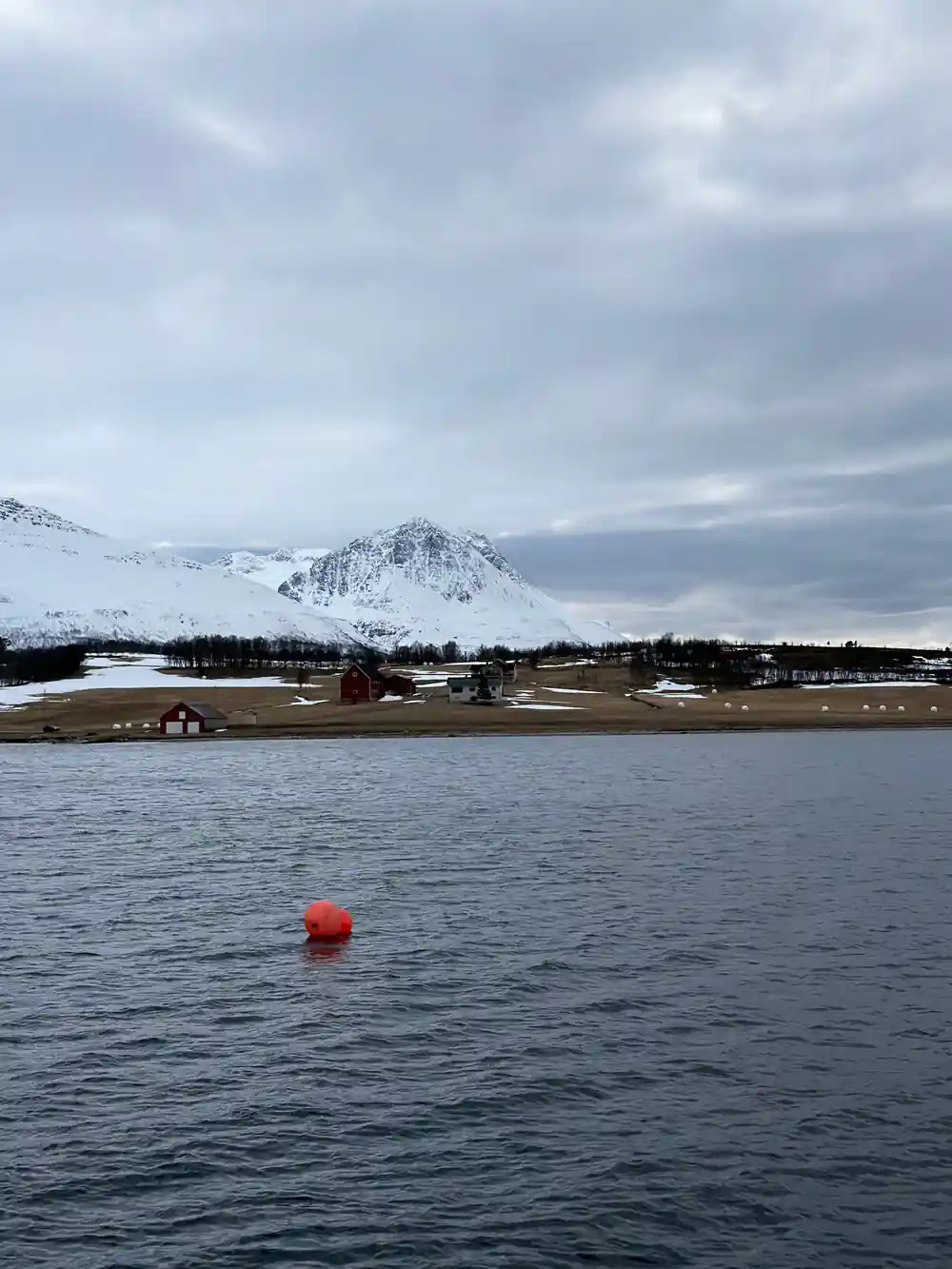
A green arc over still water: the fjord gives the aurora a second sky.
Reflection on Still Fjord Water
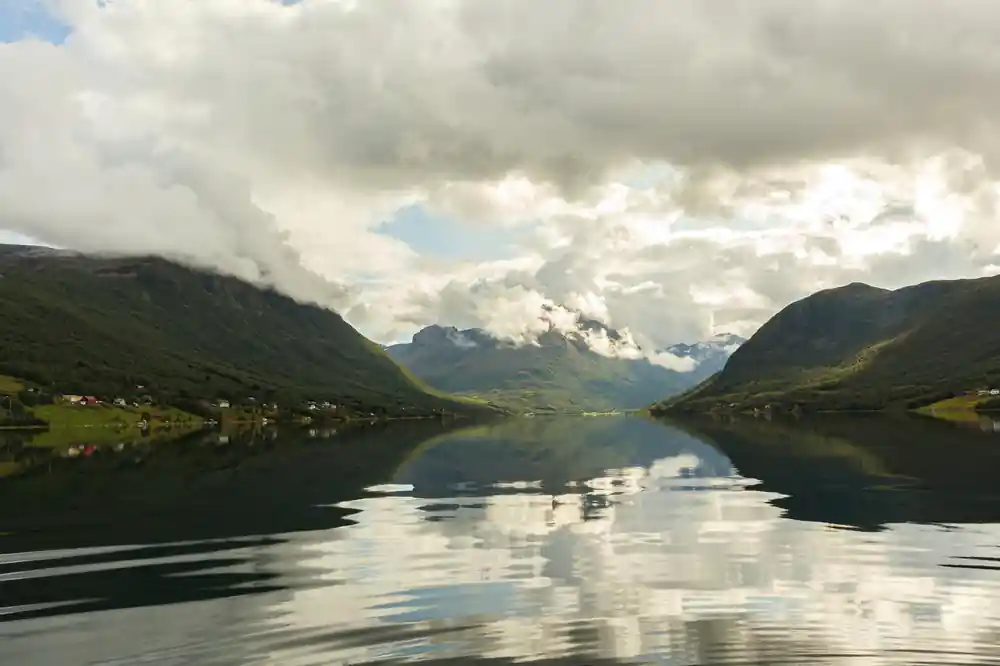
Fjords are deep and sheltered, and on a calm night the surface behaves like dark glass. That gives you two auroras: a band across the sky and a band across the water, with black mountains standing between them. Tromsdalstinden, the big mountain across the bridge from downtown Tromsø, has a summit elevation of 1,238 m.[9] A little wind changes everything. The reflection breaks into small waves and the light becomes a shimmering path that leads towards the boat instead of a mirror. On the best nights the reflection is sharper than the aurora itself, and you find yourself watching the water rather than the sky.
Water temperature shapes the night. The average sea water temperature around Tromso reaches 5.2 C in winter and rises to 10.5 C in summer.[10] Cold water and cold air together make a boat deck feel far colder than the same air temperature on land, so dress for standing still rather than for walking, with layers you can add and remove.
Escaping City Light Pollution
Tromsø's streetlights, the harbour, the bridge and the airport push a glow into the sky. On a strong aurora night the town can still put on a show, but a faint arc is easily lost in that haze. The fix is simple: put water or a dark road between you and the streetlights, then let your eyes adapt without staring at a phone screen.
Out on the fjord there is almost nothing to compete with. Once the boat has left the harbour lights behind, the sky looks deeper, with more stars and a clearer Milky Way to use as a reference line. A trip that runs after dark does this better than a daytime sightseeing cruise, so read the start times rather than the description. Local skippers also know which side of the fjord holds the clearest sky when cloud sits low over the city.
The moon matters too. A bright moon washes out faint aurora and lights up the snow and the water, which can be beautiful in its own right. Around the new moon the fjord goes properly dark, and the aurora, the stars and the Milky Way share the sky. Either way, give yourself a reason to stay outside: a hot drink, a fishing rod, or a camera you are still learning.
61 days
Tromsø claims 61 days of polar night, a stretch of fjord winter when the aurora can hang over the water at any hour you are awake.[2]
Sami and Norse Stories of the Lights
Northern lights have been named, feared and explained for as long as people have lived under them. In Sami tradition the aurora is guovssahas, and old advice warns against whistling at it, mocking it or waving white cloths. The lights were understood as the dead, or as something that answers back. Whether or not you believe any of it, these stories are a reminder that the sky has long been read as a message.
Norse writing describes fires and burning bridges in the sky, and the image of a glowing bridge arcing overhead has carried into modern fantasy. Sailors used the lights as a hint about weather and season. What survives best is the habit: step outside, look up, and stay out long enough for your eyes and your patience to settle. The practical habit outlasted the beliefs, and it is still the right one.
Modern Tromsø wears the lights lightly. They turn up on shopfronts, in Sami craft and in the names of local boats, and the aurora is a working part of the winter economy rather than a curiosity. If you want the older layer of the story, ask your guide what their grandparents said about the sky. A tale told on a cold deck sticks better than a caption.
Solar Activity and How Aurora Alerts Work
Aurora forecasting happens in two layers. Space weather scientists watch the sun for flares, coronal holes and eruptions, and estimate how much disturbance is heading towards Earth. Closer to the night itself, short-term forecasts and phone alerts describe how far from the poles the aurora might reach. An alert is a nudge to go outside, not a promise, and plenty of good displays arrive with very little warning. The strongest displays often come from eruptions that take a day or two to arrive.
Local weather decides the rest. Cloud, snow showers and moonlight all change what you actually see, and no solar forecast can help with a solid grey sky. In Tromsø, January offers the highest statistical chance of seeing the aurora, with 75-80% success.[1] February is colder, with an average air temperature of -3.2 °C in Tromso.[3] Build a trip with several evenings in it so that one cloudy night does not end the story.
Planning Your Fjord Aurora Experience
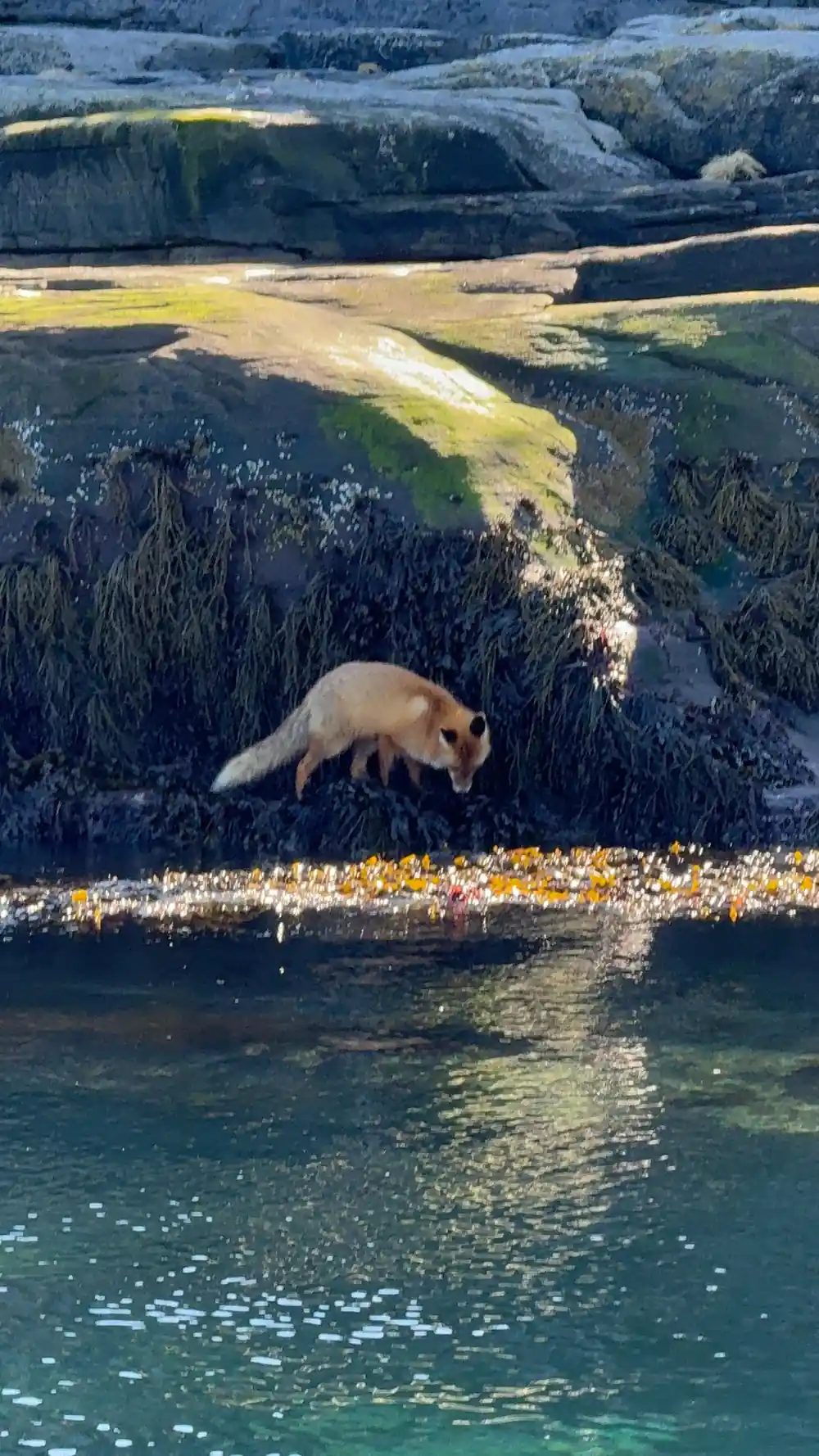
A dark-hours boat trip gives you something to do between aurora bursts. Fish found in Norwegian fjords include coastal cod, saithe, pollack, haddock, herring, mackerel, and sprat.[11] White-tailed sea eagles work these same waters, and Norway has 2,500 breeding pairs, the largest breeding population in Europe.[12] Orcas and humpbacks follow herring into the Tromsø and Skjervøy fjords roughly every November through January.[13]
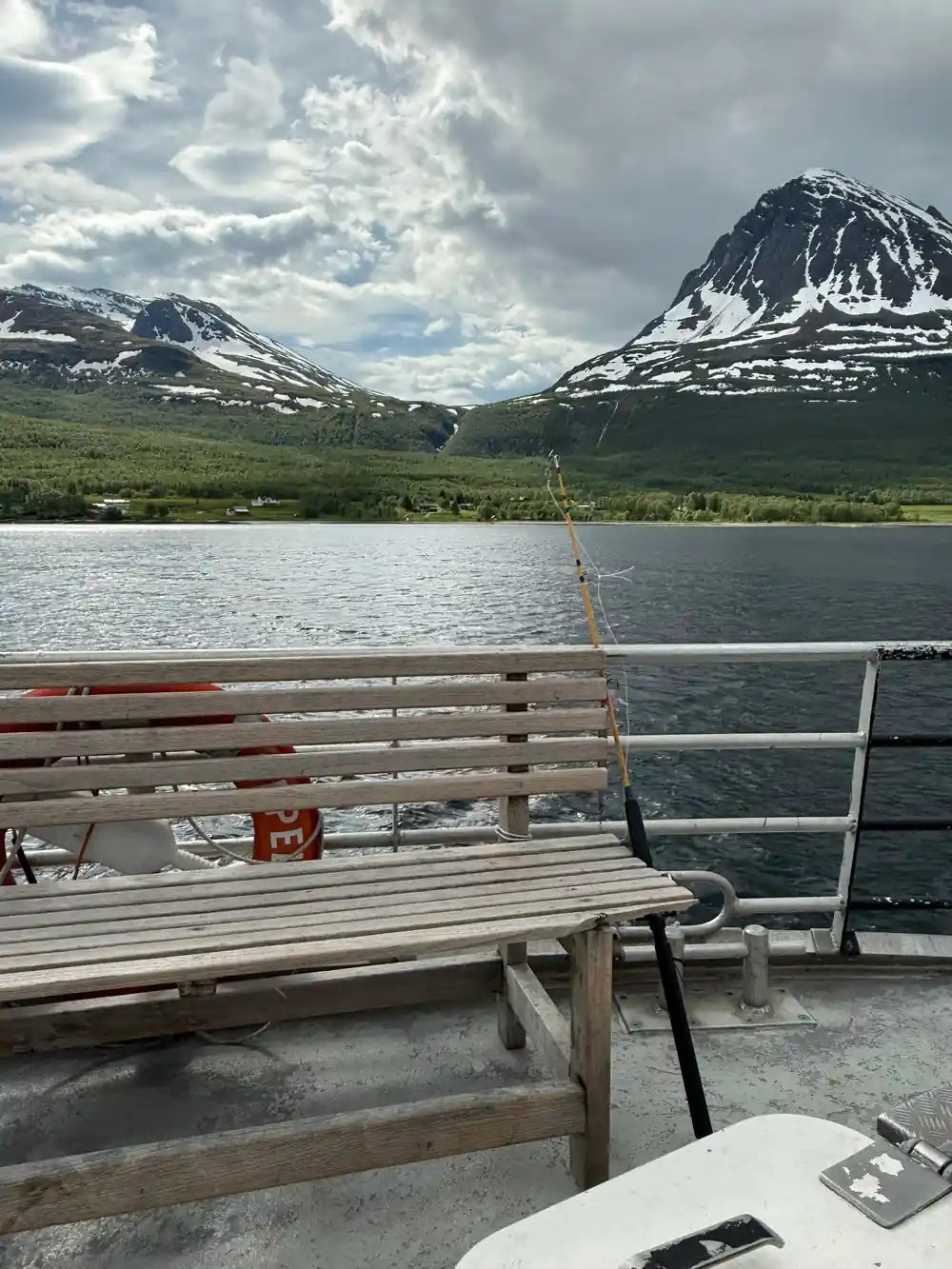
The Tromsø: Arctic Fjord Cruise & Fishing Experience is the trip booked from this site. It runs 4 - 5 hours, from US$136, with a live guide who works in English, and it stops at Ryøya and Ramfjorden.[4] You can reserve now and pay later, and free cancellation applies up to 24 hours in advance for a full refund.[4]
Pack for standing still: layers, a windproof shell, gloves you can photograph in, and a head torch with a red light so you do not blind everyone on deck. Some newer vessels run on electric and hybrid propulsion, and Siemens Energy reports that such systems can cut vessel fuel consumption, emissions, and costs up to 90 percent.[14] Quiet engines suit a night when you are listening for the water as much as watching the sky. Keep a pair of liner gloves on under the thick ones so you can work a zip without exposing your fingers.
From-prices for the fjord trips in the comparison
From-prices in US dollars for four Tromsø fjord trips listed on GetYourGuide.[4][5][6][7]
Fjord trip from-prices per person
US dollar from-prices for four Tromsø fjord listings on GetYourGuide.[4][5][6][7]
When to plan a fjord aurora night
Planning your aurora night
Pick a dark-hours sailing
Evening and night departures leave the harbour lights behind. Read the start time rather than the description, and ask how far the route runs from town.
Keep a spare night
Cloud is the usual reason a chase comes up empty. Two or three evenings in Tromsø give the sky a chance to clear.
Dress to stand still
Layers, a windproof shell, warm boots and gloves. Boat decks feel colder than the street, and you will be standing at the rail for long stretches.
Charge and cover
Warm batteries die faster. Keep spares in an inside pocket, bring a tripod, and set your phone to a dim screen so night vision lasts.
Ask about the forecast
Crews watch the aurora and cloud outlook through the evening. If the sky is quiet where you are, they may know a clearer stretch of fjord.
Sail out of the city lights and let the sky do the rest
from US$137Reserve now & pay later