At a glance
- Average sea water around Tromsø reaches 5.2 C in winter and 10.5 C in summer, cold enough to shape which fish live in the fjord.[6]
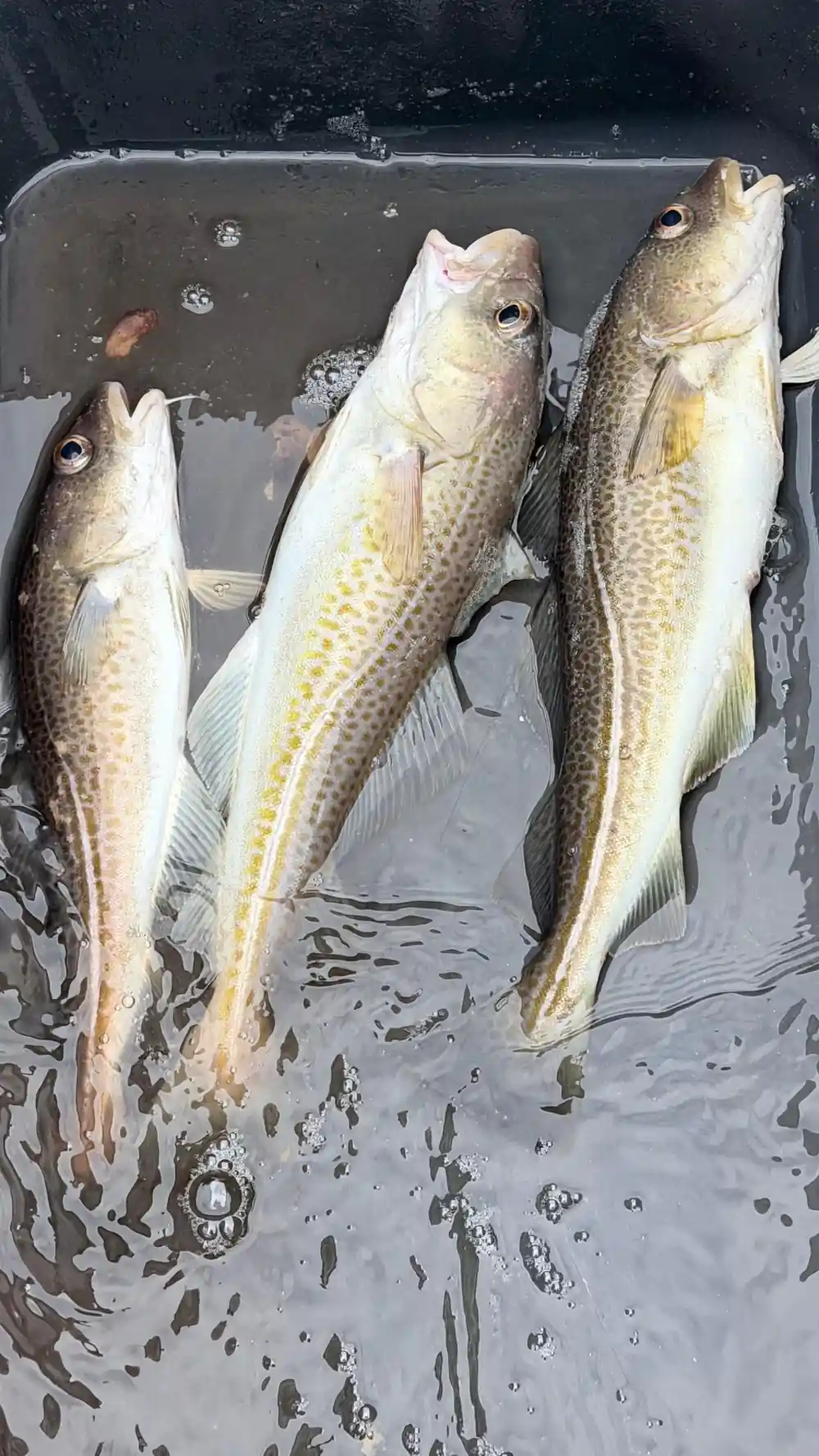
- Coastal cod, saithe, pollack, haddock, herring, mackerel and sprat are among the fish found in Norwegian fjords.[7]
- Norway has 2,500 breeding pairs of white-tailed sea eagles, the largest breeding population in Europe, and they work the same water.[8]
- In Norwegian waters the red king crab rarely exceeds 8 kg / 23 cm carapace length.[9]
- The Arctic Fjord Cruise & Fishing Experience runs 4 - 5 hours from Tromsø, with stops at Ryøya and Ramfjorden.[10]
- Top choice Fjord Cruise & Fishing from US$136 Duration4 - 5 hours[10]Rating4.72 from 5,096 reviews[10]GuideLive tour guide: English[10]CancellationCancel up to 24 hours in advance[10] Check availability
- Fishing Sea Safari from US$173 Duration3.5 hours[11]Rating4.85 from 721 reviews[11]GuideLive tour guide: English[11]CancellationCancel up to 24 hours in advance[11] See this tour
- Arctic Fjord Cruise from US$121 Duration3.5 hours[12]Rating4.68 from 1,959 reviews[12]GuideLive tour guide: English, Norwegian[12]CancellationCancel up to 24 hours in advance[12] See this tour
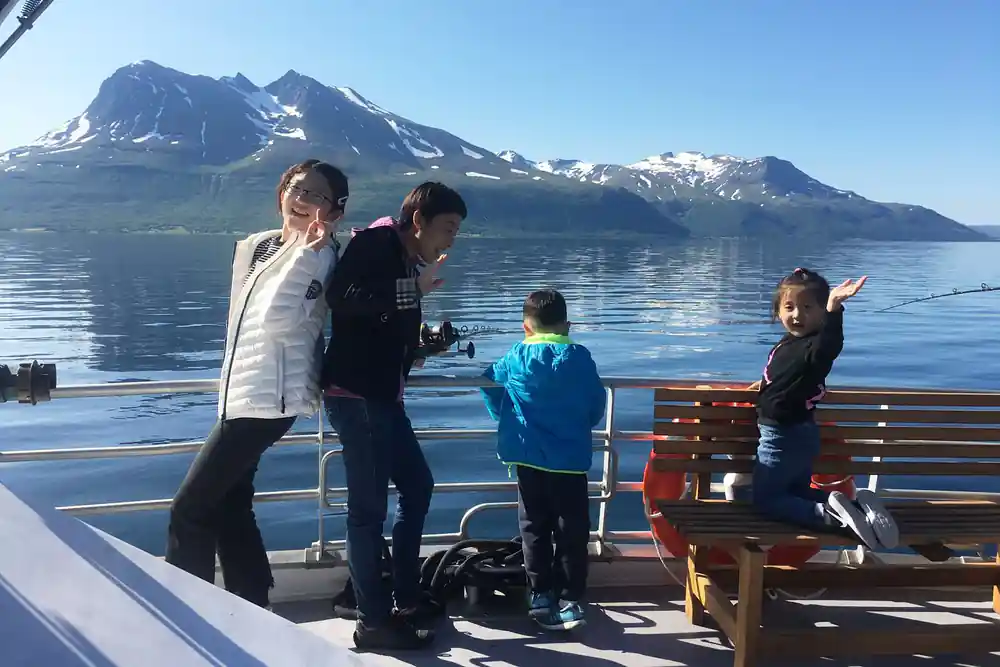
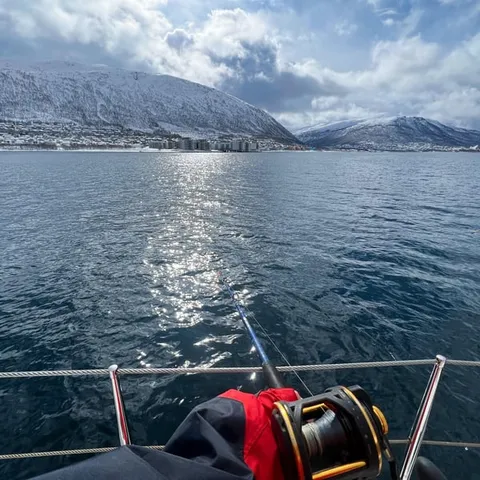
The red king crab rarely exceeds 8 kg / 23 cm (carapace length in Norwegian waters).
Fish the fjord that built this coast
Know before you leave
- Book ahead in winter, the best boats fill through the cod season.
- Prices shown on the booking page are from-prices in US dollars.
- Free cancellation applies to the cruise: cancel up to 24 hours in advance for a full refund.[10]
- Your confirmation carries the meeting point and the start time for your date.
On the water
- Average sea water around Tromsø is 5.2 C in winter, so wear layers and gloves.[6]
- Small boats let the crew help each angler individually.
- Long northern daylight in summer means late departures still show the fjord clearly.
- Check availability to see starting times before you plan the rest of your day.[10]
What swims under a Tromsø fjord
From the quayside the water looks flat, grey and empty. It is not. Fish found in Norwegian fjords include coastal cod, saithe, pollack, haddock, herring, mackerel and sprat, and a rod fished over the side near Tromsø can meet several of them in one afternoon on the water.[7] The city sits 217 miles north of the Arctic Circle and has a population of 75,638, which tells you how far north this fishery is.[13] The sea itself stays cold all year, with average sea water temperature around Tromsø reaching 5.2 C in winter and rising to 10.5 C in summer.[6]
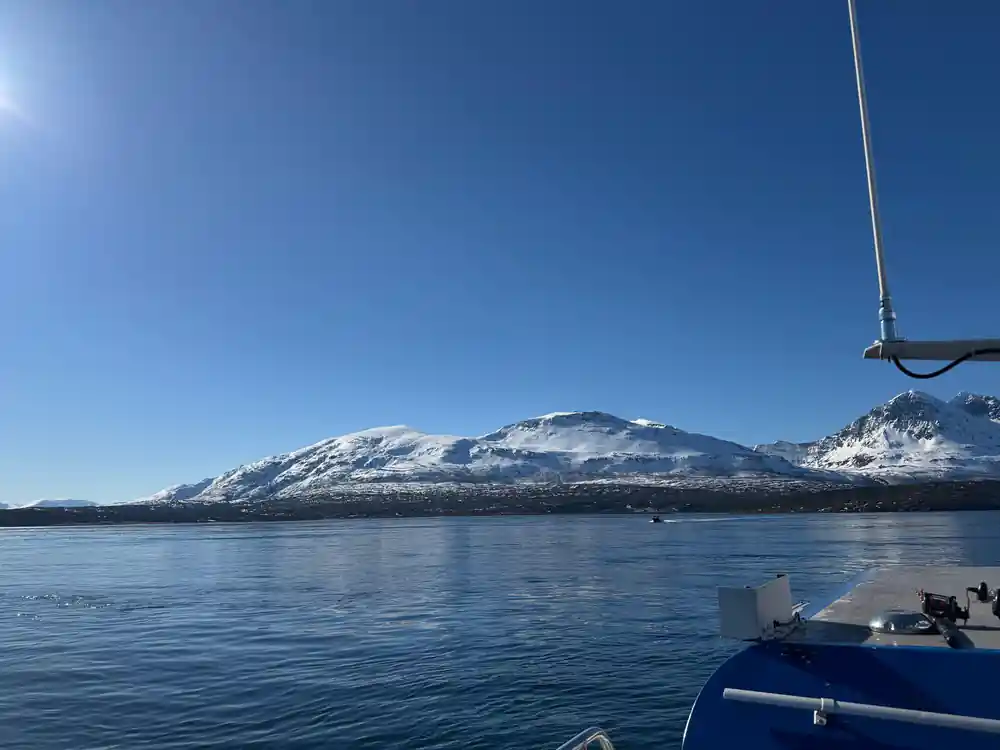
Cold water holds more oxygen than warm water, and the fjords here are deep, sheltered and scoured by tidal currents that push nutrients through the sounds. That is a food chain in plain sight, from plankton and krill up through baitfish, cod and seals. Above the water, Tromsdalstinden stands across the bridge from downtown Tromsø with a summit of 1,238 m, and its slopes drop straight into the fjord.[14] Keep an eye out for white-tailed sea eagles working the surface; Norway has 2,500 breeding pairs, the largest breeding population in Europe.[8]
Skrei: the cod that comes home to spawn
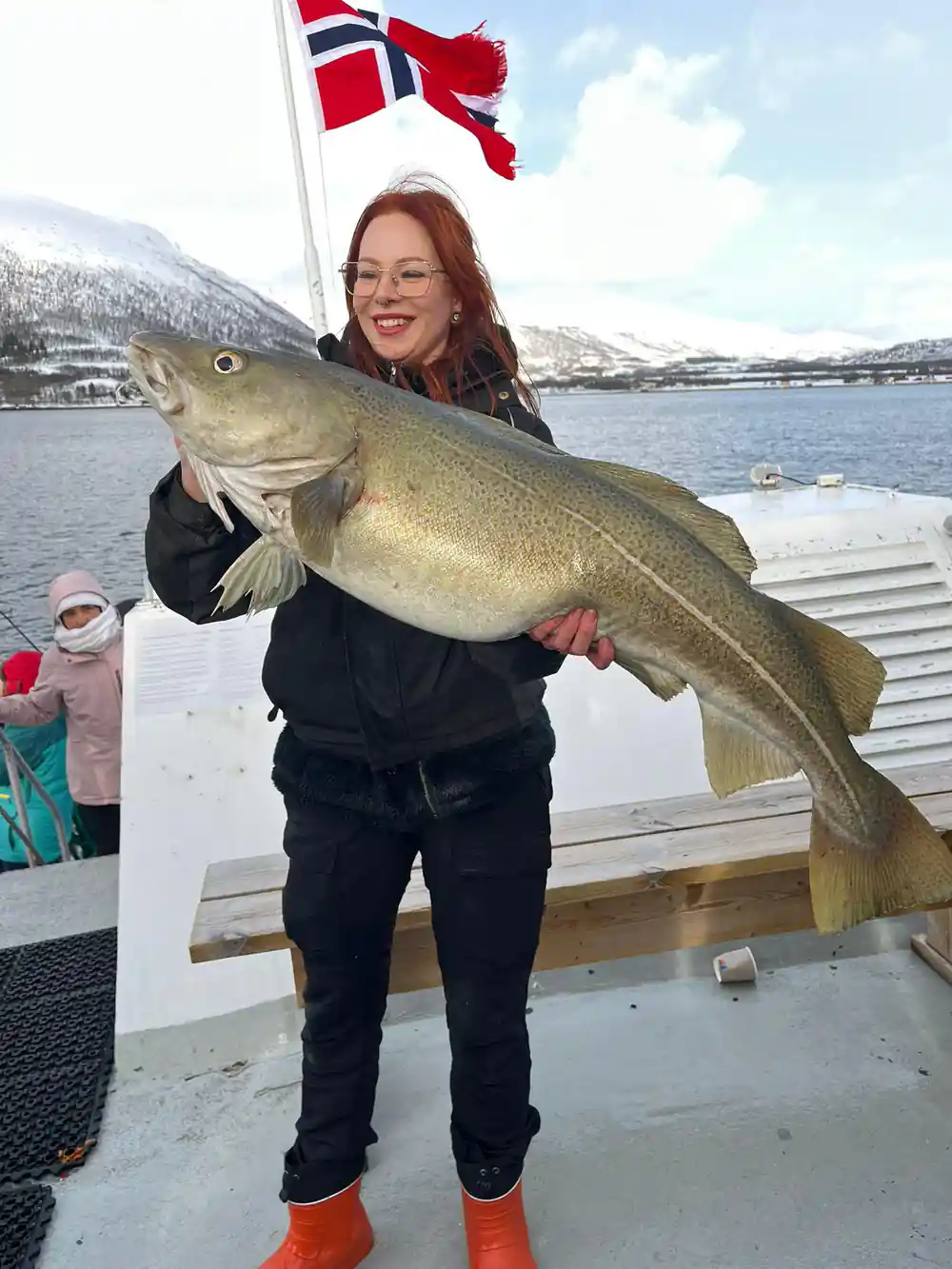
Walk past a Tromsø fish counter in late winter and you will see cod sold as skrei. Skrei is the migrating, spawning form of Atlantic cod, fish that feed out in the Barents Sea for much of the year and then run along the Norwegian coast to spawn in cold, salty water. They arrive lean and silver, in long shoals, and they are the reason cod and Norway sit together in so many old cookbooks. The season here falls in the darkest, coldest weeks of the year, when boats work short daylight hours and the fish are close to shore.
It is properly cold then. In Tromsø the average temperature in February, the coldest month, is -3.2 °C.[15] The sea is milder than the air, averaging 5.2 C in winter around Tromsø, so the spawning shoals are not sitting in ice.[6] Darkness shapes the day as well: Tromsø claims 61 days of polar night, when the sun does not rise above the horizon.[16] If you want to combine fishing with the northern lights, January offers the highest statistical chance of seeing the aurora in Tromsø, with 75-80% success.[17]
For a visitor, that timing is everything. Winter trips run in low light, with blue hours that last all morning, and the payoff is that the cod are inshore and feeding. Summer is the opposite: bright, busy and mild, with mackerel and pollack chasing bait high in the water column and the fjord lit until late.
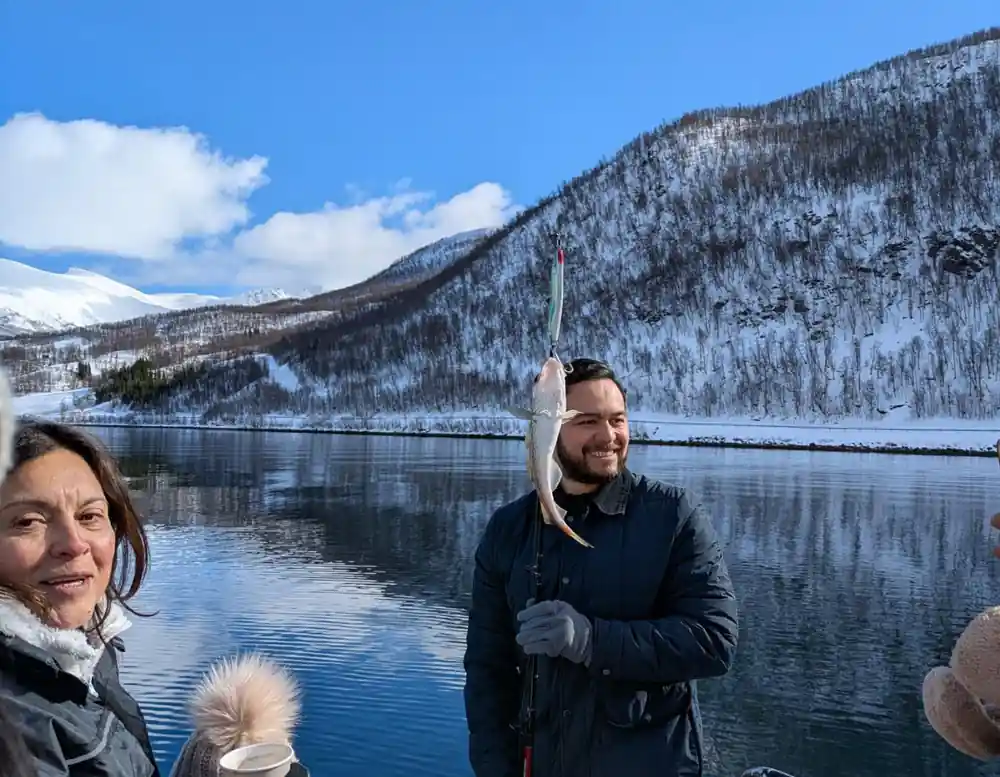
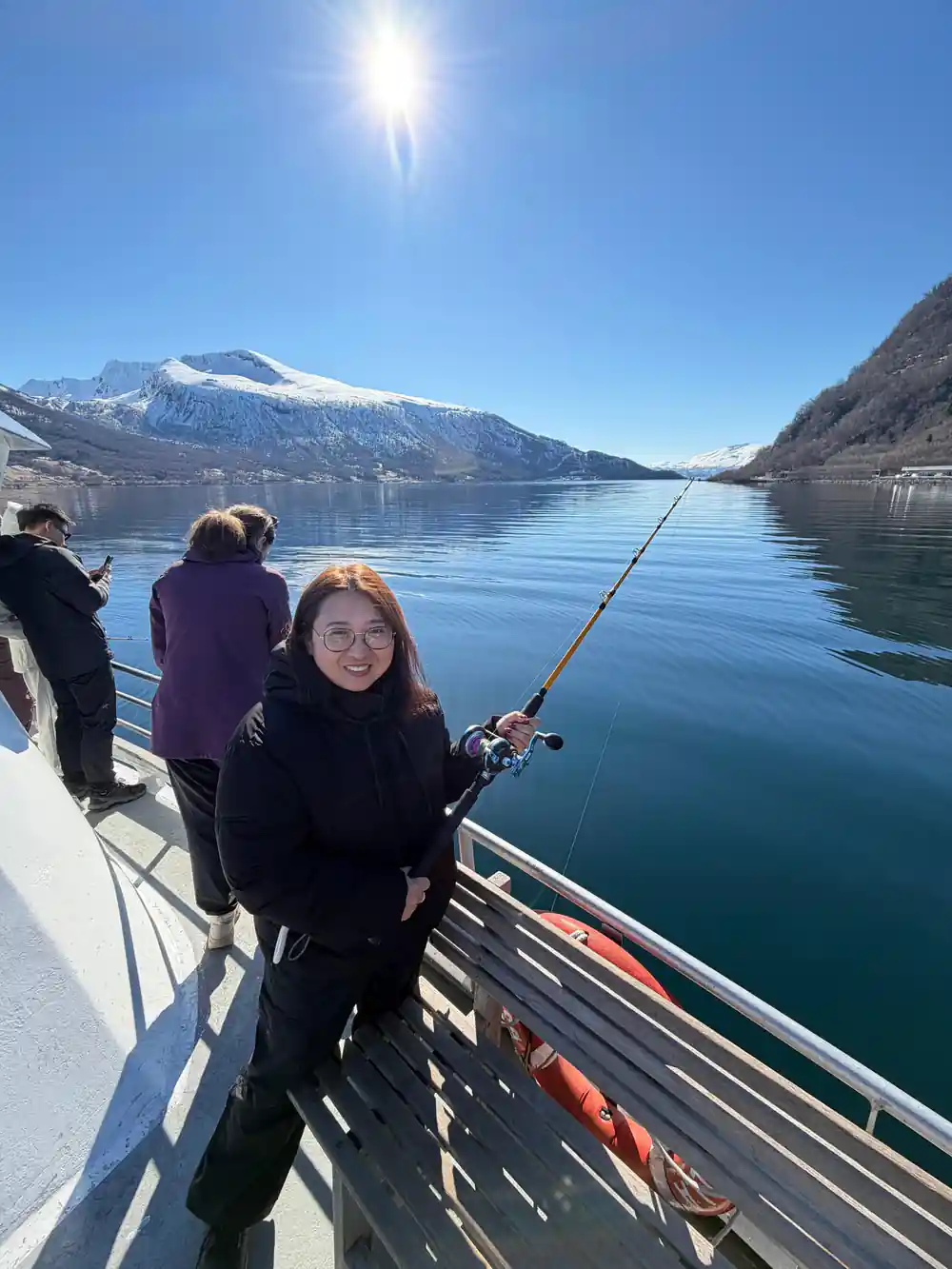
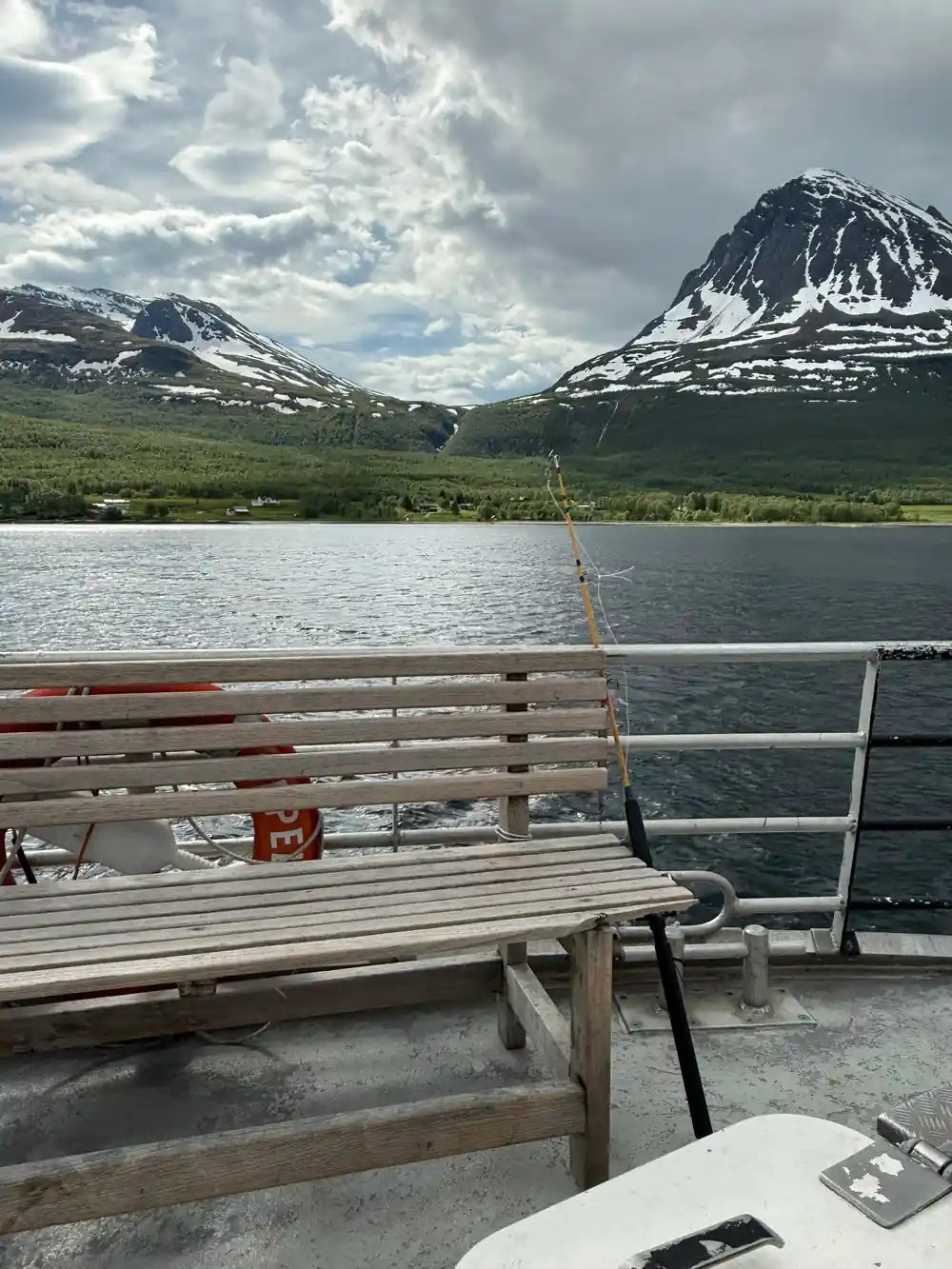
Cold, deep water and a rod over the side: the fjord outside Tromsø.
Why the cod gather in these fjords
Cod do not need warm water. They need water that is cold, salty and rich enough to feed a whole shoal of adults and the larvae that follow them. The fjords outside Tromsø deliver all three: deep channels, a long broken coastline, and tidal currents that keep the water moving and well mixed. When the spawning shoals come in, they gather in the same sheltered arms of water year after year, and the small boats that fish them do not have to travel far to find them.
For a visitor, that geography is a gift. You can leave the harbour and be over fishing ground within minutes, with mountains on both sides and very little swell. The mix changes with depth and season, and the list of fish found in Norwegian fjords includes bottom dwellers such as cod and haddock and midwater species such as herring and mackerel.[7] Even in high summer the water only averages 10.5 C, cool enough to keep fish active and feeding through the long northern days.[6]
Halibut, coalfish and the birds above
Atlantic halibut is the fish that makes anglers go quiet. It lies flat on the seabed, camouflaged against sand and gravel, and ambushes whatever swims within reach. Coalfish, known in Norway as sei, are the opposite: fast, midwater, and often found in schools that push baitfish up through the water column. Both turn up in northern Norwegian fjord fishing, and both fight hard on light tackle.
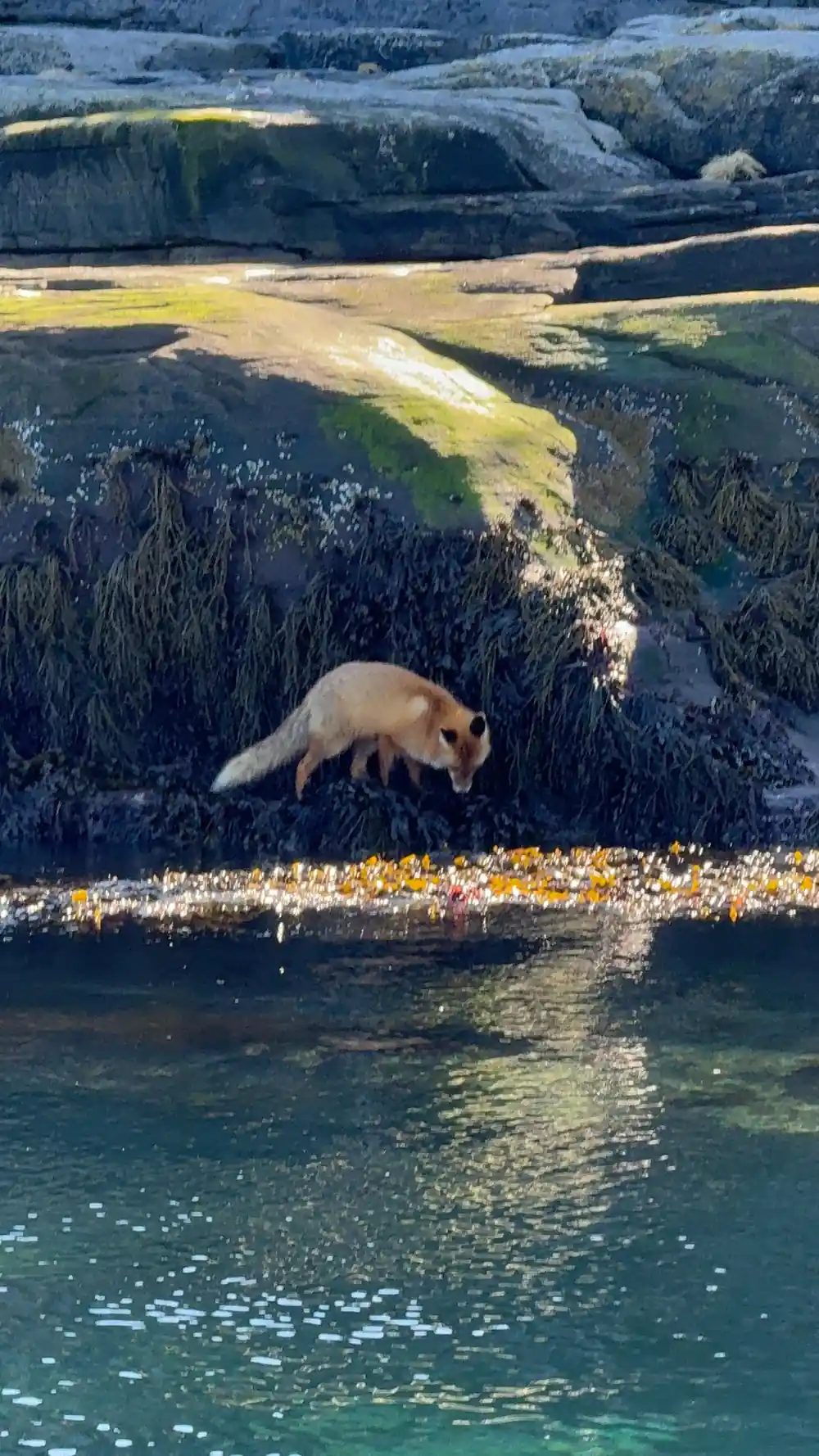
Above them the food chain is visible. Gulls, cormorants and sea eagles work the same water, and diving seabirds mark the bait shoals from a long way off. Norway has 2,500 breeding pairs of white-tailed sea eagles, the largest breeding population in Europe, so a big dark shape over the boat is worth watching.[8] In winter, herring draw larger visitors: orcas and humpbacks follow herring into the Tromsø and Skjervøy fjords roughly every November through January.[18]
from US$136
Arctic Fjord Cruise & Fishing Experience: 4 - 5 hours, live English guide, stops at Ryøya and Ramfjorden.[10]
How fish live in near-freezing water
Cold blood is not a disadvantage if you are built for it. Cod and their relatives make antifreeze proteins that stop ice crystals forming in their body fluids, and their muscles and enzymes keep working at temperatures that would slow a warm-water fish to a standstill. That is why the cod family thrives so far north, and why the fishing stays good when the air temperature drops well below freezing.
The practical side is simpler than the biology. Cold water carries plenty of oxygen, so fish can feed hard without tiring, and they usually take a bait confidently. It also means you should not rush a hooked fish: play it gently and it comes to the boat in better condition. February averages -3.2 °C in Tromsø, the coldest month of the year, so your hands will feel the cold long before the fish do.[15]
Dried cod, herring and the trade that built the coast
For centuries the winter cod were not only food, they were money. Split, salted and dried on wooden racks, cod became stockfish and clipfish, shipped south through Bergen and out into Europe, and the small fishing villages along this coast grew up around the season. Herring mattered just as much. In the 1950s and 1960s the fishable component of the Norwegian spring-spawning herring stock is believed to have measured about 10 million metric tonnes, a reminder of how vast these northern shoals once were.[19]
That history is still written into the landscape: rorbuer on stilts over the water, drying racks on the headlands, and harbours built for boats that followed fish rather than visitors. Today the same water carries a mixed fleet of fishing boats, ferries and small cruise vessels. Electric and hybrid propulsion systems of the kind fitted to some newer boats can cut vessel fuel consumption, emissions and costs up to 90 percent.[20]
King crab, wolffish and what you see from the deck
Two of the strangest animals in these fjords live on the bottom. Wolffish look assembled from spare parts, all blunt head and crushing teeth, and they crunch through sea urchins and shellfish. Red king crab are giants by crab standards: in Norwegian waters the red king crab rarely exceeds 8 kg / 23 cm carapace length, and they are caught in pots rather than on lines.[9]
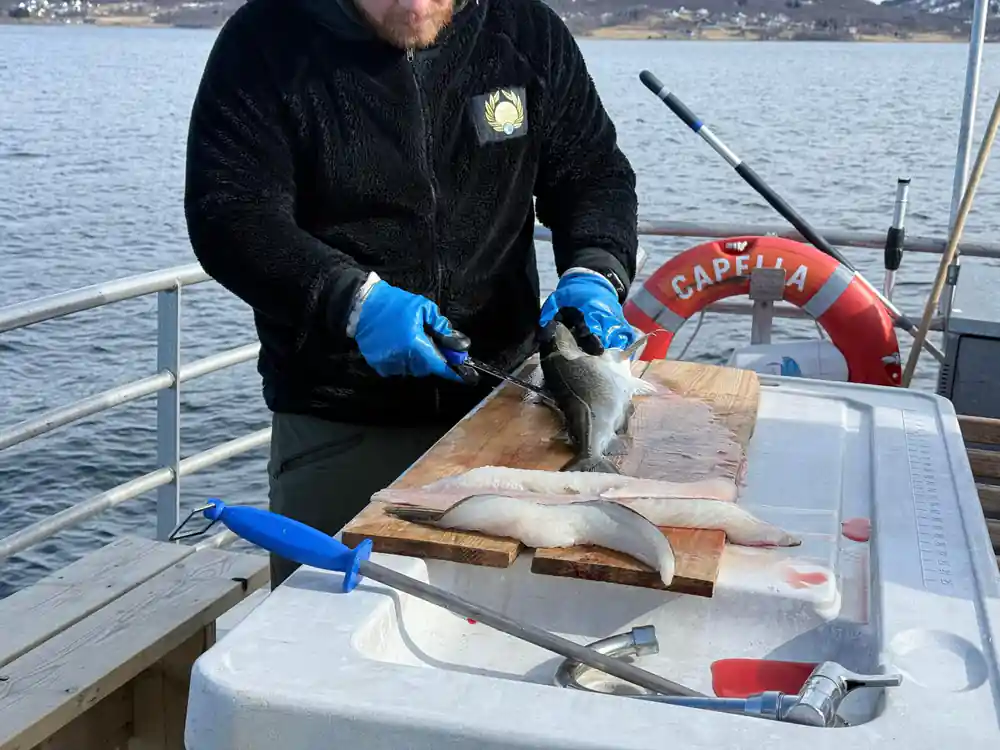
You do not need to be a biologist to enjoy any of this. On a fjord fishing trip out of Tromsø you are handed a rod, shown how to work it, and left to watch the tip while the boat drifts over known ground. The Arctic Fjord Cruise & Fishing Experience runs 4 - 5 hours, has a live English guide and stops at Ryøya and Ramfjorden, from US$136.[10] It is rated 4.72 from 5,096 reviews, with free cancellation up to 24 hours in advance and reserve now and pay later.[10]
From-prices for fishing trips out of Tromsø
From-prices in US dollars from these GetYourGuide listings.[10][11][21][22]
Compare from-prices for fishing trips
From-prices in US dollars from these GetYourGuide listings.[10][11][21][22]
When to go, by season
Plan your fjord day
Choose your boat
The Arctic Fjord Cruise & Fishing Experience runs 4 - 5 hours with stops at Ryøya and Ramfjorden.[10]
Book before winter
Reserve now and pay later is offered, and the listing includes free cancellation up to 24 hours in advance.[10]
Layer up properly
February averages -3.2 °C in Tromsø, the coldest month, so bring a windproof shell and warm gloves.[15]
Listen to the skipper
Local crews know which depth is holding fish on the day, so ask what is showing on the sounder and how deep to fish.
Handle your catch
Keep your hands wet, support the fish along the body, and let the crew show you how to release or keep what you land.
Fish the fjord where the cod come in to spawn
from US$137Reserve now & pay later