At a glance
- Tromsø: Arctic Fjord Cruise & Fishing Experience runs 4 to 5 hours and starts from US$136.[1]
- 4.72 out of 5 from 5,096 reviews on GetYourGuide.[1]
- The route takes in Ryøya and Ramfjorden, with a live English-speaking guide on board.[1]
- Reserve now and pay later, with free cancellation up to 24 hours in advance.[1]
- Coastal cod, saithe, pollack, haddock, herring, mackerel and sprat are found in Norwegian fjords.[2]
- Top choice Fjord Cruise & Fishing from US$136 Duration4 - 5 hours[1]Rating4.72 from 5,096 reviews[1]GuideLive guide: English[1]CancellationFree cancellation up to 24 hours in advance[1] Check availability
- Sommarøy Salmon Picnic from US$55 Duration4.5 hours[3]Rating4.73 from 5,005 reviews[3]GuideLive guide: English, Spanish[3]CancellationFree cancellation up to 24 hours in advance[3] See this tour
- Polar Landscapes Cruise from US$121 Duration3.5 hours[4]Rating4.68 from 1,959 reviews[4]GuideLive guide: English, Norwegian[4]CancellationFree cancellation up to 24 hours in advance[4] See this tour
The red king crab rarely exceeds 8 kg / 23 cm (carapace length in Norwegian waters).
Is the Tromsø fjord fishing cruise worth booking?
Read before booking
What to Expect from Food and Drink on Board
A fjord cruise from Tromsø runs for 4 to 5 hours on the water[1]. That is a long stretch in cold air, and a warm drink or a bowl of something hot starts to matter. Menus differ from one boat to the next and can change with the season and with what the crew has been able to buy that week. Treat food as part of the planning rather than an afterthought. Read the tour listing properly, look at the photographs, and if a hot meal is important to you, message the operator before you book and ask what will be served on your date.
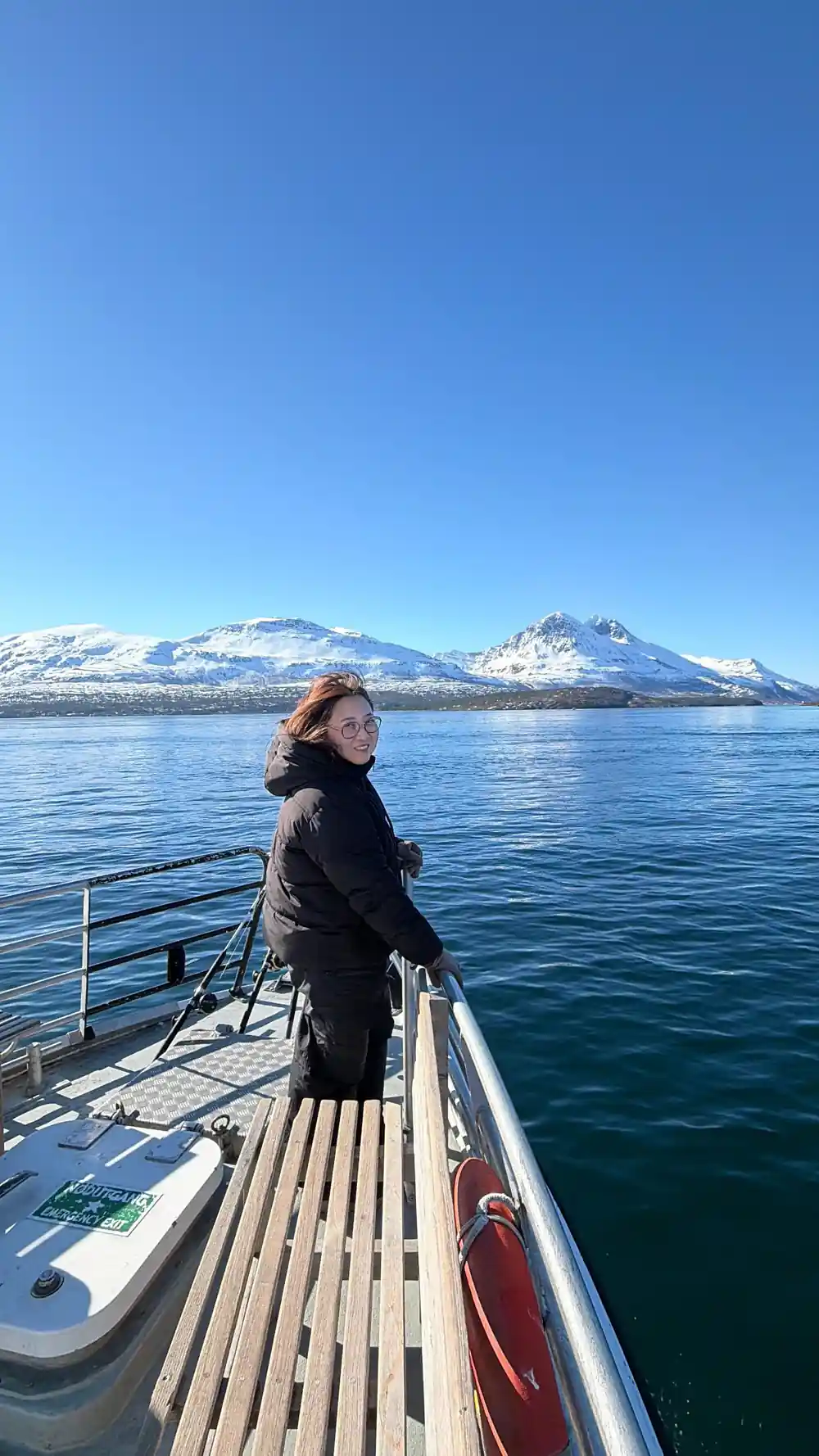
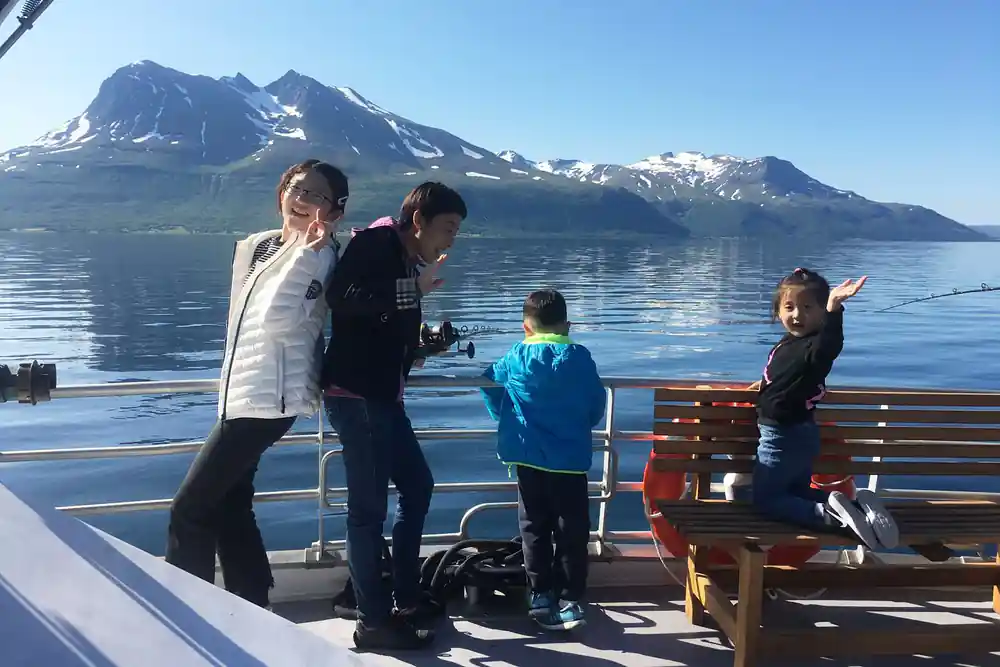
The Arctic Fjord Cruise & Fishing Experience, the tour booked from this site, heads out past Ryøya and into Ramfjorden[1], with a live guide who speaks English[1]. Bring a small day bag with a water bottle, a few snacks you know you like, and any food or medication you cannot do without. Sea air makes people hungrier than they expect, and cold sharpens hunger further. A handful of nuts or a bar of chocolate in a coat pocket has rescued a lot of fjord days.
Fish Soup and Warm Dishes on the Water
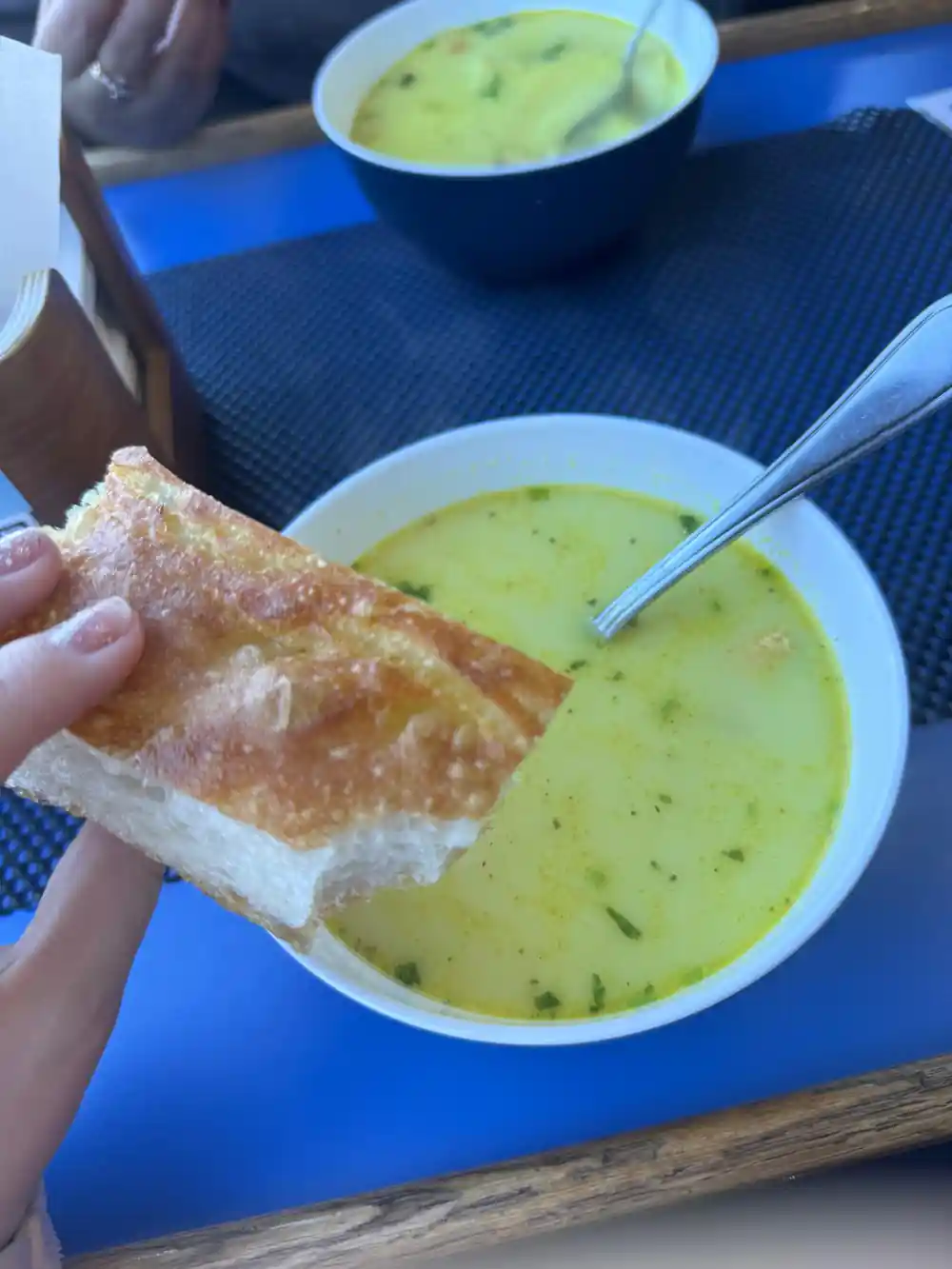
Fish soup is a staple of the Norwegian coast. In its common form it is a smooth, slightly sweet broth built on fish stock, milk or cream, carrots, leeks and potatoes, with chunks of white fish folded in at the end and a scatter of dill or chives on top. Along the Tromsø quays it also turns up as a clearer, tomato-tinted soup with a chilli bite. Either way it is built for cold weather: hot, filling, and easy to eat from a mug or a deep bowl with a slab of bread.
If a hot meal is served, the middle of the trip is the natural moment for it, when the boat slows and people come in to warm their hands. Bread, crispbread, butter and coffee are the usual companions, and a flask of hot blackcurrant cordial goes down well with children. Galleys on small boats cook what the season allows, so the exact dish can change from one sailing to the next. If the detail matters to you, ask what your date will serve rather than assuming.
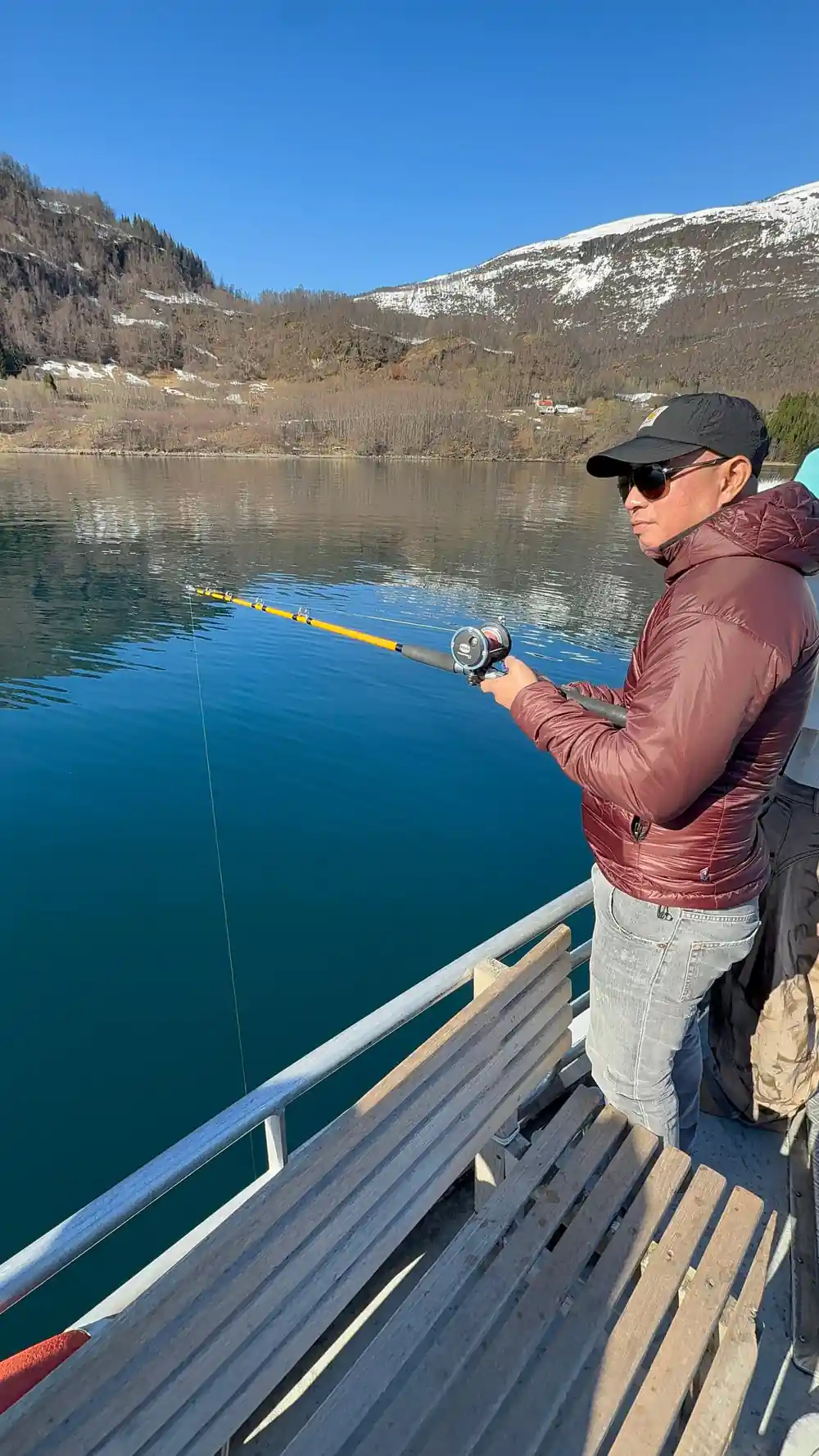
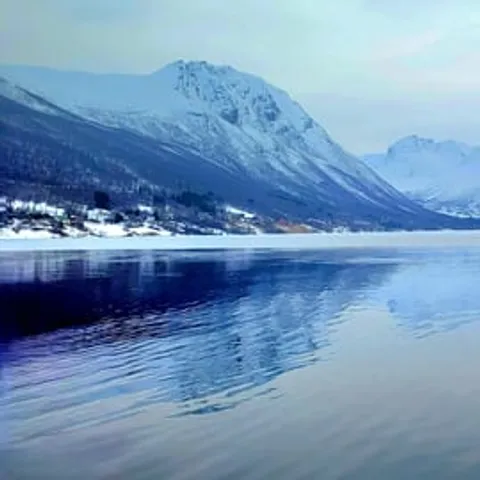
Cold, clear water and a line over the side on a Tromsø fjord day.
Vegetarian, Vegan and Other Dietary Requests
If you are vegetarian or vegan, do not leave it to the day. Message the operator when you book, ask specifically what the galley can prepare for you, and follow up a day or two before you sail. A clear, simple request is the difference between a proper vegetable dish and a plate of garnish. The same goes for anyone who keeps halal, follows a low-carb diet for medical reasons, or simply cannot eat fish. Ask early, ask in writing, and remind the crew when you step aboard.
Seafood questions come up constantly, and can you eat arctic char is one of the most common. Char is a cold-water fish of northern lakes and rivers, mild and pink-fleshed, lovely simply grilled with butter and lemon, but whether it appears on a menu during your stay depends on the restaurant and the week rather than on anything you can plan around. Ask at the counter. If you want to cook for yourself, the fjords around Tromsø hold coastal cod, saithe, pollack, haddock, herring, mackerel and sprat.[2]
Allergies and Dietary Restrictions on Board
A small galley is not a restaurant kitchen. Pans, boards, fryers and serving spoons get shared, and flour, nuts, dairy or shellfish may all be in the air at once. If your allergy is serious, say so when you book, put it in writing, and repeat it to the crew when you board. Ask what the risk of cross-contact is and what they can do to reduce it, then decide for yourself whether the answer is one you are comfortable with.
Bring what you need to stay safe: your own medication, a written card in Norwegian and English explaining the allergy, and a snack you know is clean. This trip has a live guide who speaks English[1], so explaining your needs on board is straightforward. If a meal cannot be made safe for you, eat well before you sail and enjoy the water instead. Nobody on a fjord boat will think that is odd.
from US$136
The Tromsø: Arctic Fjord Cruise & Fishing Experience, 4 to 5 hours past Ryøya and Ramfjorden, from US$136.[1]
Catching, Cooking and Eating Your Fish
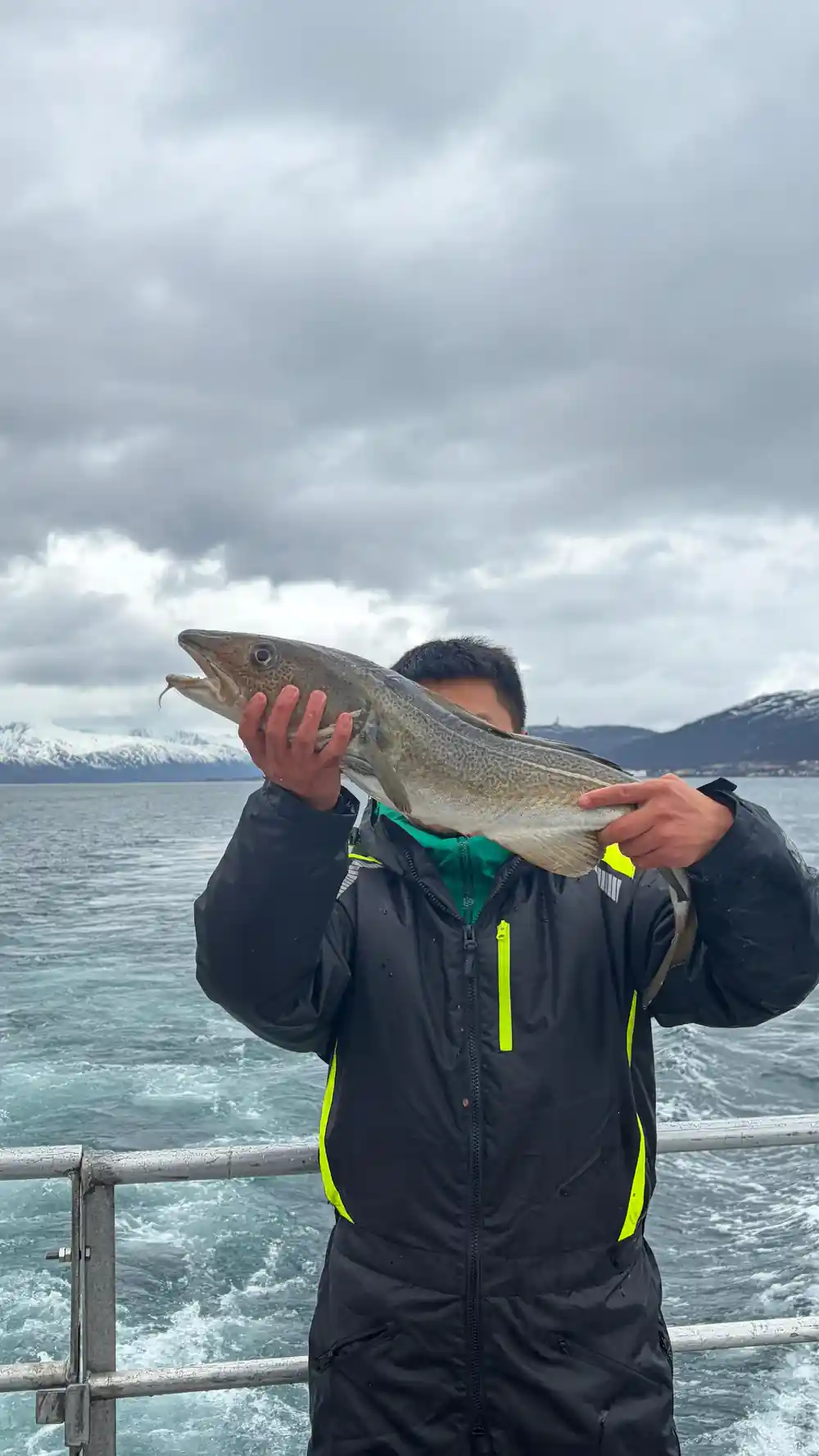
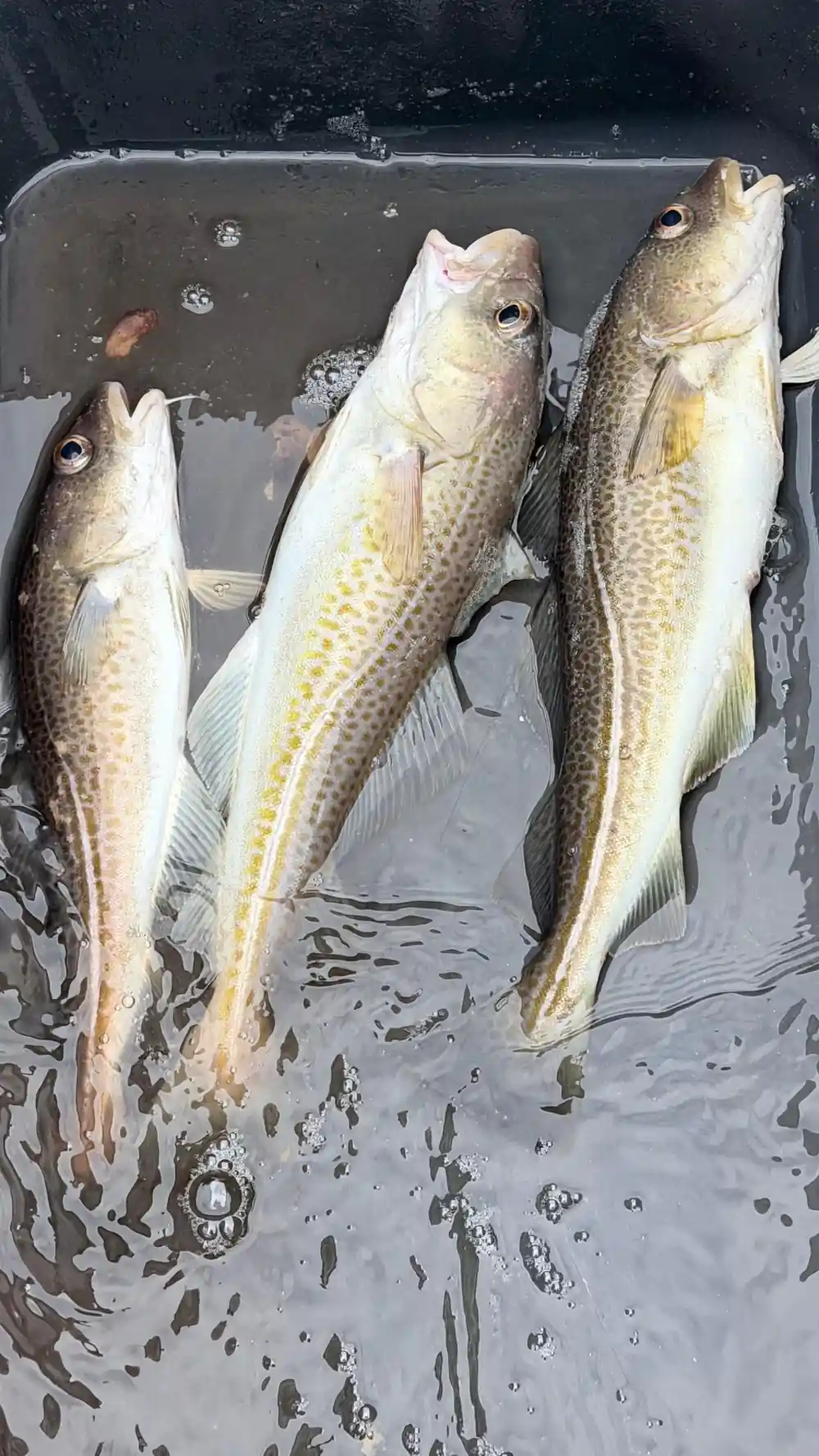
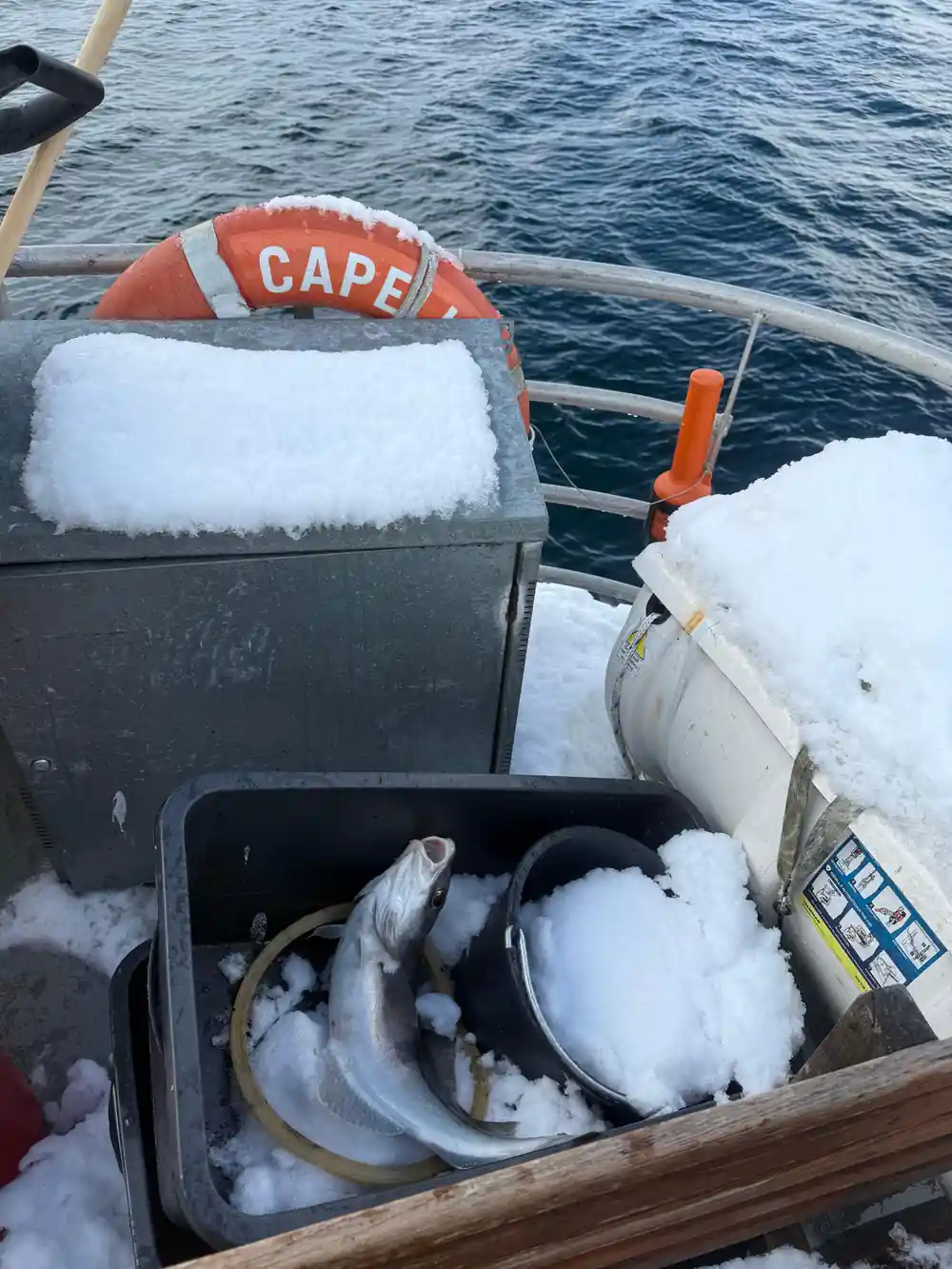
This is the hands-on part of the day. Lines go over the side in water that is rarely very deep, and the catch is the ordinary, good-eating kind: coastal cod, saithe, pollack, haddock and mackerel are all found in Norwegian fjords.[2] A cod of a few kilos is a real handful on light tackle, and even a modest haddock makes a proper meal. Listen to the crew about depth, bait and how to hold the rod, and keep a hand free when the boat rolls.
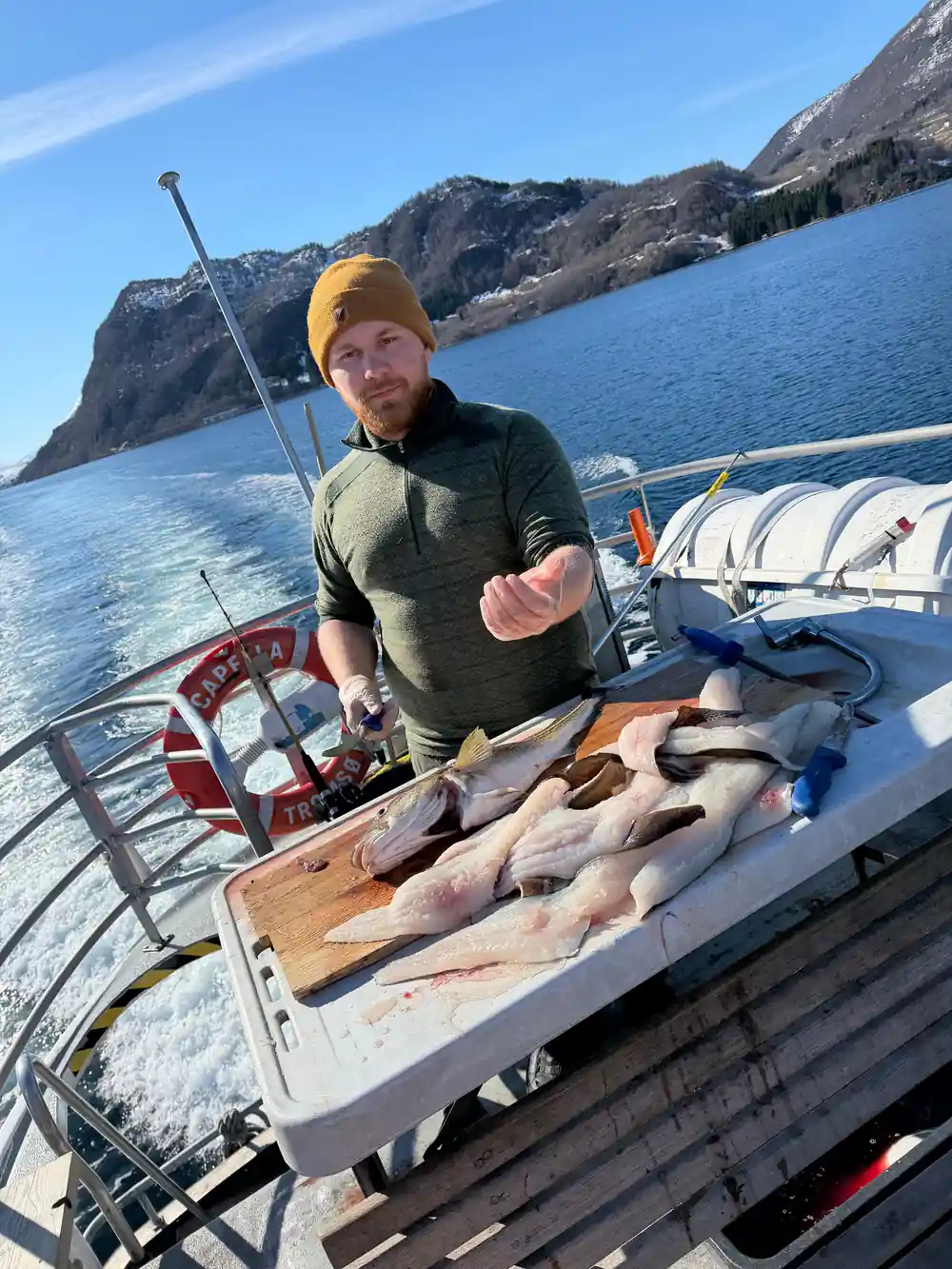
If cooking your catch is part of your day, ask the crew early what happens to the fish: who guts it, who fillets it, whether it goes into a pan or a pot, and whether you eat it on board or carry it away. Fresh cod or pollack needs little more than butter, salt and a hot pan. King crab is the other famous catch in these waters, and it is worth knowing the scale of the thing: red king crabs rarely exceed 8 kg or 23 cm carapace length in Norwegian waters.[6]
Keeping Your Catch to Take Home
Fish is perishable, and a boat deck in the Arctic is not a fridge. If you hope to take fillets home, ask the crew to gut and clean the fish as soon as it is landed, keep it cold and out of the sun, and get it into a fridge or freezer within a few hours. Ask your hotel or guesthouse whether they have freezer space you can use, and plan how you will carry the fish back to your room.
For the journey home, freeze the fish solid, wrap it well and keep it in a cool bag or an insulated box with ice packs. Rules on carrying fish and other animal products differ between countries and change from time to time, so check with your airline and with Norwegian and destination customs before you pack a fillet in a suitcase. Many travellers decide the simplest answer is to eat their catch in Tromsø and travel light.
The Bar, Paid Snacks and Bringing Your Own
Ask when you book what drinks are available on your sailing: coffee and tea, a small bar, or nothing beyond what you carry on yourself. It is also worth asking whether drinks are included and whether cards are accepted on board. If you are particular about your tea, a flask of your own is never wasted on a cold deck. Some of the boats working these fjords use electric and hybrid propulsion, systems that can cut vessel fuel consumption, emissions and costs up to 90 percent.[7]
Before you pack a bottle, check the current Norwegian customs allowances, which differ depending on where you are travelling from and how long you have been away. On board, treat alcohol as something to ask about rather than assume. If you bring your own food, keep it simple and sealed, and mention it to the operator so nobody minds. A thermos of soup and a bag of cinnamon buns is a very Norwegian picnic, and it works beautifully at anchor in a quiet fjord.
Traveller review counts for Tromsø fjord tours
Review counts taken from the GetYourGuide listings for these tours.[1][3][4][8]
What the Tromsø boat trips cost from
From-prices in US dollars from the GetYourGuide listings; child places are quoted by the operator at booking.[1][3][4][8]
When to sail around Tromsø
How to plan your food day
Read the listing
Read the tour listing carefully and note what it says about meals, drinks and start times.
Message the crew
Send dietary needs, allergies and questions a few days ahead so the galley can plan.
Pack smart
Pack a water bottle, snacks you trust and any medication in a small day bag.
Fish first
Ask the crew how they handle gutting, filleting and cooking if you plan to eat your catch.
Keep it cold
Plan storage or freezing for any fish you take home, and check airline and customs rules.
Ready for a few hours on the fjord with a rod in your hand?
from US$137Reserve now & pay later