Principais conclusões
- In July 1892 papers across Norway reported that three hundred silver coins, struck between 1541 and 1595 and the size of a Norwegian speciedaler, had been dug out of the ground at Bentsjord.
- A Tromso paper noted that there had already been a legend that a treasure lay buried in the earth at Bentsjord, though what the legend rested on was another matter.
- Within a fortnight the same paper reported that the finder had sold the whole three hundred to a goldsmith in Tromso.
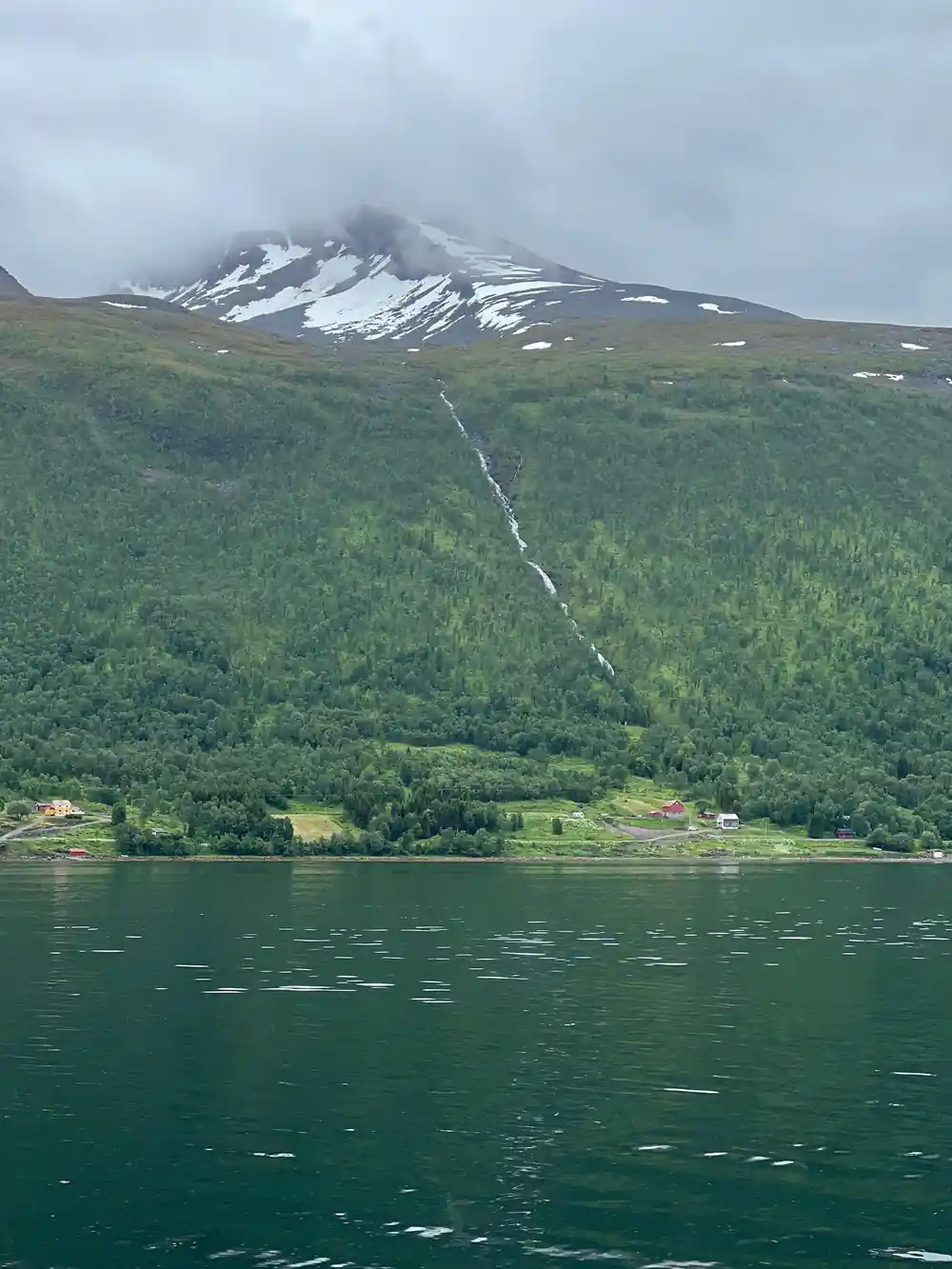
- Bentsjord sits on the mainland shore by Rystraumen, under a pointed summit of about one thousand two hundred and forty-five metres, with an anchorage on soft clay bottom.
The shore you pass without noticing
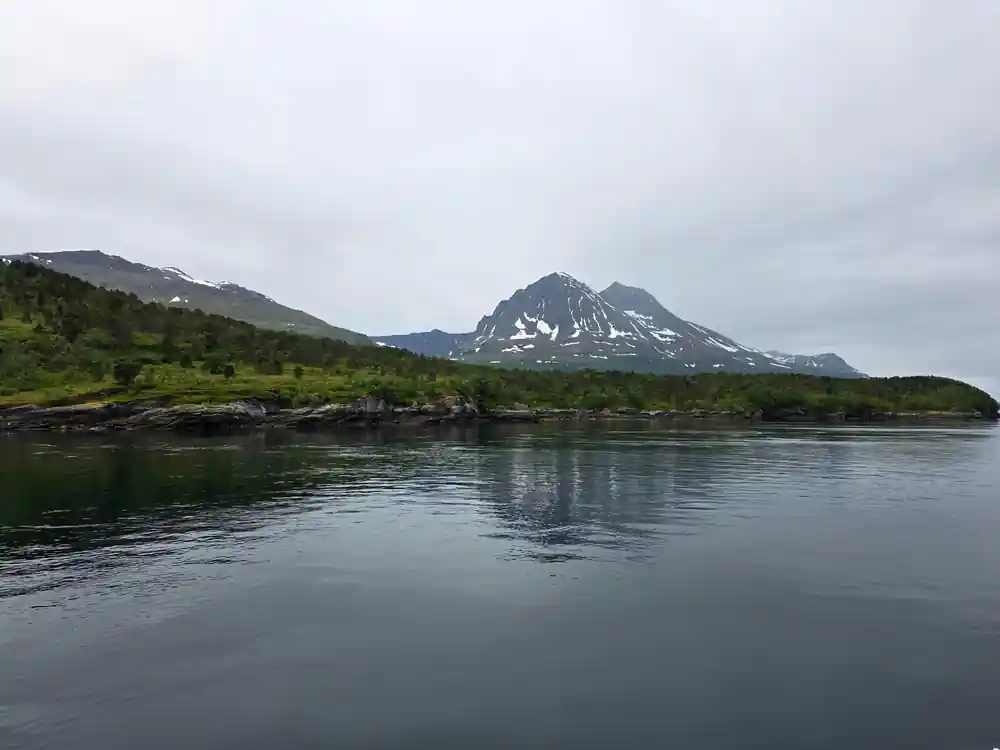
The fjord cruise runs south from Tromso and threads Rystraumen, the tidal narrows between Kvaloya and the mainland. On the mainland side, just there, is a farm called Bentsjord.
It is a name that means nothing to a visitor, and for one week in the summer of 1892 it was in newspapers from Hamar to Bergen.
What came out of the ground
The report is short and it is everywhere. Hamar Stiftstidende, on 26 July 1892: at Bentsjord, in Rystraumen south of Tromso, three hundred silver dalers from the years 1541 to 1595 have been found in the earth. [1]
Tromsoposten, which had it first, gave the detail that makes it real. A quantity of silver coins was found a short time ago on the farm Bentsjord in Tromsosundet; the coins, three hundred in number, were the size of a Norwegian speciedaler and had been struck in the sixteenth century. [2]
Vestlands-Posten, printing it a week later, added that the coins were well preserved. [4] Sixteenth-century silver, in northern soil, in good condition, three hundred of it.
The papers do not say who found it. One account describes people at Bentsjord raising the houses on the site, and a large stone lying a little below the living room with something on top of it. [2] That is as close to the moment as the record gets.
The part that makes it a story
Buried treasure turns up in Norwegian soil often enough. What makes Bentsjord different is that people had been saying it was there.
Tromsoposten, in the same week, wrote it down plainly: there had, however, been a legend that a treasure lay buried in the earth at Bentsjord, but what this legend rested on is another matter. [3]
A correspondent writing a little afterwards went further, remembering that the talk of this treasure had gone about in his own time. [6] So this was not a story reconstructed after the find. It was a local expectation, held long enough to be sceptical about, that turned out to be correct.
The ending is the least romantic part and the most human. Within a fortnight, Tromsoposten reported that the old coins found at Bentsjord, about three hundred in number, had now been sold by the finder to a goldsmith in Tromso. [3] Not to a museum. To a man who would weigh them.
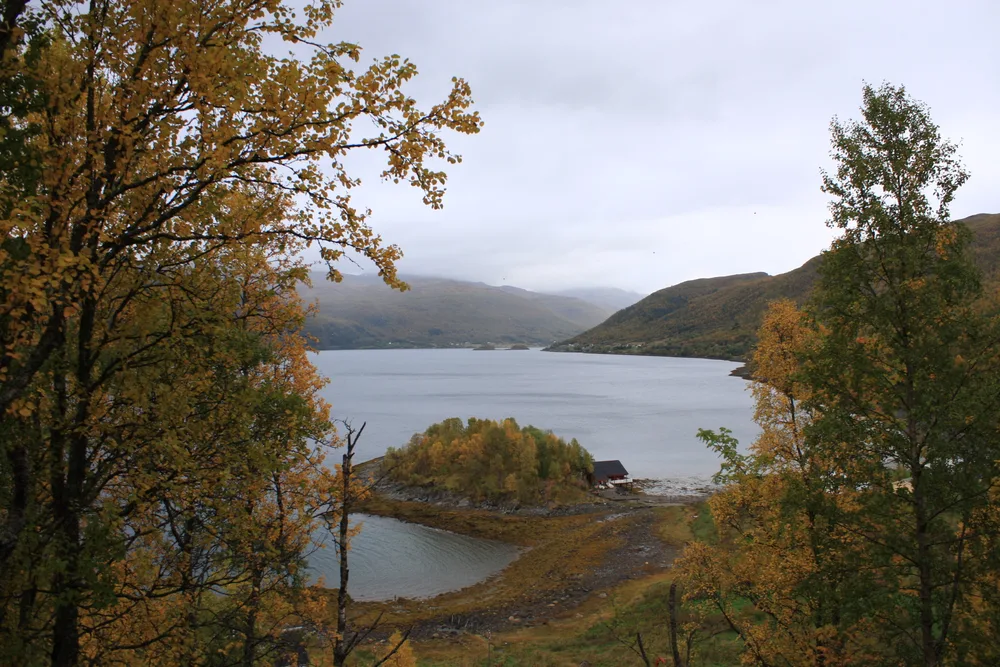
The mainland shore by Rystraumen, where in July 1892 three hundred silver dalers struck between 1541 and 1595 came out of the ground, exactly where local memory had said they would be.
Why there was something worth burying
Bentsjord was not an ordinary farm. In September 1885 a paper introducing one of its sons noted that he was born on the farm Bentsjord in Tromsosundet in 1853, and belonged to an old farming and landowning family that had lived there more than a hundred years. [9]
A 1925 recollection is blunter about what the place had been: the imposing Bentsjord in Tromsoysund, it says, unfortunately pulled down in 1890. [8] Two years before the hoard came up, the great house was taken down.
The 1899 topographical survey confirms it was a working estate rather than a croft: a traveller notes with pleasure the handsome saw at Bentsjord, standing near the houses, because saws matter in a country like this. [7]
What you can actually see
A German travel handbook of 1896 gives the landmark: nearby one has Bentsjord with the pointed Bentsjord summit, which is about one thousand two hundred and forty-five metres high. [5] Look for the sharp peak on the mainland side and you have the place.
The pilot notes give the water. Once Malangfjord is passed one goes by Bentsjord, where there is an anchorage on soft clay bottom. [6] Soft clay is why ships stopped here, and the sheltered ground is still there under the boat.
It has not always been kind water. In July 1886 a paper reported that the vessel wrecked at Bentsjord that spring had been raised from a depth of ten fathoms. [10] In April 1914 a fish buyer's sloop from Hardanger capsized just south of Bentsjord on the Friday, and a motorboat reaching the spot immediately after saved the skipper. [11] In January 1907 three boathouses at Jaegtvig by Bentsjord, at Stenen and at Mjelle were blown completely down. [12]
And in September 1904 a man of Bentsjord vanished without trace; he left his home in the afternoon and was seen taking the road, and that is the last of him in the paper. [13]
The best sentence in the file
For all the coins and the wrecks, the line that says most about this stretch of water was written in October 1921 by a schoolteacher on an ordinary Sunday.
On the Sunday we rowed across a sun-bright fjord, an hour's row to Bentsjord, where we held a meeting in a full schoolhouse. [14]
An hour's row. That is the distance you will cover in a few minutes, on a boat with a heated cabin, past a farm where three hundred pieces of sixteenth-century silver were waiting under a stone.
Bentsjord in the record
1853: born on the farm
A son of the house is born at Bentsjord, into a family that had held it over a hundred years. [9]
1886: a wreck raised
The vessel lost at Bentsjord that spring is brought up from ten fathoms. [10]
1890: the great house comes down
The imposing Bentsjord in Tromsoysund is pulled down. [8]
July 1892: three hundred dalers
Silver struck between 1541 and 1595 is dug out of the ground and reported across the country. [1] [2]
July 1892: the legend acknowledged
A paper notes that a story of buried treasure at Bentsjord had gone before the find. [3]
August 1892: sold
The finder sells the whole three hundred coins to a goldsmith in Tromso. [3]
1896: the landmark
A travel handbook gives the pointed Bentsjord summit at about 1,245 metres. [5]
1899: the anchorage
Sailing directions put a soft clay anchorage off Bentsjord once Malangfjord is passed. [6]
1904: a man disappears
A man of Bentsjord leaves home in the afternoon and is never traced. [13]
1907: three boathouses down
A storm flattens boathouses at Jaegtvig, Stenen and Mjelle. [12]
1914: a capsize, and a rescue
A Hardanger fish buyer's sloop goes over south of Bentsjord and her skipper is saved. [11]
1921: an hour's row
A teacher rows across a sun-bright fjord to a full schoolhouse at Bentsjord. [14]